
Updated: March 2023
The first time we encountered that mass of seaweed known as “sargassum” was in Barbados in 2015; it seemed to have appeared from nowhere and just kept coming every day, making it unappealing to swim in the ocean and lounge on the beach where we were staying. Since then, we’ve been hopeful the seaweed wouldn’t return but it has every year in varying amounts and 2018 has seen record amounts of it wash up on Crane Beach on the east coast of Barbados, and other popular Caribbean destinations. It looks likes even now in 2020, seaweed is still making its way to some of the most pristine beaches in the Caribbean from our observations and people who write to me about the Sargassum seaweed that has affected their vacations. In this post, I’ve compiled my research about sargassum seaweed, the areas it seems to affect, and some tips to avoid having the seaweed ruin your vacation entirely.
What is Sargassum seaweed, where does it come from, and what causes it?
NOAA characterizes sargassum seaweed as “genus of large brown seaweed (a type of algae) that floats in island-like masses”.
While it’s not very pleasant to look at, makes your skin itch when it brushes against you, and smells like sewage when it starts to rot, it’s actually an important habitat for marine life: “Floating rafts of Sargassum can stretch for miles across the ocean. This floating habitat provides food, refuge, and breeding grounds for an array of critters such as fishes, sea turtles, marine birds, crabs, shrimp, and more. Some animals, like the Sargassum fish (in the frogfish family), live their whole lives only in this habitat. Sargassum serves as a primary nursery area for a variety of commercially important fishes such as mahi mahi, jacks, and amberjacks.”
Sargassum seaweed actually migrates from the Northern Atlantic’s Sargasso Sea or West Africa through ocean currents. While no one knows for sure what is causing it to reproduce so much, and to rise and migrate, there are some theories, including:
- Climate change and rising ocean temperatures.
- Shifting of currents due to more intense hurricanes (also related to climate change).
- Pollutants such as nitrogen heavy fertilizers, sewage waste, and the 2010 BP oil spill disaster and clean-up.
These satellite images show how the peak of the Sargassum bloom in July has grown exponentially since 2011. It is said that the Sargassum bloom peaks every July in the Northern Atlantic.
:format(webp):no_upscale()/cdn.vox-cdn.com/uploads/chorus_asset/file/18279463/Screen_Shot_2019_07_03_at_12.03.09_PM.png)
:format(webp):no_upscale()/cdn.vox-cdn.com/uploads/chorus_asset/file/18279494/wang5HR.jpg)
Is it toxic? Is it damaging?
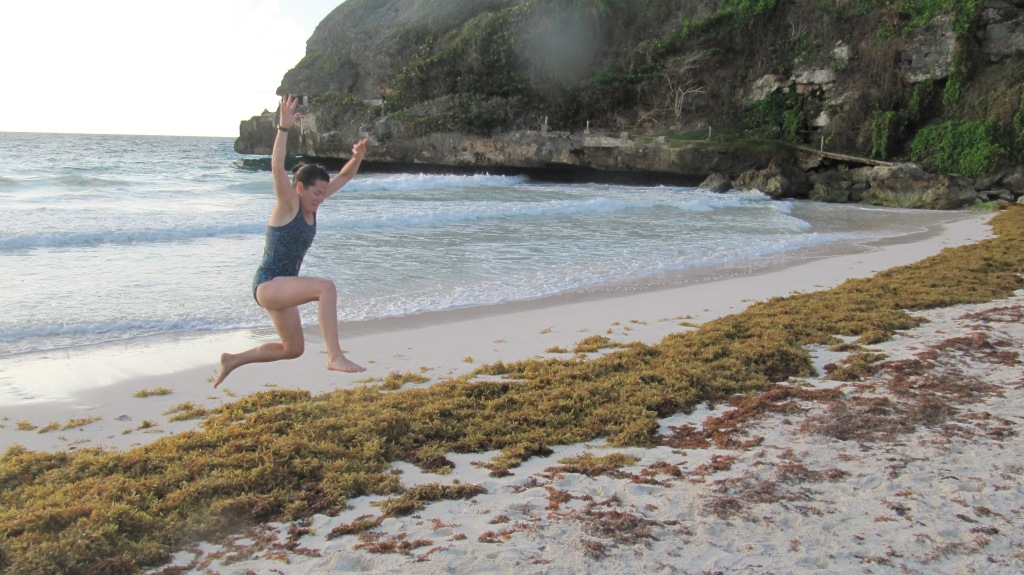
Well, I’m not an expert but I have walked in it and swam in waters that had it, and was fine albeit quite grossed out. The seaweed has trapped sea creatures that are dying in it and also attracts sand flies which can carry diseases so it should be avoided. If you swim in it, it also makes some parts of your body itch depending on contact.

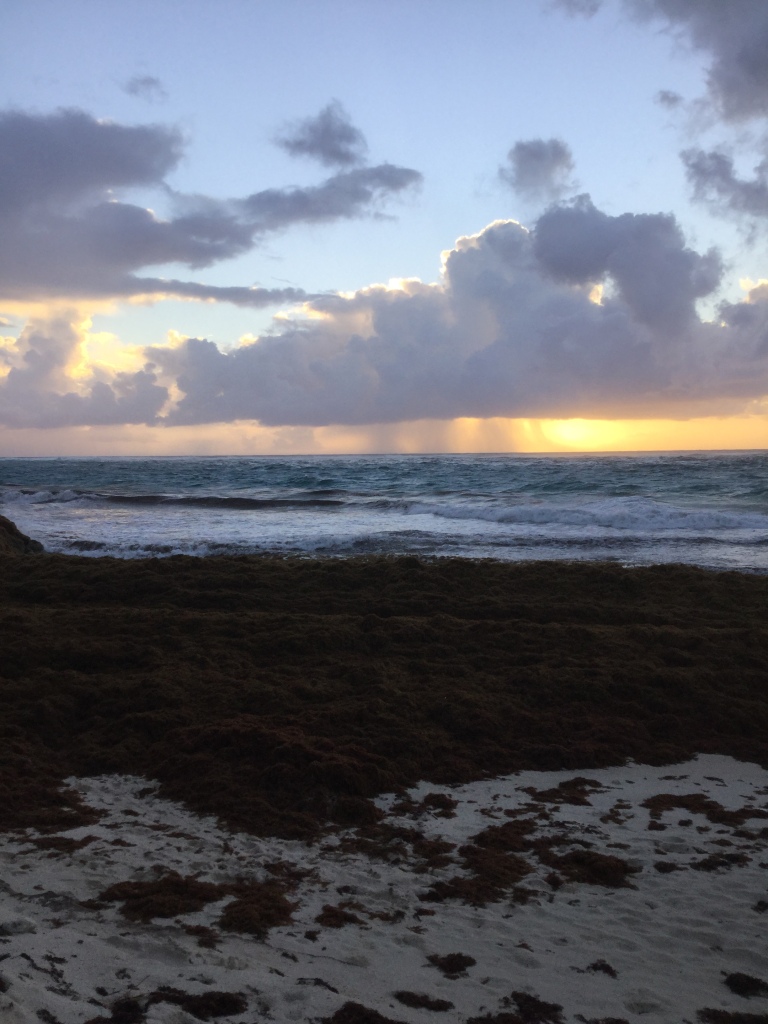
Once it sits on the beach and starts to rot, it smells like sewage which is quite unpleasant. Last year in Barbados (February 2018), I had to avoid running part of the beach that had almost 3 feet of it piled up because the putrid smell made me gag.
In addition to ruining the pristine beaches people want to spend their vacations on, it also affects the livelihood of local people who can’t fish like they usually do. We were told that a popular fish cutter stand in Barbados had to close because of a low supply of fish due to the seaweed in December 2018/January 2019.
Which areas are affected by sargassum seaweed and when?
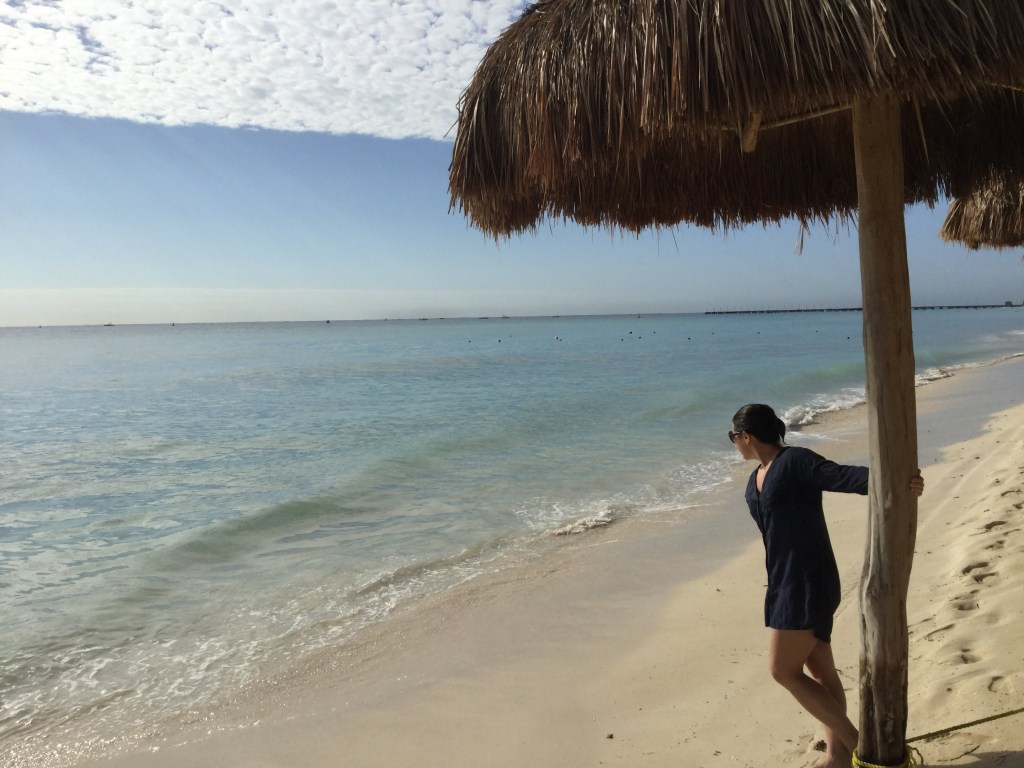
While it can vary from year-to-year, in 2015 it was so bad that 15 Caribbean nations called an emergency meeting to discuss the problem and the United Nations held an assembly to mobilize funds and initiatives to help countries affected by it. During some periods, the sargassum invasion caused some countries to declare states of emergency and Mexico called in the Navy and employed 10,000 people to clear up the almost 10 foot mounds of it across its coastline. In some cases, it will last a few weeks or even months and there really is no set sargassum season or accurate forecast to notify people about its migration in the same way hurricanes are tracked.
Here is a list of the places that I have found news articles citing problems with sargassum seaweed:
- United States: Coastal Texas, Louisiana, Mississippi and Florida (mostly the Keys)
- Mexico: Yucatan Peninsula (Akumal, Cancun, Playa del Carmen, Tulum, etc.), Cozumel (East Coast and South-East coast beach of Playa Palancar)
- Caribbean: Antigua, Aruba, Barbados, Bermuda, Belize, Bonaire, British Virgin Islands, Costa Rica (Caribbean coast), Curacao, Dominican Republic, Grand Cayman, Haiti, Honduras (Roatan), Jamaica, Martinique, Panama, Puerto Rico, St. Lucia, St. Martin, Trinidad and Tobago, and other Caribbean islands
And the good news is that as of October 2020, the Optical Oceanography Laboratory at the University of South Florida is reporting less seaweed than previous years:
“While the monthly bulletins can be found at the bottom of this page, the amount of Sargassum decreased during the month of October 2020, showing a total Sargassum coverage of 12 km2 as compared with a historical mean of 100 km2 between 2011 and 2017, for the area bounded by 8-23°N and 89-58°W. The overall bloom extent in 2019 was significantly higher than most of the years during 2011-2018 for the Caribbean and the central West Atlantic. The reasons behind this record-high bloom and the strong decrease since September 2019, however, are yet to be determined.”
As of February 7, 2021, we have received information from travelers that:
- Playa Del Carmen has good conditions in February 2020 and February 2021. There was seaweed reported in December-February 2021 but it was much less than previous years.
- Isla Holbox north of Cancun was seaweed free but one day, it was blanketed with a thick mass of seaweed that appears to have come out of nowhere as this area is not known to get seaweed like other spots in Mexico.
- Punta Cana was seaweed free in January 2020 and February 2020.
- Tulum had good conditions in December 2020 to February 2021 but some days were bad and some spots more affected than others.
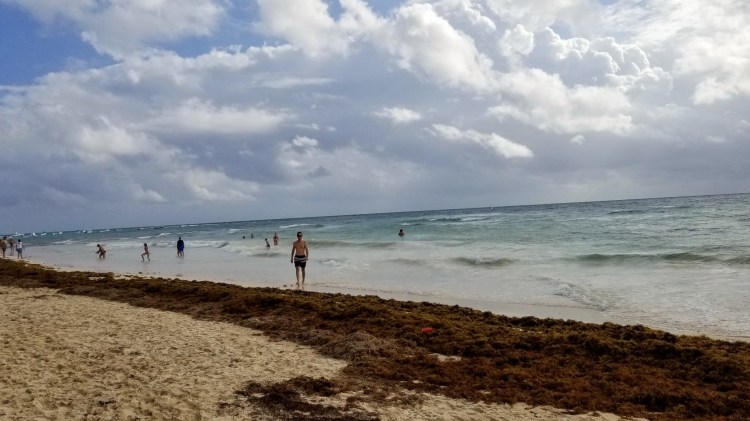
Playa Del Carmen Beach on December 30, 2018 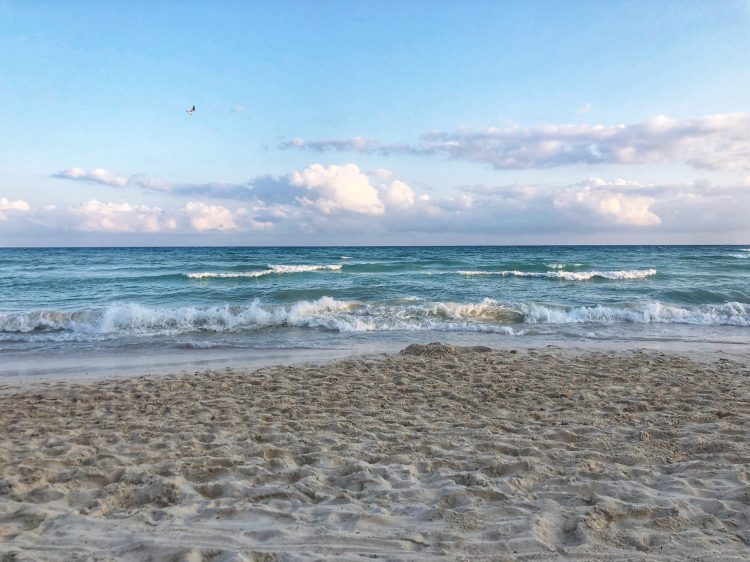
Playa Del Carmen Beach in February 2020: Photo credit to http://www.bingoabroad.com 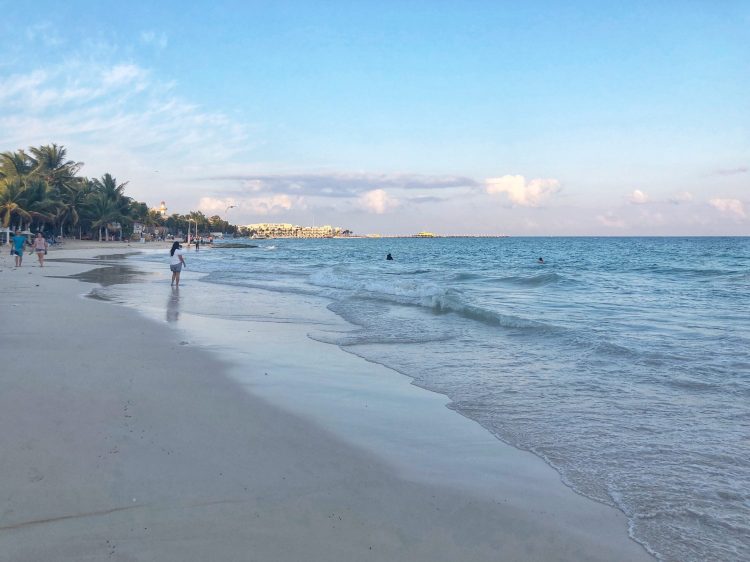
Playa Del Carmen Beach in February 2020: Photo credit to http://www.bingoabroad.com 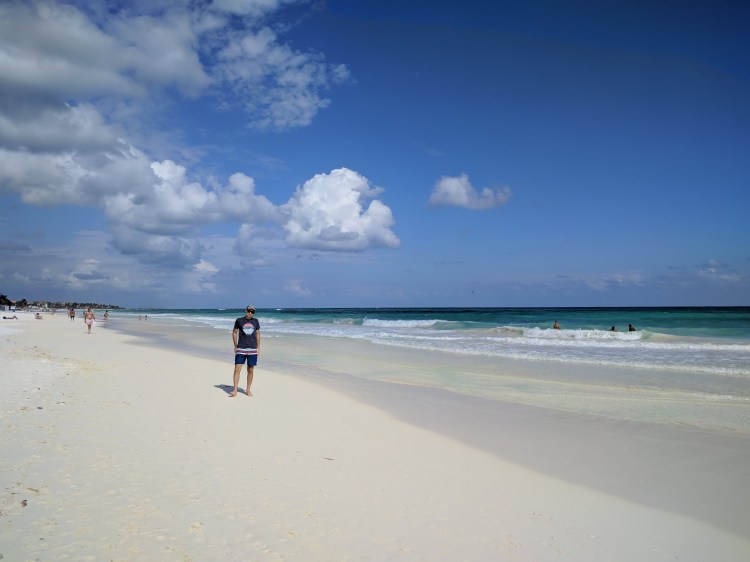
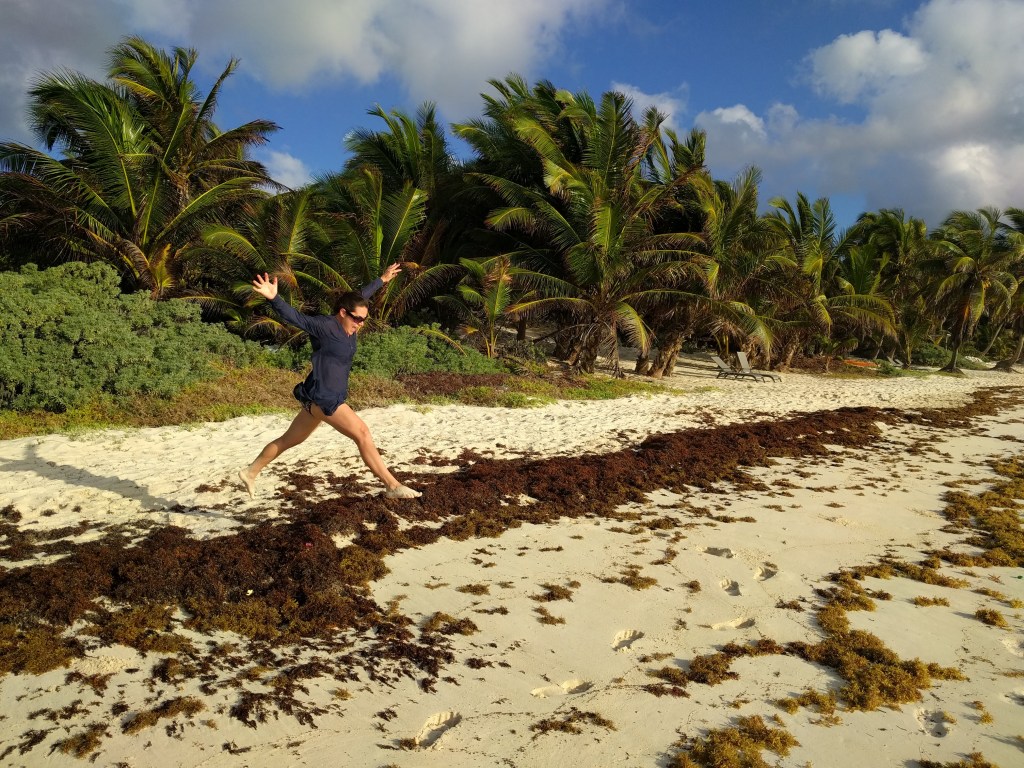
Jason on the beach in Tulum 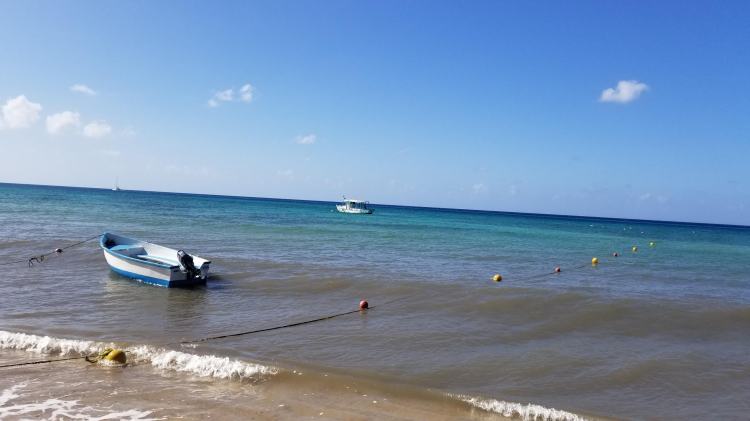
Playa Palancar, Cozumel on January 1, 2019: some Sargassum seaweed made the water murky by the shore 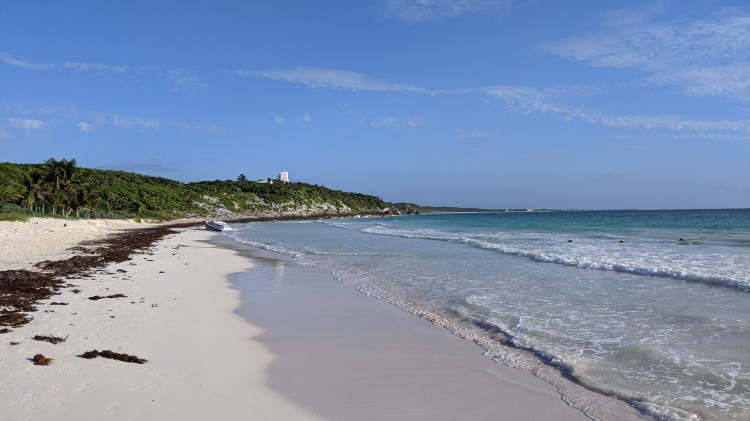
Tulum Beach with some seaweed by the ruins in December 2020. Photo courtesy of a WLT reader 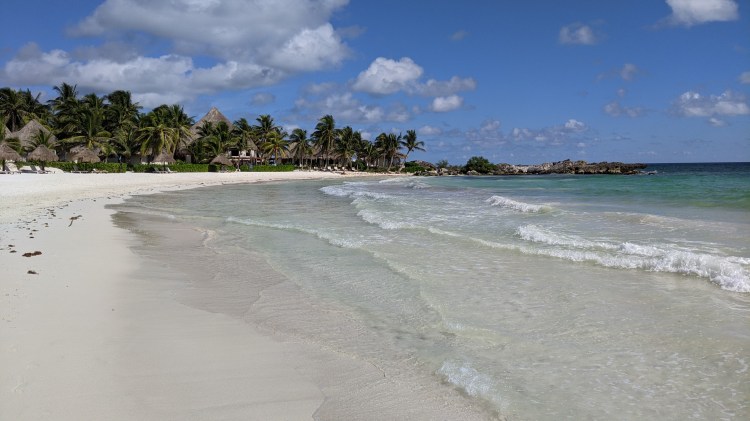
Tulum Beach with very little seaweed by Maya Tulum in December 2020. Photo courtesy of a WLT reader 
Playacar with no seaweed in December 2020. There was seaweed on the beach (what is left of it) by town. Photo courtesy of a WLT reader 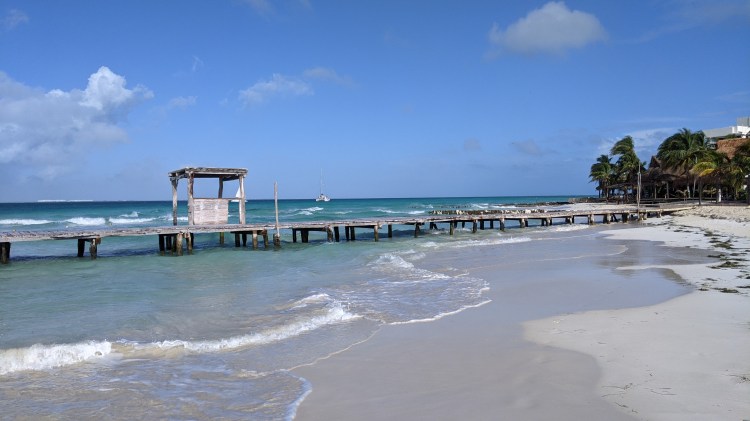
There was a bit of seaweed on Playa Norte on Isla Mujeres in December 2020. Photo courtesy of a WLT reader. 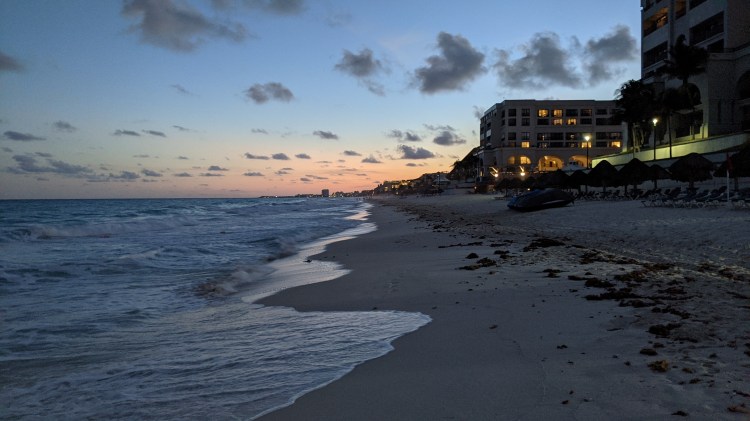
There was a bit of seaweed in Cancun in December 2020. Photo courtesy of a WLT reader.
What can you do about your vacation?
1) Keep your plans and try to make the best of it:
- Conduct research to see if other beaches are unaffected. For example, when we were in Barbados, not all beaches were affected so we drove our rental car to other beaches. The beaches on the West Coast of Barbados and closer to Bridgetown were not affected. SEAS, the Sargassum Early Advisory System, an A&M Galveston research project has satellite images to help assess where the seaweed is if you can figure out how to interpret them.
- Plan to spend more time at the pool and find a property that has great pools.
- Conduct research about what other activities are available in the area, i.e the Mayan Riviera also water parks such as Xel Ha and fresh water cenotes that are also good for swimming.
- If you are there for a special event like a wedding and want to take photos on the beach, make sure your photographer can crop it out or airbrush it, which is what we had to do in 2015 in Barbados when we had our family photoshoot on Crane beach.
2) Go somewhere else: While there are pros and cons to changing your plans, it might be a good opportunity to try something different. The west coast of Mexico (Cabo, Puerto Vallarta, Sayulita, Xuatulco, etc.) and Pacific coast of Central America don’t have the seaweed problem. In addition, places like Colombia have nice beaches on the coast, are a lot safer now and are up and coming on the tourist trail. We used to recommend Hawaii as well but the cost of a trip to Hawaii is becoming out of reach for the average traveler.
3) Know what you’re getting into: Have a look at beach cams, read through TripAdvisor forums and local newspapers, and Google where you’re going with “sargassum” in the keyword field to stay aware of the developments. While there is no way to predict how much seaweed there will be and where exactly, it helps to know there is a risk and to manage your expectations. This site has frequent updates for beaches in Mexico and searching for “sargassum” on Facebook is also an option. Below is a Google Map with up to date information about how the seaweed is affecting beaches in Mexico’s Yucatan Peninsula.
Summary:
It may seem self-indulgent to hold the “I came to this pristine beach and all I found was this mound of smelly seaweed instead” postcard, but it’s a reality and a problem that keeps coming back. The good news is that more resources are being allocated to study sargassum seaweed and entrepreneurs are also working to find ways to keep it off beaches and to transform it into matter that can be used for agriculture.
Have you experienced sargassum seaweed? Did it ruin your vacation? Will you be making travel plans based on this year’s sargassum forecast?
Related Posts:
- Dining Guide for Barbados: Cheap Eats
- 4 Days in Cozumel – A Travel Guide
- Getting Sick while Traveling: Dos and Donts to Minimize the Risk
- Travel Advisory: The Red Tide in Florida
- Plan: The Maldives on a $500 budget per day
- Unfinished Business: 3 Days in Tulum
- Tulum: Planning a Day Trip from Playa Del Carmen
- Review: Playa Escondida, Sayulita, Mexico
- Review: Hotel La Semilla, Playa Del Carmen, Mexico
- Review: Grand Hyatt Playa Del Carmen Resort
- Our Top 10 Pools: Enhance Your Hotel Stay


 weleavetoday.com
Leave a comment