
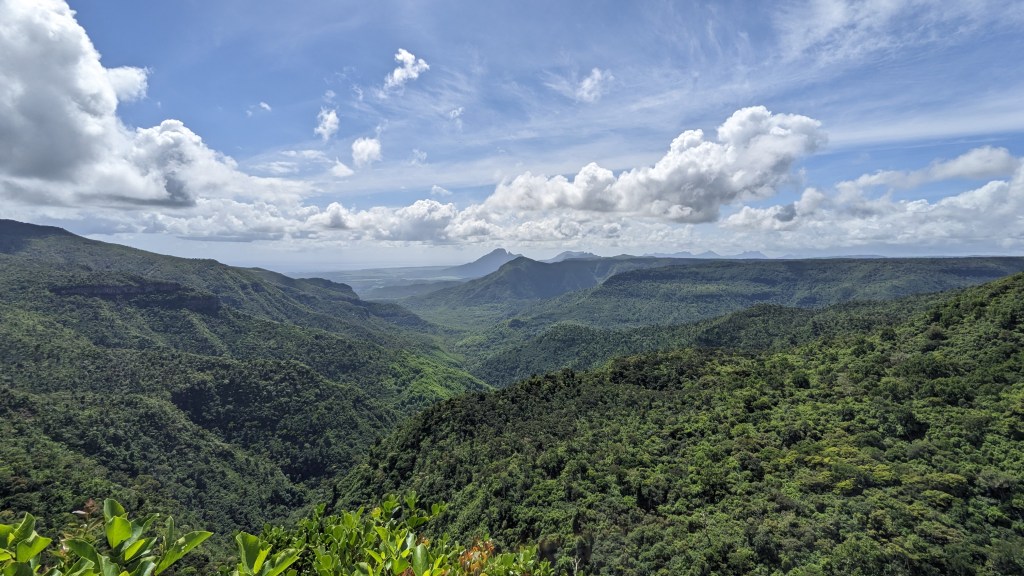
Mauritius, an Indian Ocean island nation, is known for its beaches, lagoons, and reefs. The mountainous interior includes Black River Gorges National Park, with rainforests, waterfalls, hiking trails, and wildlife. The capital, Port Louis has sites such as the Champs de Mars horse track, Eureka plantation house, markets, and botanical gardens. It is not easy to reach from North America but we had the opportunity to visit in April 2023 and share tips to help you plan your trip.
When to visit:
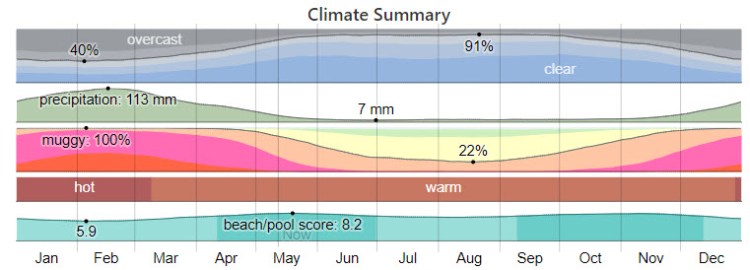
We visited in mid-April at the start of the dry season. During our visit, we did experience some rain showers and thunderstorms at times. Things did clear up though and we were able to enjoy exploring the island but it did make driving difficult at times. The rain and thunderstorms didn’t ruin days of our trip like they did in Koh Samui Thailand, the Maldives, and Bali. We also learned that in Mauritius, it can be a massive downpour in one area, and 10 minutes away, it’s sunny and dry. We also did not experience the winds some people talk about but the northeast point and southwest points appear to get more wind as they are popular spots for windsurfing. Overall, it was sunny and warm every day and we would visit again around the same time.
The recommended time to visit Mauritius is from mid-April to late June and from early September to mid-December to avoid the rain and wind.
How long to stay:
We spent 10 nights in Mauritius and divided our stay into 3 different areas to explore the island easier. We also chose to spend more time in Mauritius than in South Africa, which was also a stop on this trip. For us, we felt 10 nights was the optimal amount of time but we could have easily spent up to 3 weeks in Mauritius due to how enjoyable it is and the variety of activities. On a longer 2-3 week trip, we could consider venturing off to Rodrigue Island, about a 1.5 hour flight away.
At a minimum, you should plan to spend 1 week in Mauritius, which is what most Europeans we met were doing.
Getting Here:
From Vancouver, Mauritius is far: it’s 10,446 miles. Fun fact: The furthest two places can be from one another on Earth is 12,430 miles. So, Mauritius is very far from Vancouver and it might be the farthest we’ve ever been from home!
To get here, we flew from Vancouver to Seattle to catch a flight on Qatar Airways to Doha. From Doha, we flew to Cape Town South Africa to spend a few days exploring there. We flew Air Mauritius from Cape Town to Mauritius non-stop. The flight to Doha was close to 15 hours, the flight to Cape Town was 10 hours and the flight to Mauritius was 5 hours.
To return home, we flew Air Mauritius to London Heathrow and then on Air Canada to Vancouver. This was the most time-efficient routing as it included one stop but a lengthy layover in London. The flight to London was 12 hours, our layover was 8 hours, and the flight to Vancouver was 10 hours.
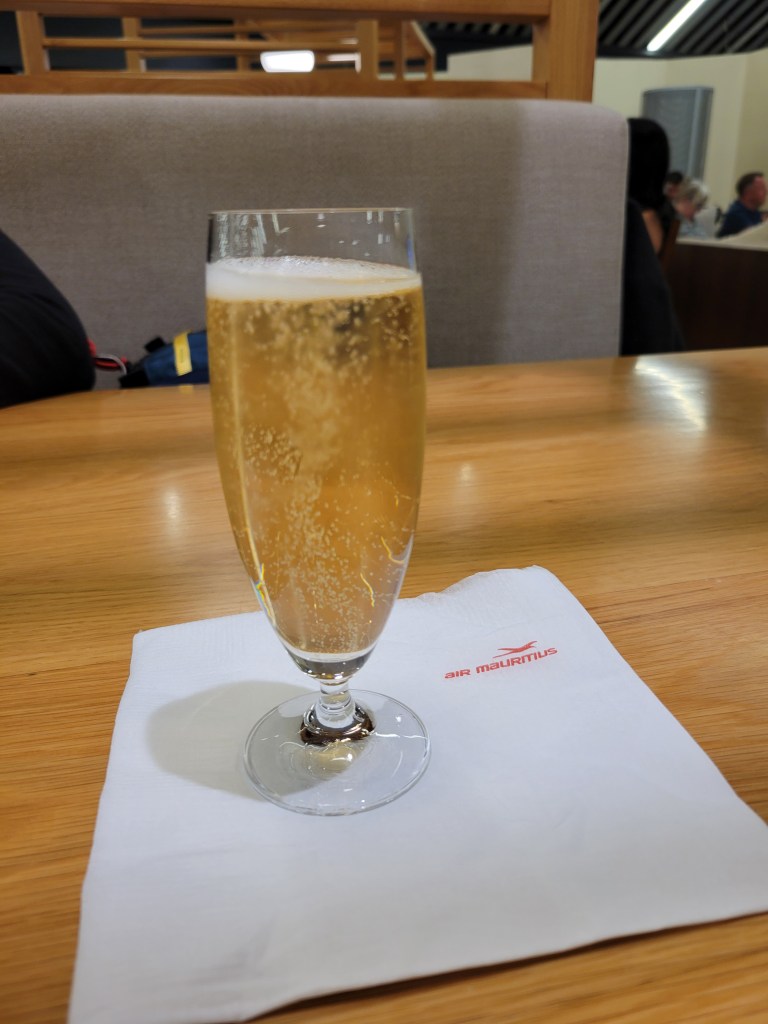
There are many daily flights between Mauritius and Paris. This might be a good option, especially for those who might want to add a layover in Paris for a couple of nights.
Cash VS Credit Card:
Credit cards are widely accepted for payment in Mauritius, as is cash. It is also easy to find an ATM to withdraw cash at a reasonable exchange rate with no additional fees. For those who bank with Scotiabank, look for MCB (Mauritius Commercial Bank). Hotels will also let you pay with cash for part of the balance and the rest with a credit card to minimize the amount paid for credit card payment fees. When traveling, we often use our HSBC World Elite MasterCard as it doesn’t incur foreign transaction fees.
Some smaller places only accept cash though and so you should always have the equivalent of $50-$100 with you. Most places let you add the tip on a credit card but some do not and cash tips are always preferred. Most places will also provide change for the tips happily.
Entry Requirements:
Entry requirements for Canadians were very easy: we did not need a VISA or have to pay any fees. We completed Mauritius All-In-One Travel Form prior to arrival and had a printout as well. This form is used to screen for infectious diseases and it asks a number of questions, including vaccination status. Mauritius removed all COVID protocols in July 2022 and is open to all.
Budget:
For our trip to Mauritius, we used points for some flights and hotels and paid for some too. Overall, we found things in Mauritius reasonable for what was offered and available but it was not cheap.
Thankfully, everything is charged in Mauritian Rupees and so for us Canadians, this was much more budget-friendly than if they did like other countries and charge in US Dollars (like Costa Rica) or have their currency pegged to the US Dollar (like Barbados), or charge in Euros.
We also played a fun game during our trip: how much would this cost in Hawaii? Due to how expensive things have gotten in places like Hawaii and how everything there is in US Dollars, accommodations, car rental, food, drinks, and other goods were very reasonably priced. For example, it was possible to find hotels under $200CAD per night and have meals under $50CAD and nicer ones under $100CAD. Gas is expensive in Mauritius though: it’s about $2.00-$2.50 per liter. This is something you get used to outside of North America. For comparison, we complain about paying $1.85CAD in Canada.
Food and drinks at hotels are very expensive but prices include tax and often service charges. Most hotels also don’t charge resort fees, or parking fees, and offer free activities like rentals of standup paddleboards, kayaks, snorkel gear, etc. In Fiji and Hawaii, hotels charge for watersports at exorbitant rates. Hotels in Hawaii have very expensive food and drink, charge resort and parking fees, and charge for activities. You will end up paying more for resort food and drinks, either on a pay-as-you-go or half/full board plan in Mauritius but less than in the Maldives. Mauritius competes with the Seychelles and the Maldives: from research and experience, Mauritius offers some similar things, and then some but at a much more affordable price tag.
A big factor for North Americans coming to Mauritius is the flight: if you can use points or find a decent deal, then yes, it is excellent value compared to other beach destinations.
Getting Around:
We chose to rent a car in Mauritius as our primary method of transportation and think this is the most optimal way to enjoy the island. If you do not rent a car, you will be limited to staying at your resort and using taxis and tours to get around. There are local busses that run frequently but they might be somewhat confusing and intimidating to the average person.
Driving in Mauritius is always an adventure. Winding roads dart in every direction and one second you are on a North American-style freeway and the next you are on narrow roads through endless sugarcane fields. As you drive you through the many small villages, you and might even feel like you are driving through someone’s home. And then there is getting used to all the unexpected things, like people randomly stopping in the middle of the road for no reason very abruptly, people tailgating you so close, passing at strange times, all the dogs running across the road, the changing width of roads…the roundabouts with no actual exits… All while driving on the left side of the road and on the right side of the car. If this doesn’t sound like something you want to try, then yes, you will need to depend on taxis and tours to get around.
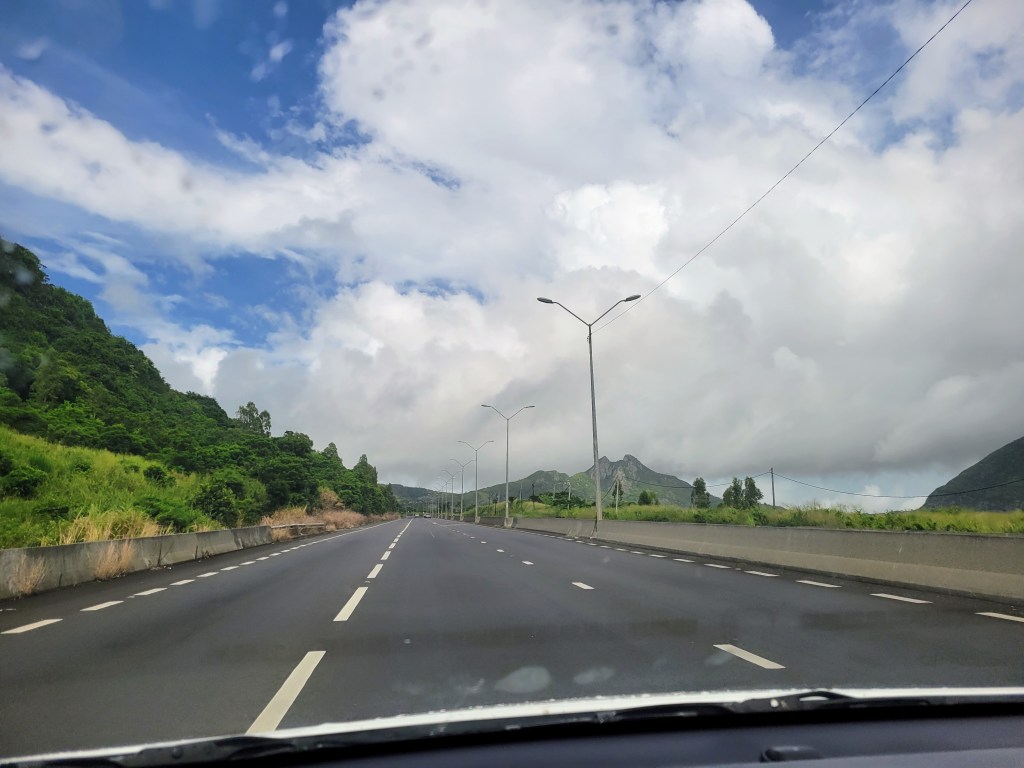
Google Maps generally worked well but occasionally, it sent us down roads that were actually private hotel grounds or roundabout exits that don’t exist but 95% of the time, it worked as it should! In general, the roads are in very good condition in Mauritius: there are a few major tire-destroyer potholes and some very narrow windy roads, but it’s not the norm. There was also only once where we pulled off to go to a beach and decided to turn around as the road was too rough.
We did drive at night sometimes and it was much easier in some spots than others. We found Grand Baie easy to drive at night but did not drive between Le Morne and Tamarin at night, and we made sure to drive to the airport to catch our flight during daylight hours (…even if that meant arriving hours early).

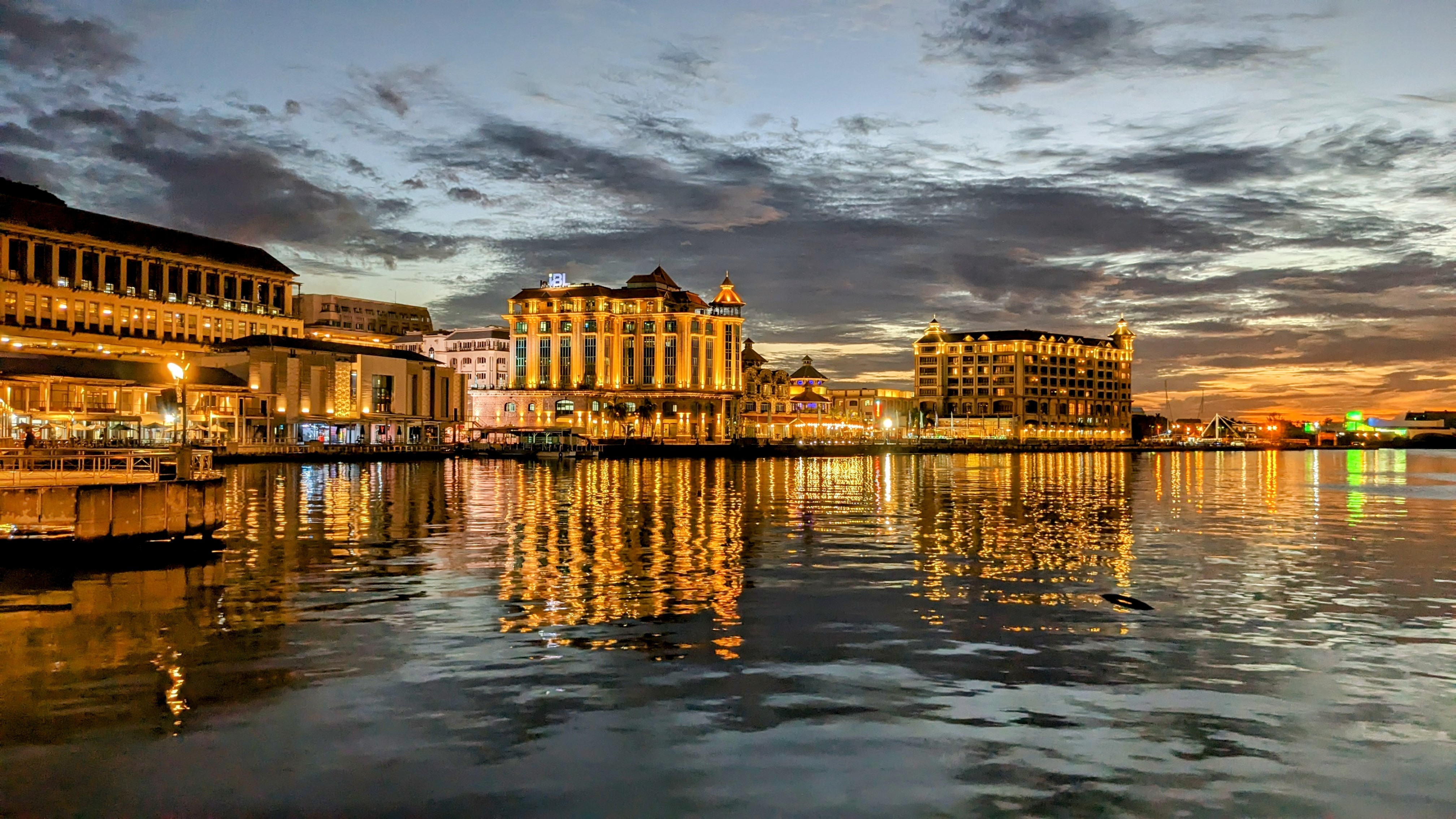

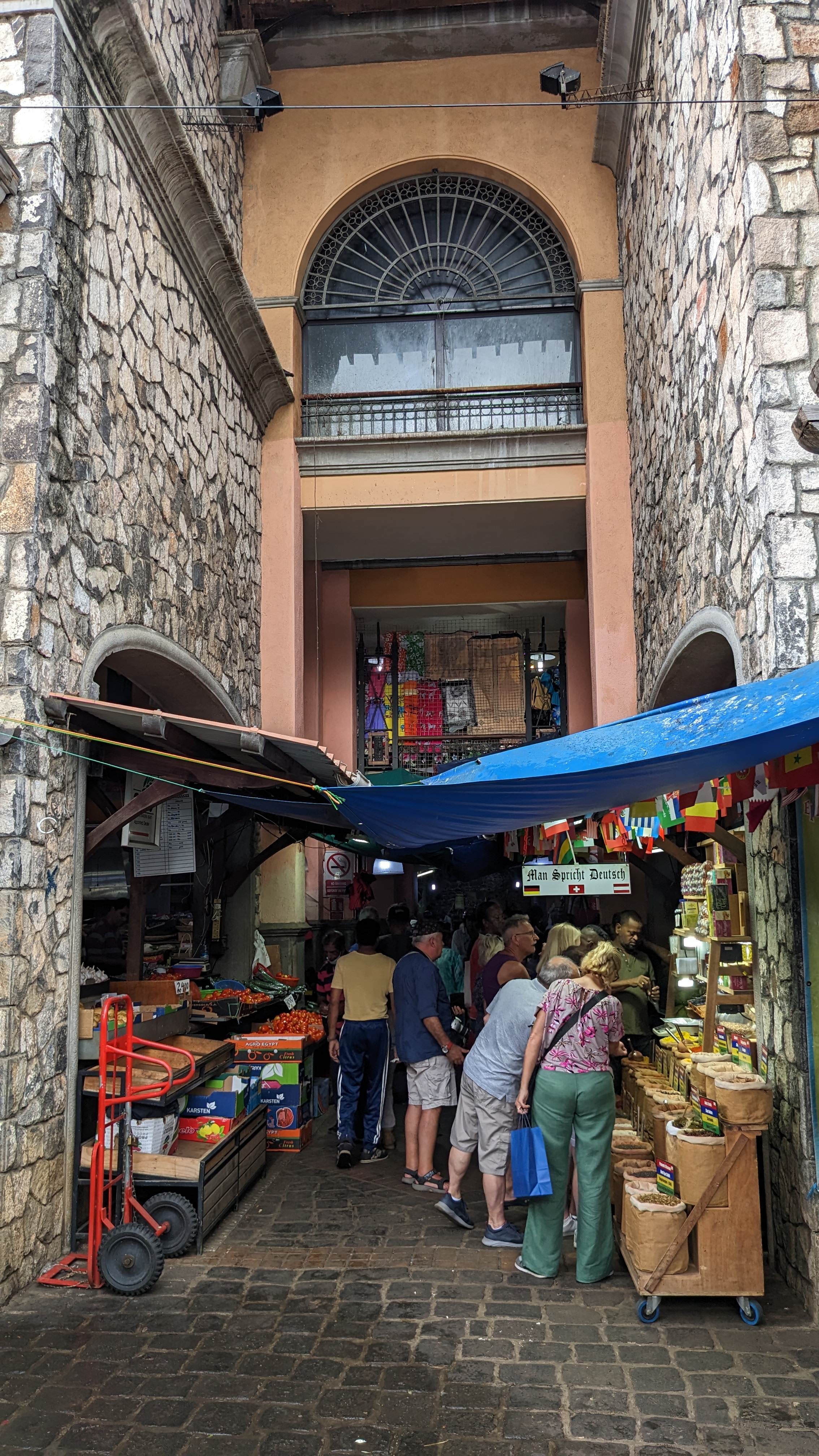
Also, if you can return your rental car to the right parking lot at the airport without having to go through 3 parking lots and disregard directional arrows, you will have our utmost respect and admiration. We learned that one should not follow the signs that say “Car Rental Return” as it will take you to the regular arrival parking lot. You then need to go to the car rental desk and ask the agent to come help you move the car. We may just need to return to Mauritius to figure out how to return our rental car to the correct parking lot just to update this post and solve the mystery that plagues so many tourists!
Where to Stay:
Most people we met went to one resort and stayed there their entire stay. If you rent a car, we recommend splitting up your stay into a few different spots to get a more varied experience as each spot is a little different. We stayed in three different spots: the East side of the island near Palmar/Belle Mare, the west of the island near Pointe aux Piments, and the southwest of the island near Le Morne/La Gaulette. Overall, we enjoyed each one and they all had their pros and cons. It took us about 1.5 hours to drive in between each spot, including getting to and from the airport from each hotel.
At a minimum, we want to spend at least 3 nights in one spot to maximize time and minimize time loss and inconvenience from checking out and checking in to a new place.
- Le Meridien: We enjoyed having 5 nights here in Pointe aux Piments because there were more dining options nearby, it was easy to visit Port Louis, but the beach setting at our hotel was not the best and required walking further (walk to the Beachcomber beach for good snorkeling and swimming conditions).
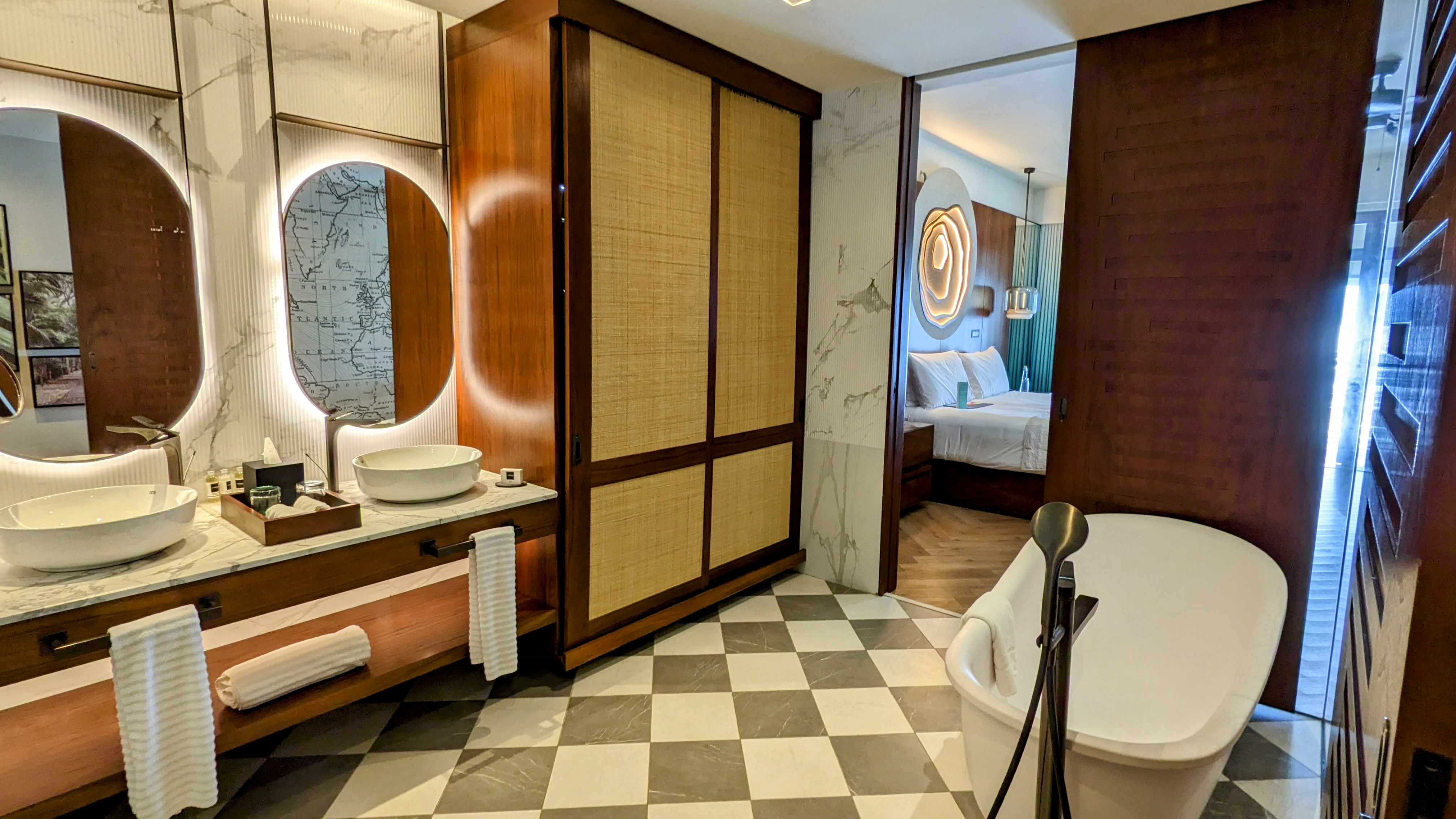
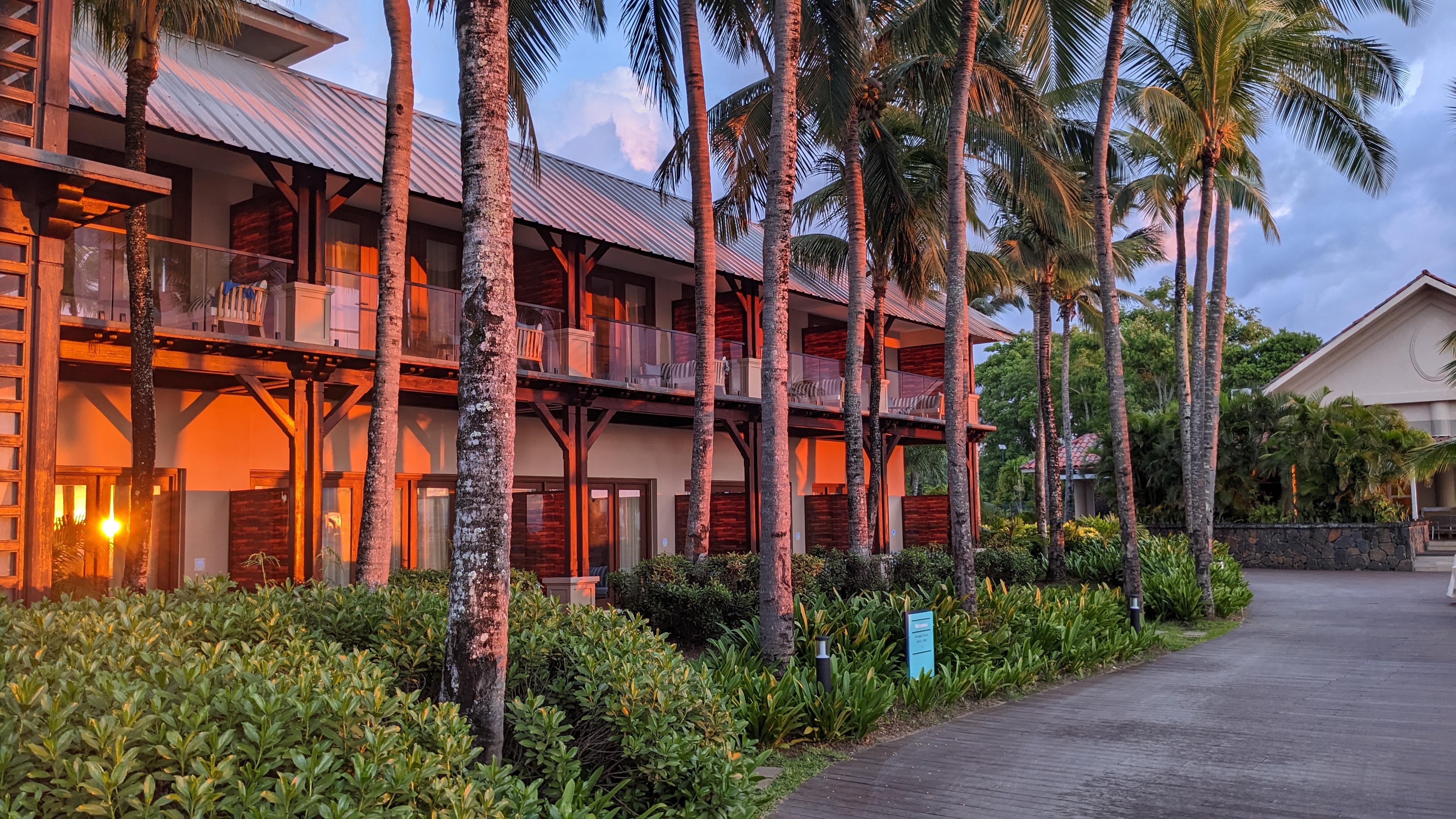
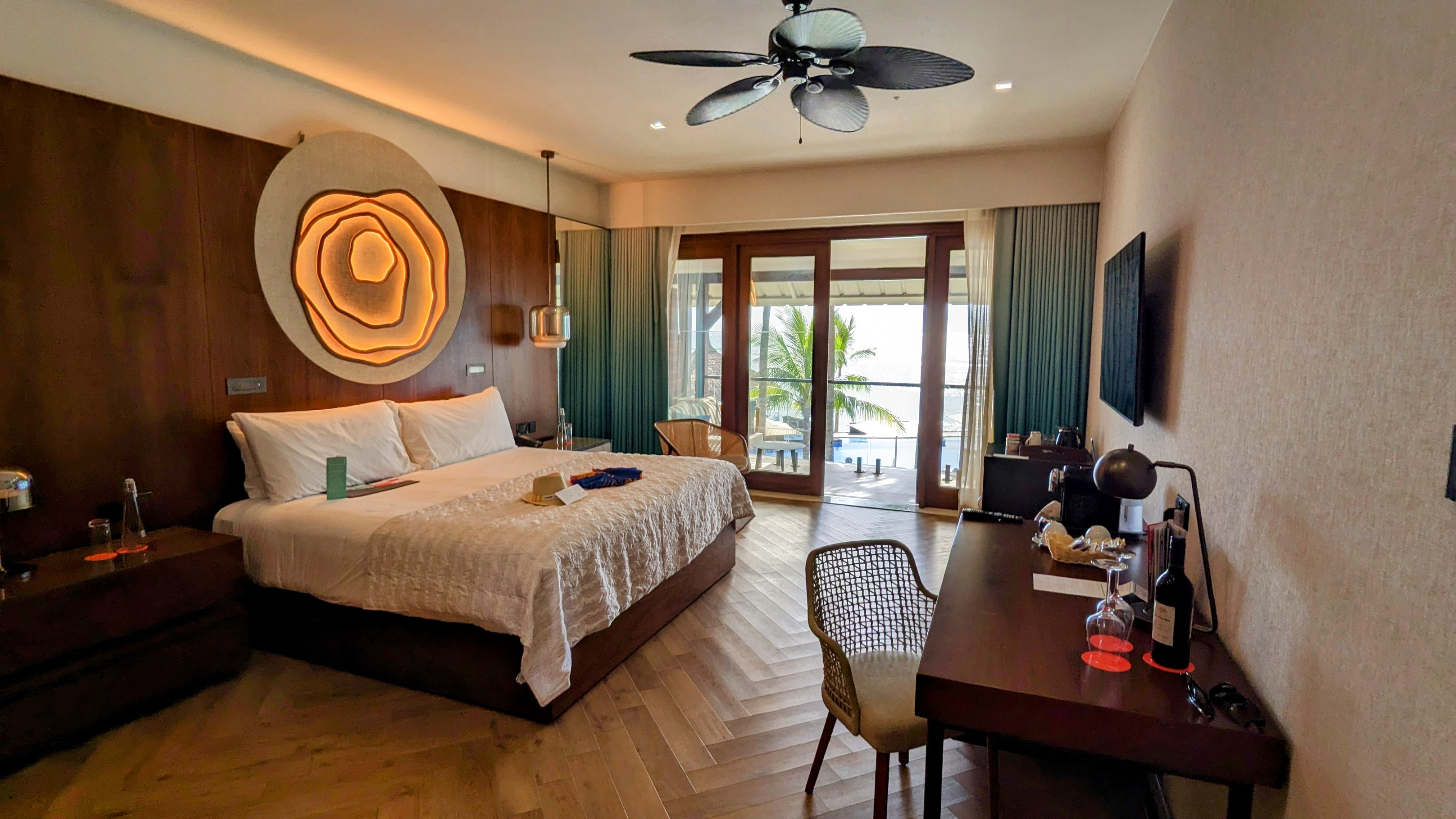
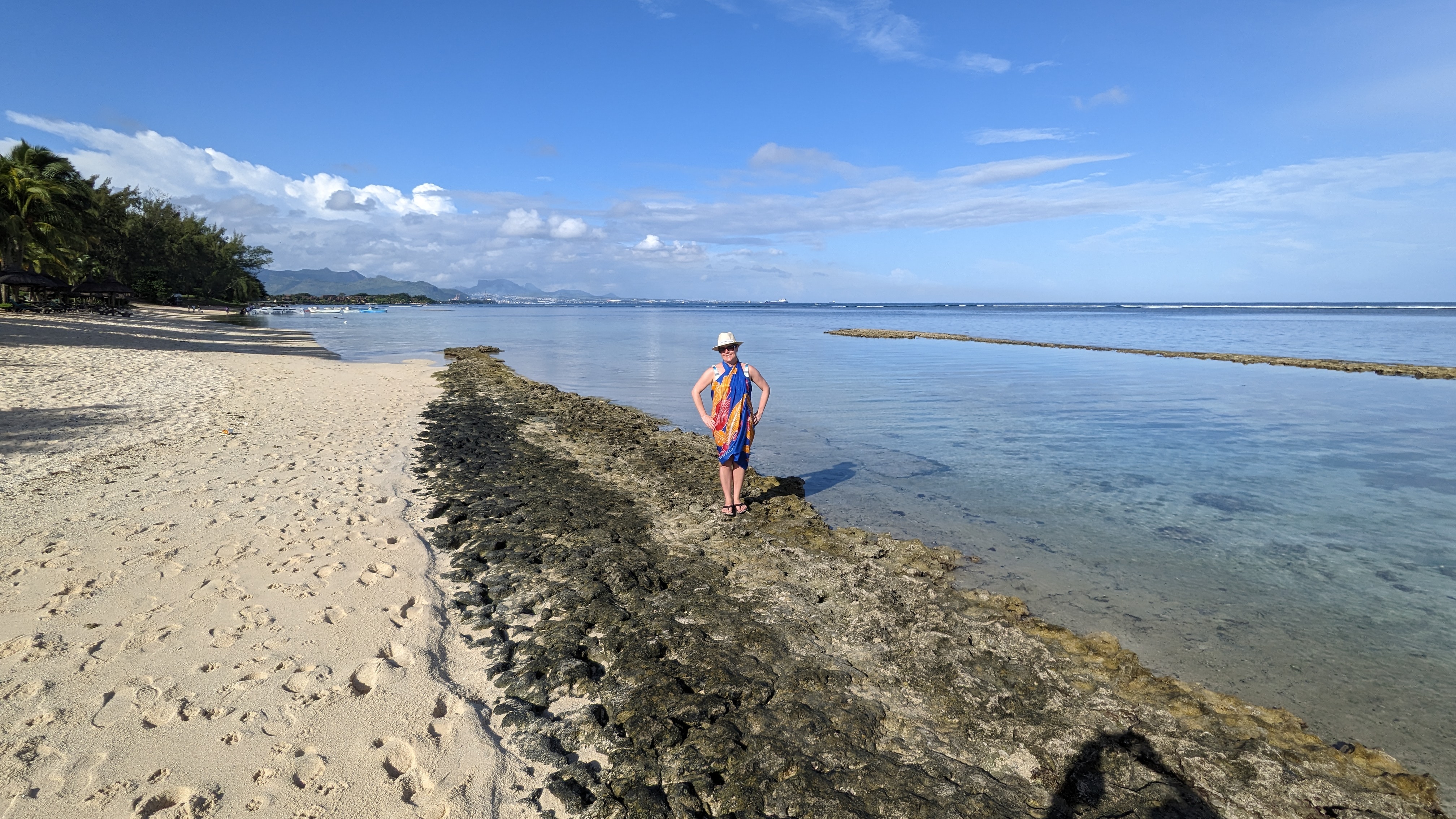
- LUX Le Morne: We enjoyed the beach setting at Le Morne much more, being close to Chamarel and Tamarin but didn’t enjoy the limited dining options and dress code (men had to wear long trousers and closed-toe shoes). This hotel is also popular with families and while they have 3 pools, none are designated for adults only.
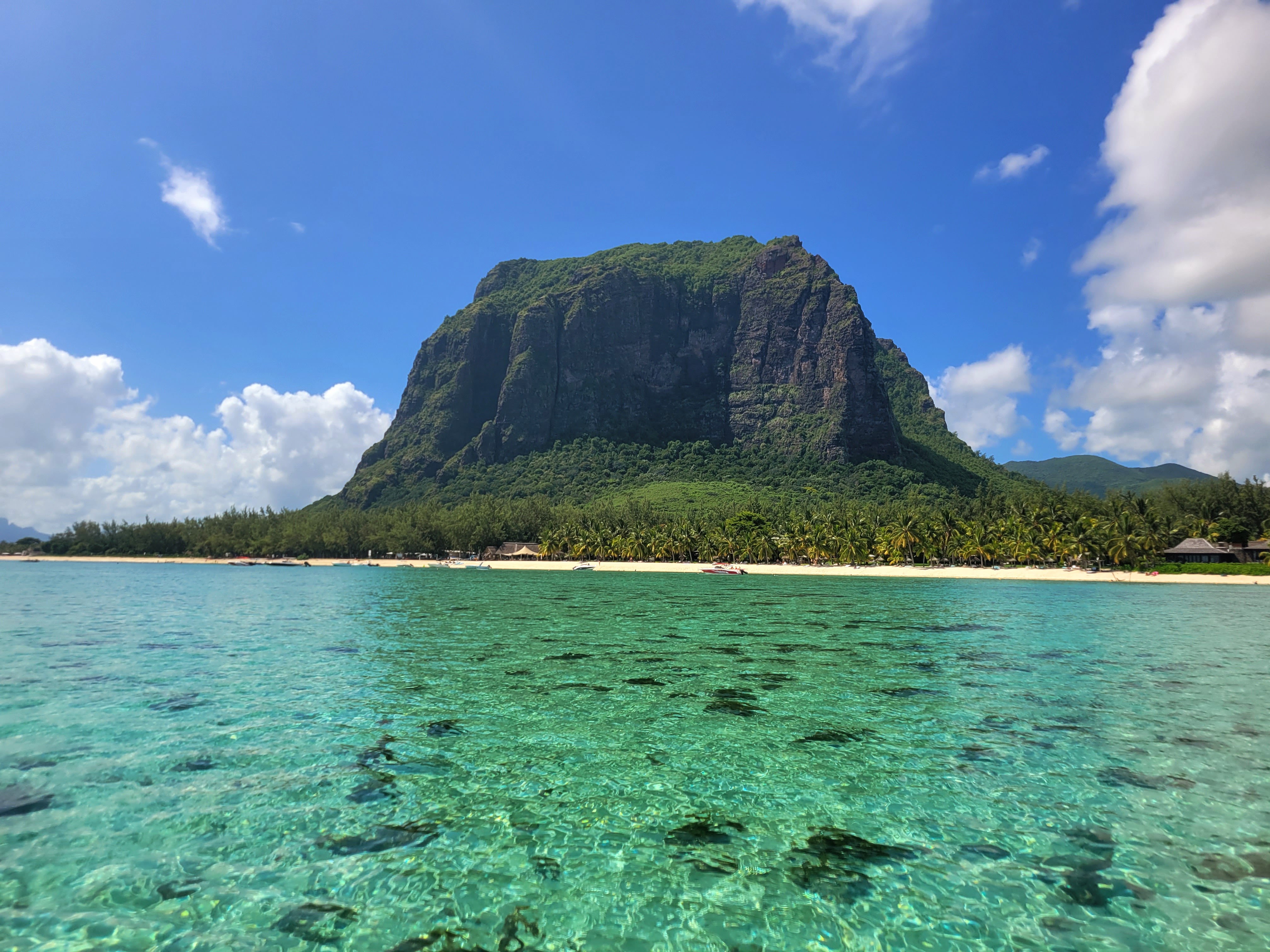
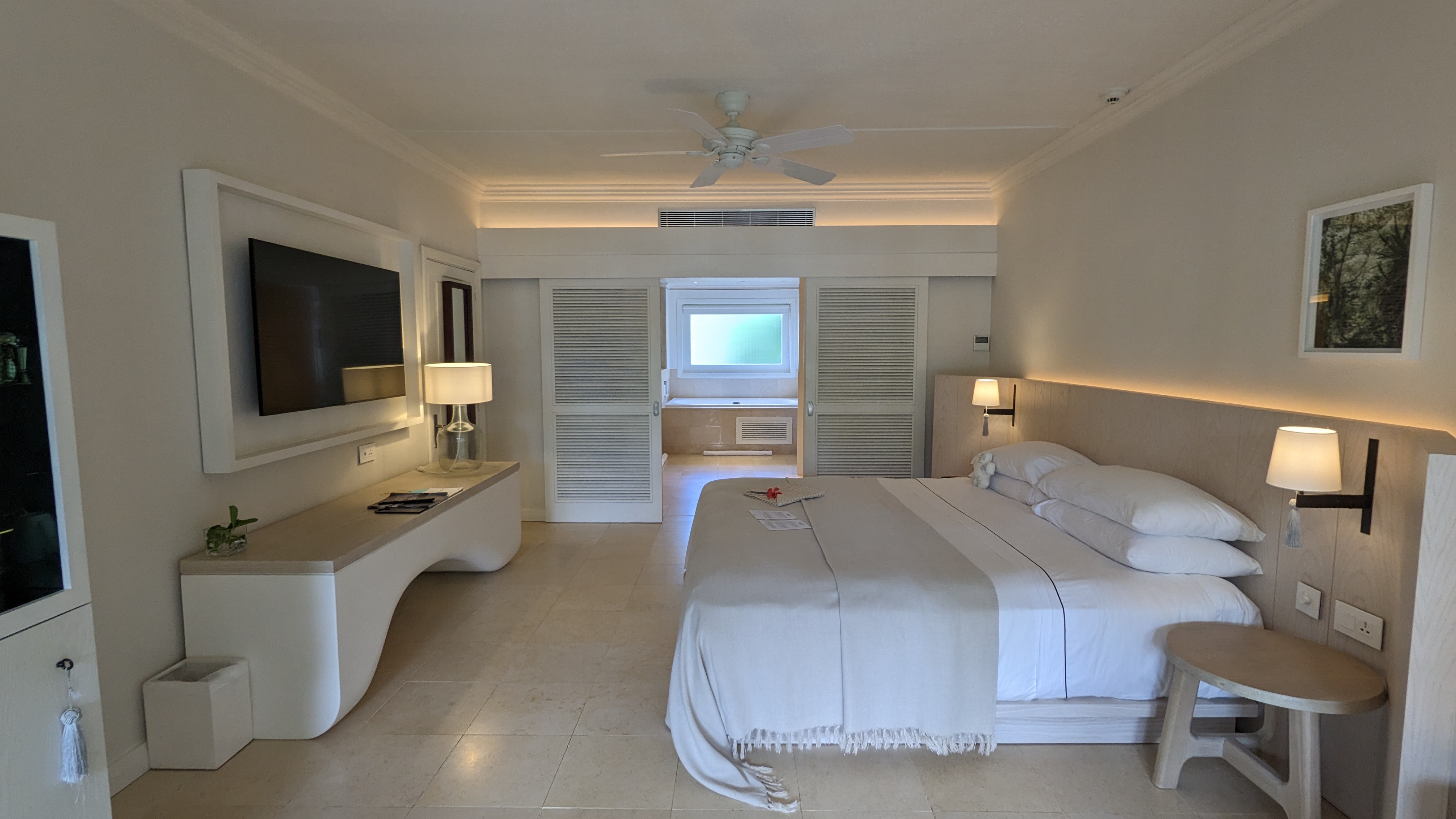
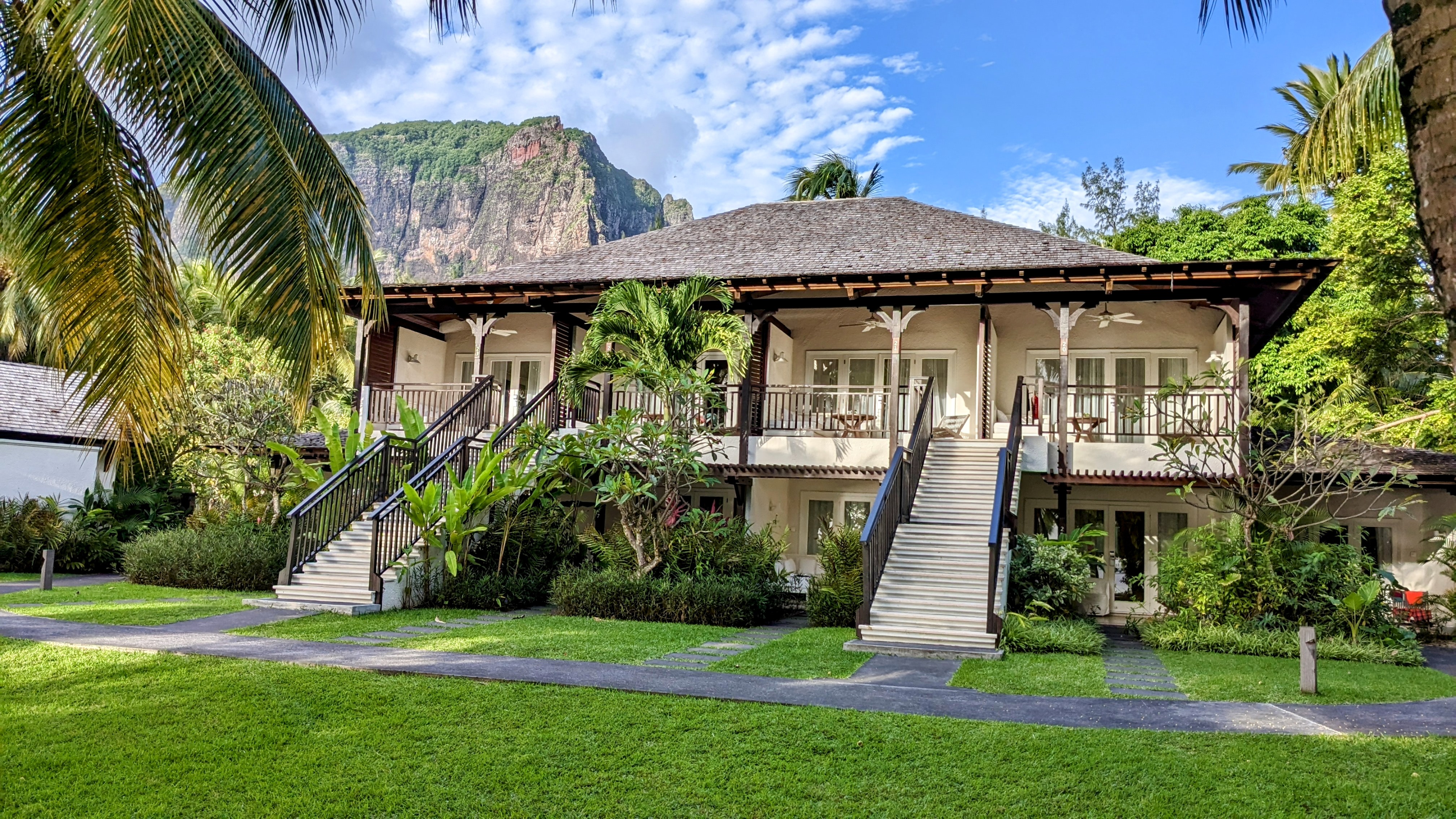

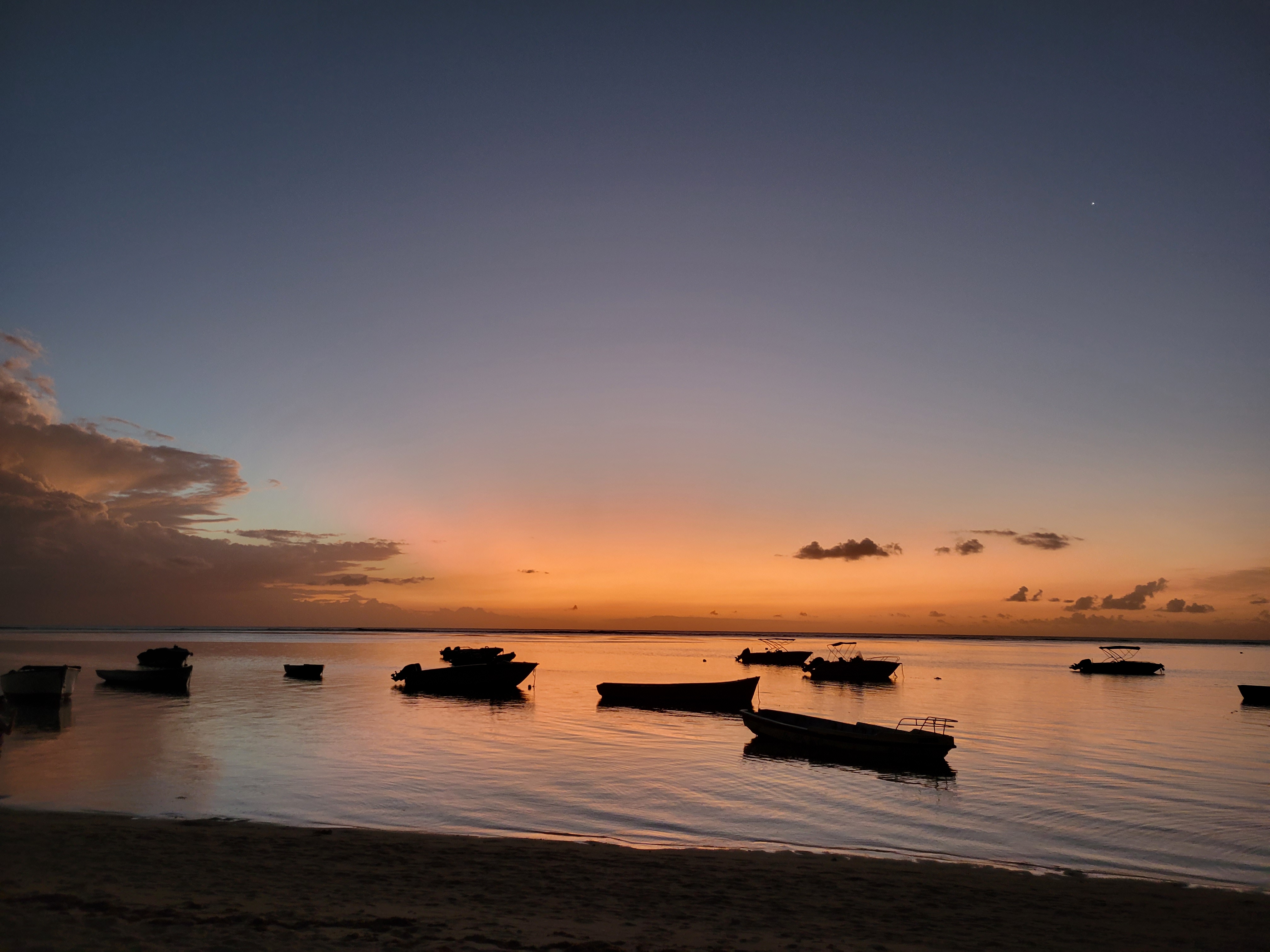
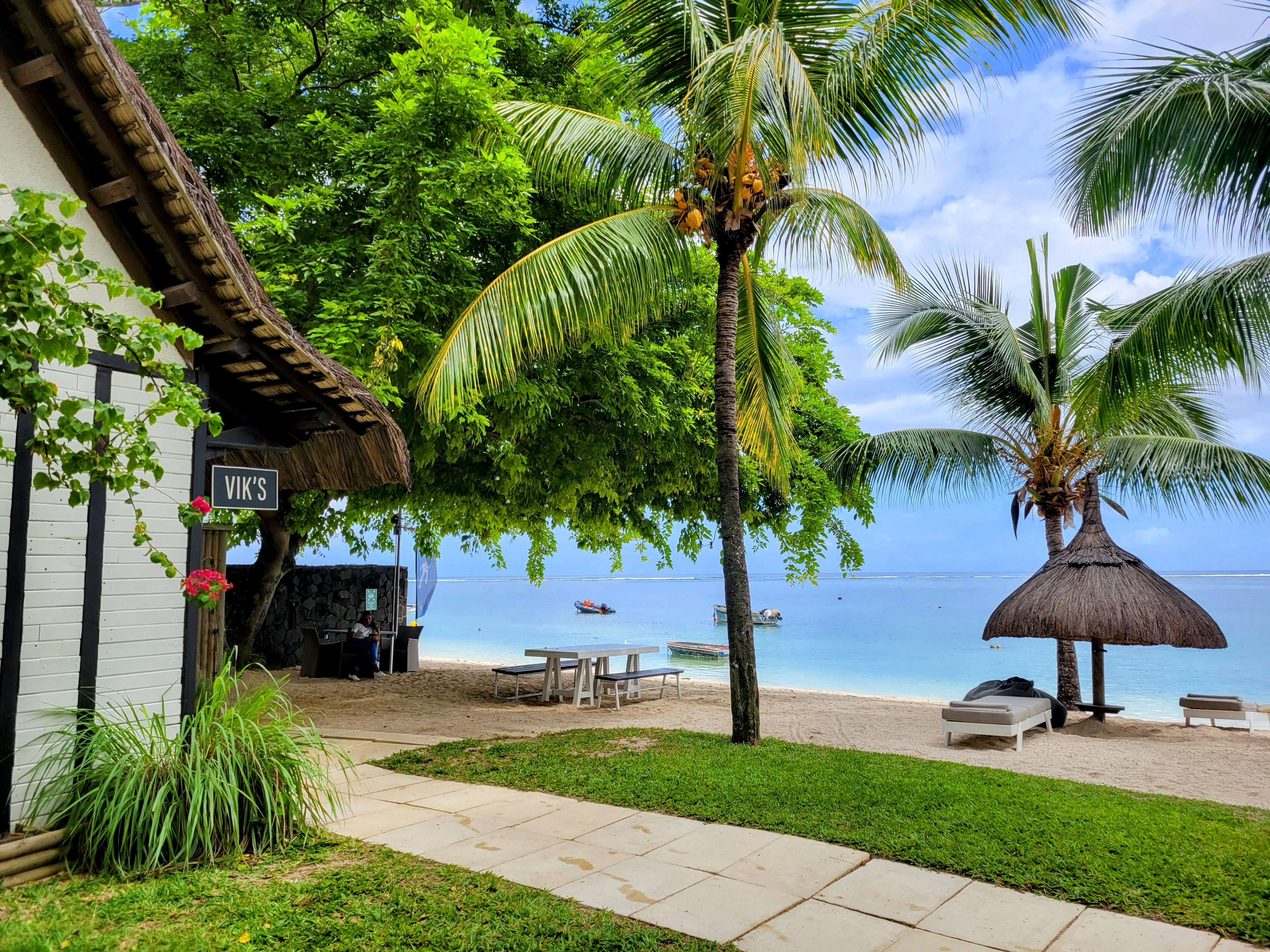
- Salt of Palmar: We enjoyed staying at an adults-only boutique hotel on the east coast near Belle Mare due to the nice beaches here, and how quiet and low key the east coast was but there was less to do and less dining options as well.
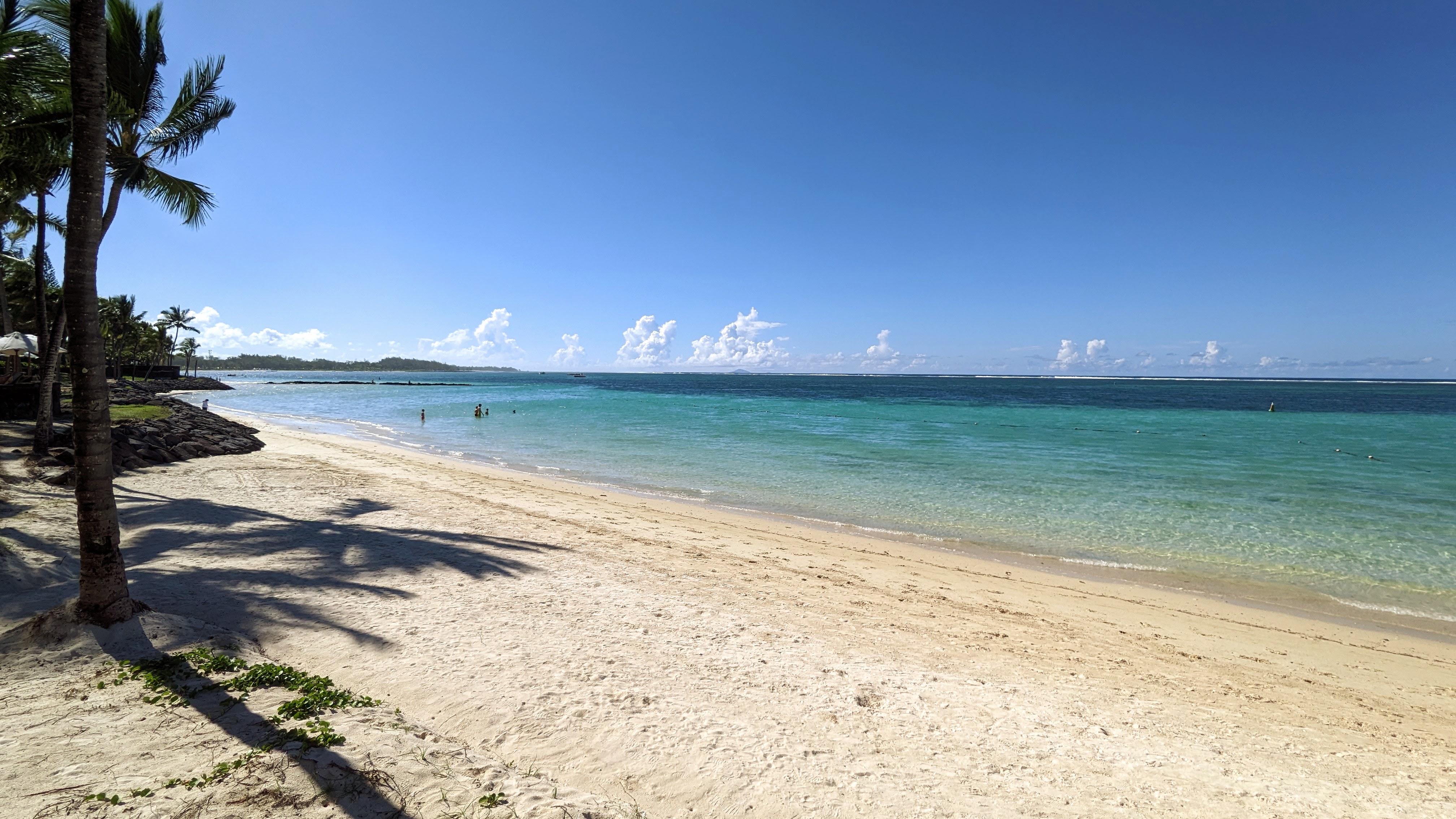
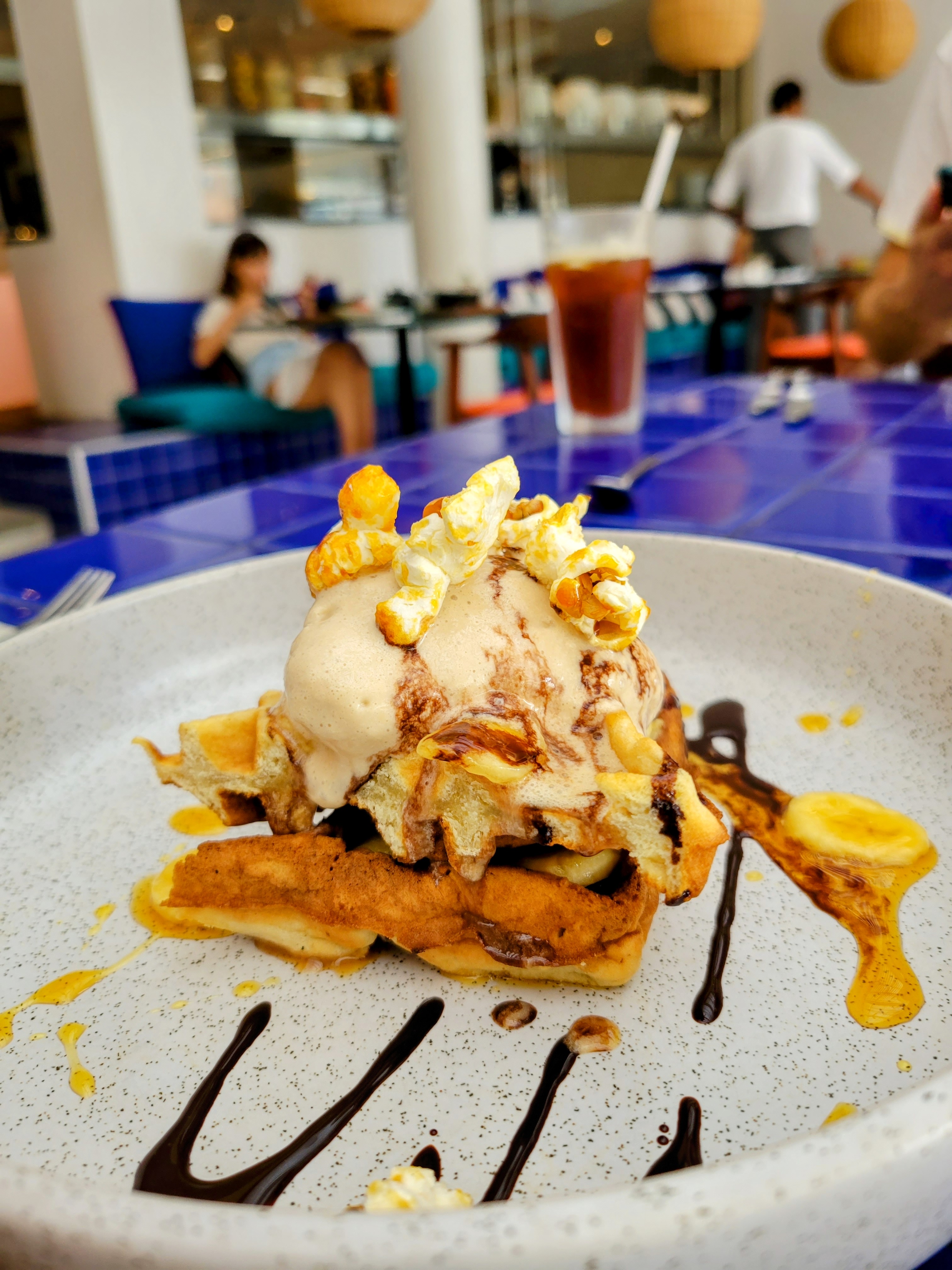
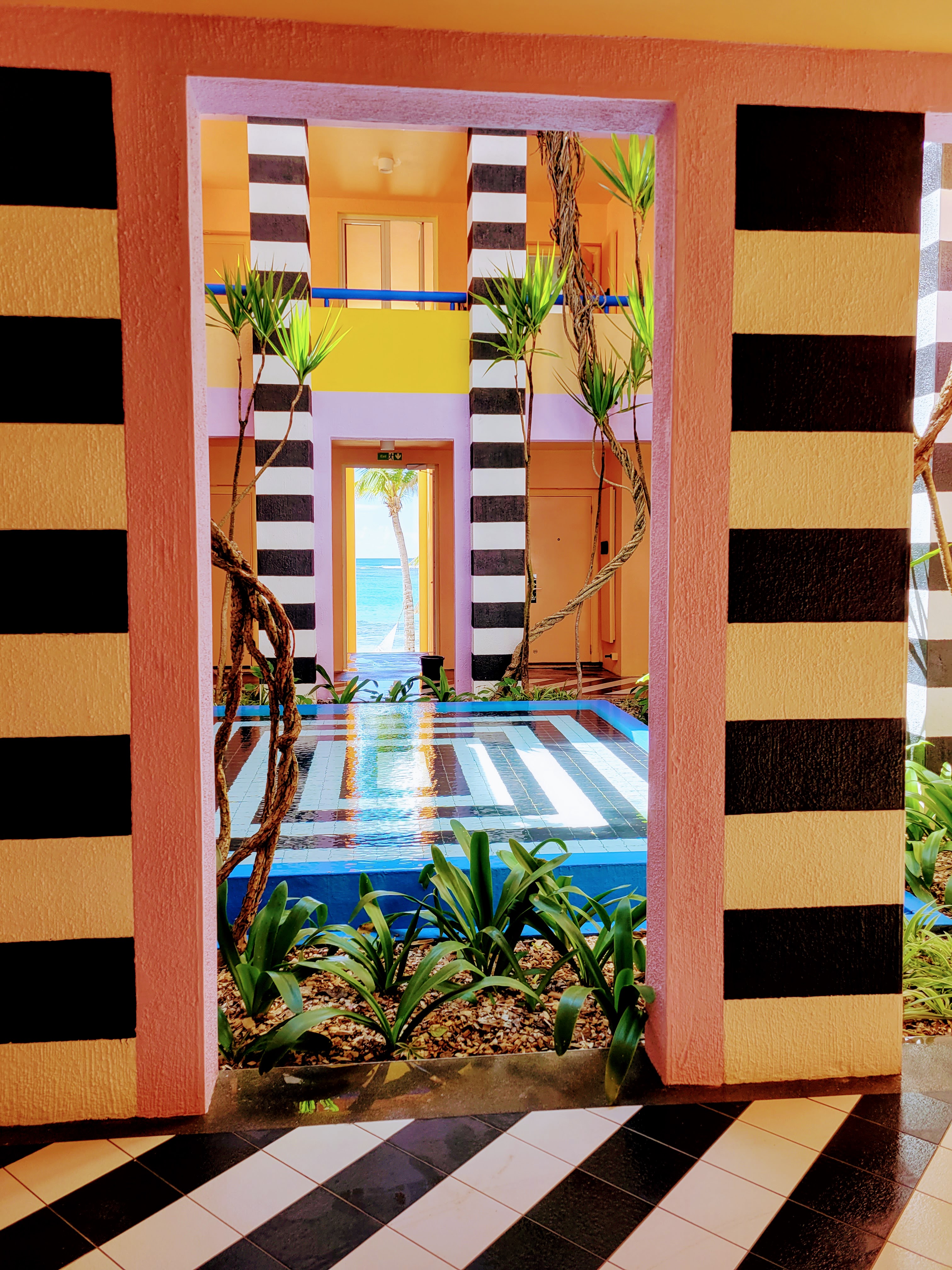
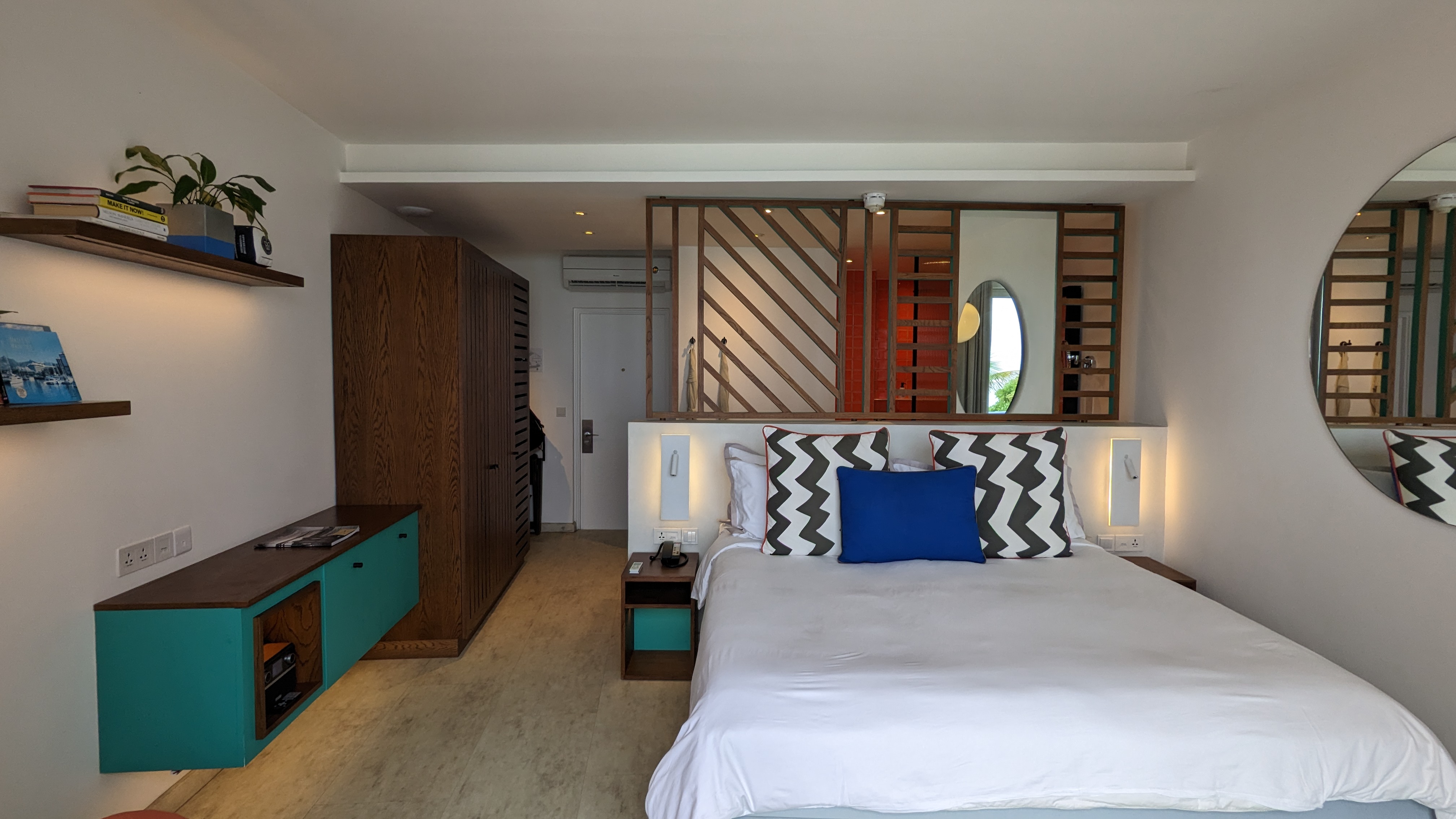
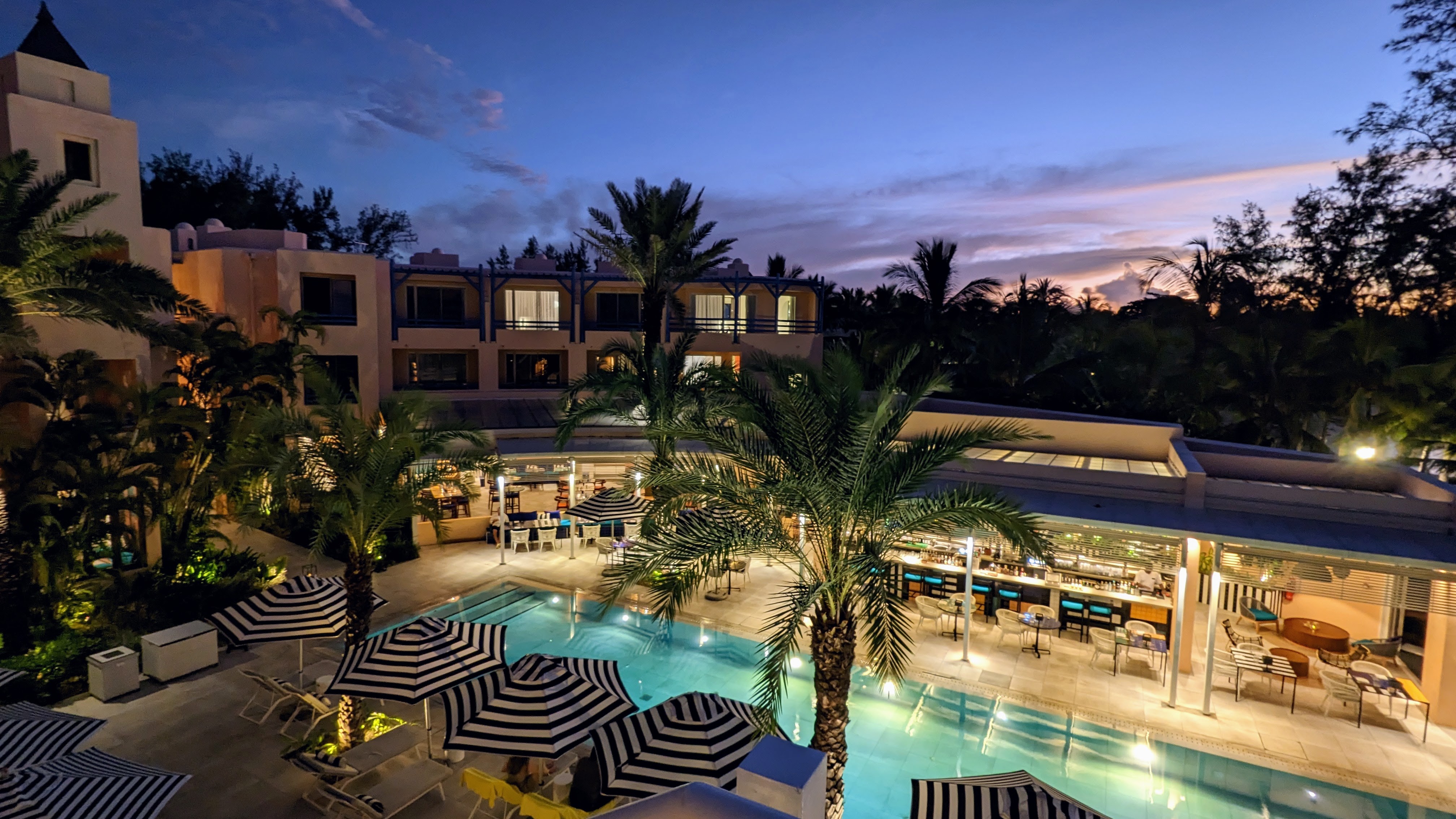
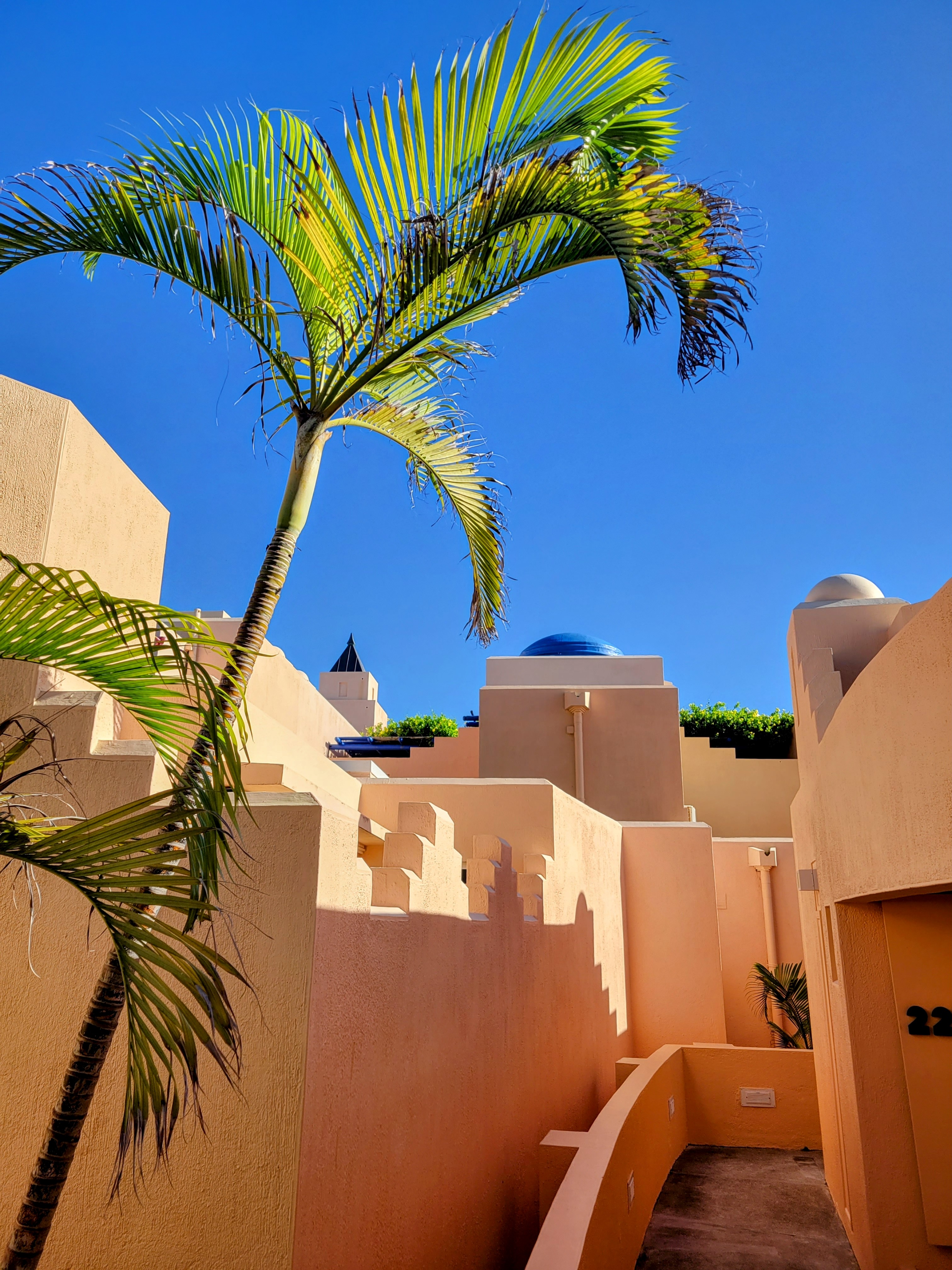
Mauritus is resort-oriented and most people will choose their resort and spend a lot of time there and so where to stay exactly might be less important to some but for those who want to explore independently, where to stay is important. We recommend dividing up your time between a few spots if possible.
Safety in Mauritius:
The Government of Canada Travel Advisory for Mauritius is “Take normal security precautions”, which is the lowest advisory possible. Overall, we felt very safe in Mauritius but we were also mindful of following precautions we take in most places to minimize opportunities for crime in general. i.e. don’t leave things unattended on the beach, don’t leave things in the car, don’t walk in dark and uncrowded places at night, etc.
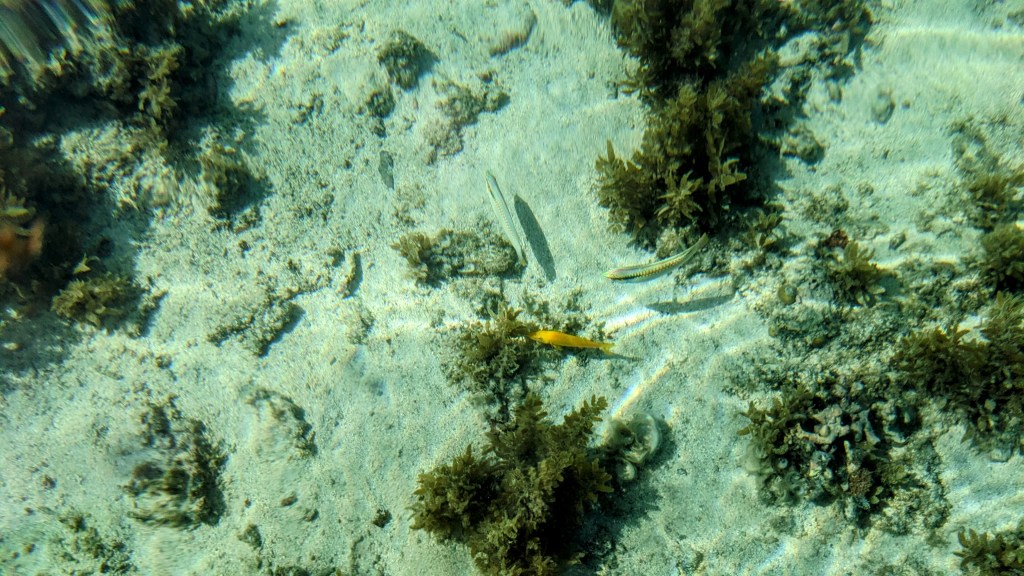
As for things that can kill you, there are few in Mauritius but stonefish and lionfish are present and snorkelers and divers need to be mindful of that. We did see a lionfish while snorkeling and steered clear of it and from research, lionfish end to defend themselves when threatened instead of seeking out to attack people.
Infrastructure:
In 2017, Mauritius was able to eradicate extreme poverty but poverty and inequality continue to exist in Mauritius. Residents have access to health care, education, and the political system seems to be stable (parliamentary democracy).
The tap water is drinkable, although we don’t recommend drinking it to avoid potential illness since you are not used to it. Being able to drink tap water also brings peace of mind because you don’t have to worry about contaminated water as much in food and how things are washed, in our opinion and from experience.
The grocery stores and shopping options are very modern and some might be nicer than the ones we have here in North America. We were able to easily find items we needed to purchase very easily and at reasonable prices, like bandaids, bug spray, sunscreen, etc.

In some areas and types of businesses, there is the “island time” thing happening: service can be slow (…but generally good and friendly), hours of operation are often inaccurate, and many businesses will say they are open 7 days a week but choose when they want to open or close. You definitely need to be patient and always have a back-up plan as we have learned and experienced.
Overall, we were impressed with the infrastructure in Mauritius. Some things were very modern and others were not which made for an interesting and diverse experience.
Languages Spoken:
Mauritian Creole is a French-based Creole and is estimated to be spoken by around 90% of the population in Mauritius. French is the language that tends to be used in education and media, while English is the official language in Parliament, however members can still speak French. Find out more about the languages spoken in Mauritius here.
Most of our interactions were in English but it did seem people preferred speaking French overall. People also assumed we were French tourists but quickly realized that while we did speak French, it was different. People were curious about our French due to the accent and different sayings. Overall, we had no issues with communication while in Mauritius. If you are visiting, make sure to brush up on your French!

While it is not necessary, you can find out more about Mauritian Creole and learn a few words and phrases by consulting this guide.
Foods and Drinks to Try:
As mentioned above, tourism in Mauritius is very resort centric but it is possible to leave the resort and explore on your own or via tour. If you explore on your own, you will have access to some more off-the-beaten-path and unique experiences.
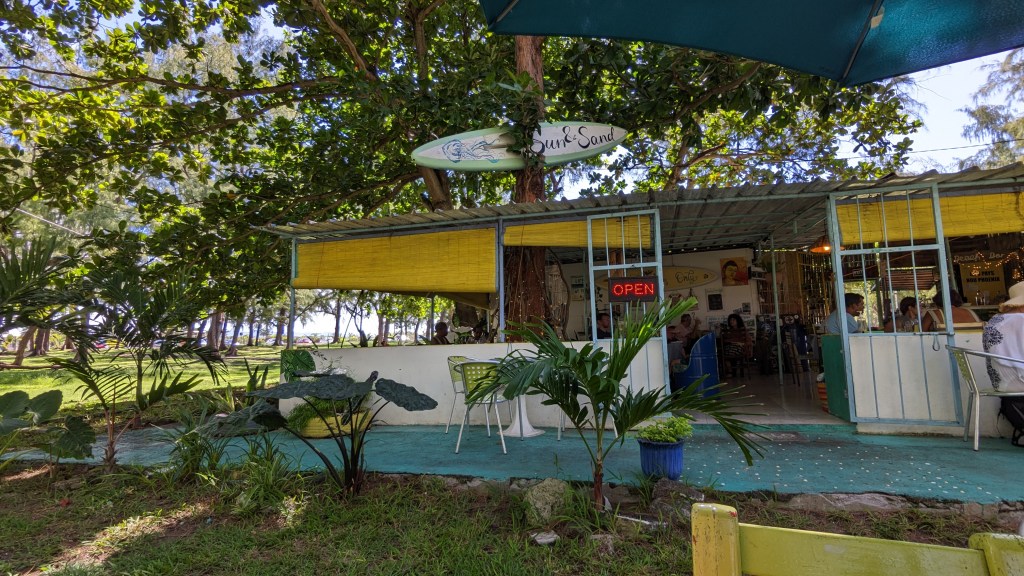
Sun and San Beach Restaurant and Bar in Belle Mare 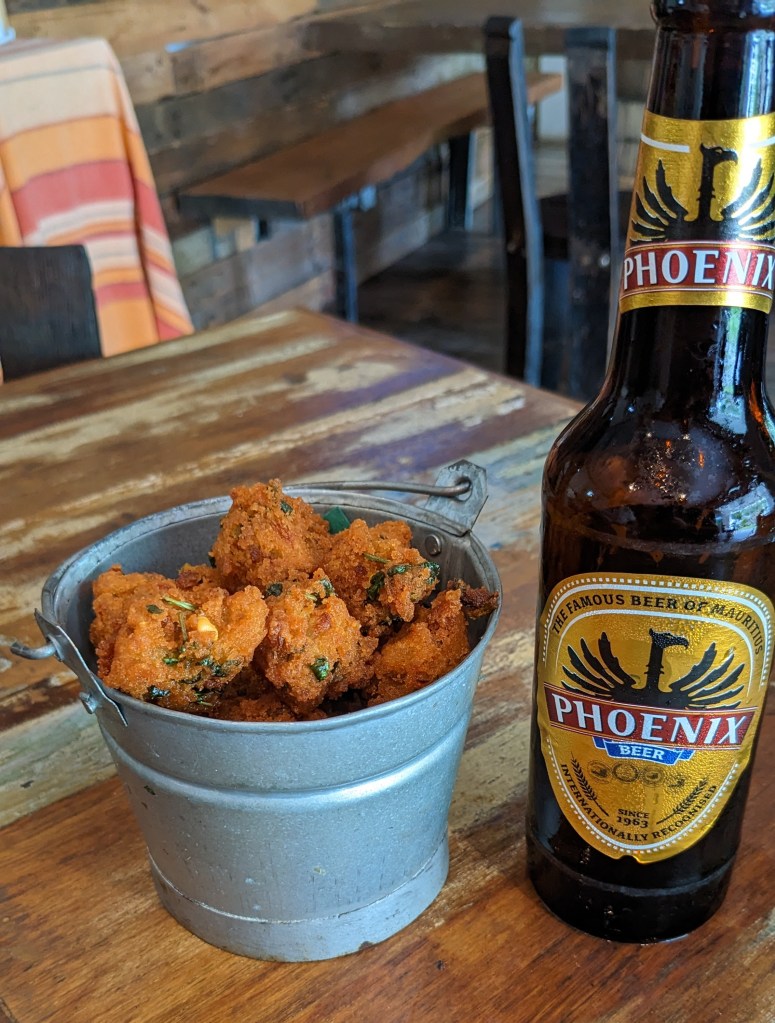
Gateau piment at Creol Shack 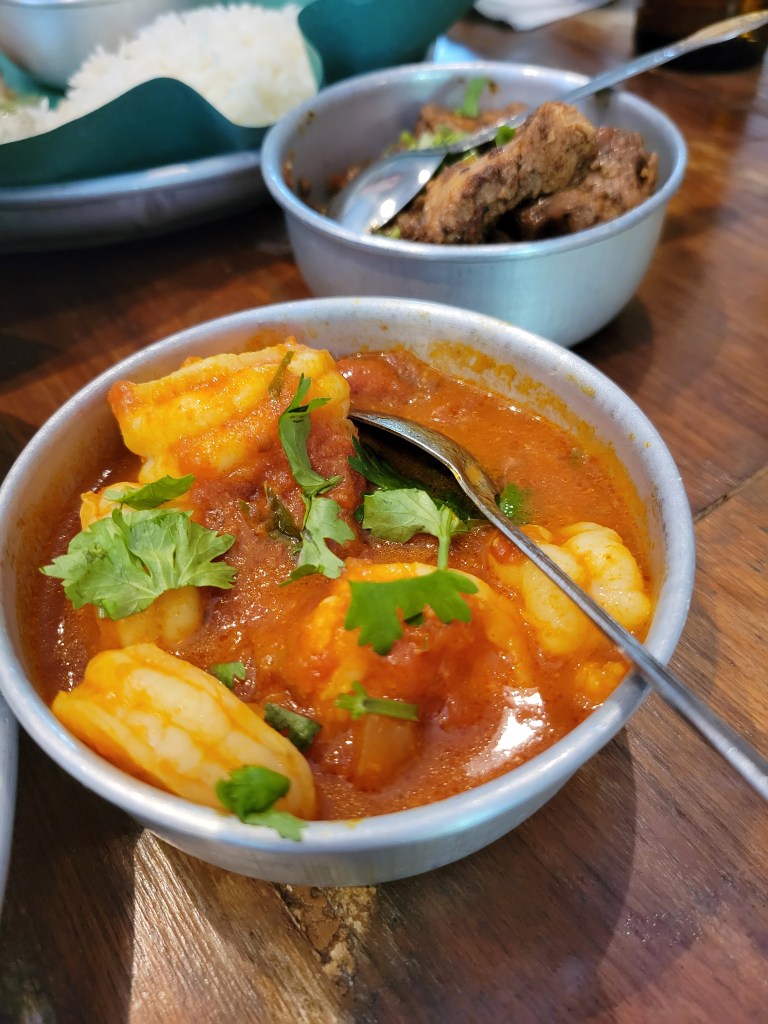
Shrimp rougaille and chicken curry at Creol Shack 
Jason at Flying Dodo Brewing Company 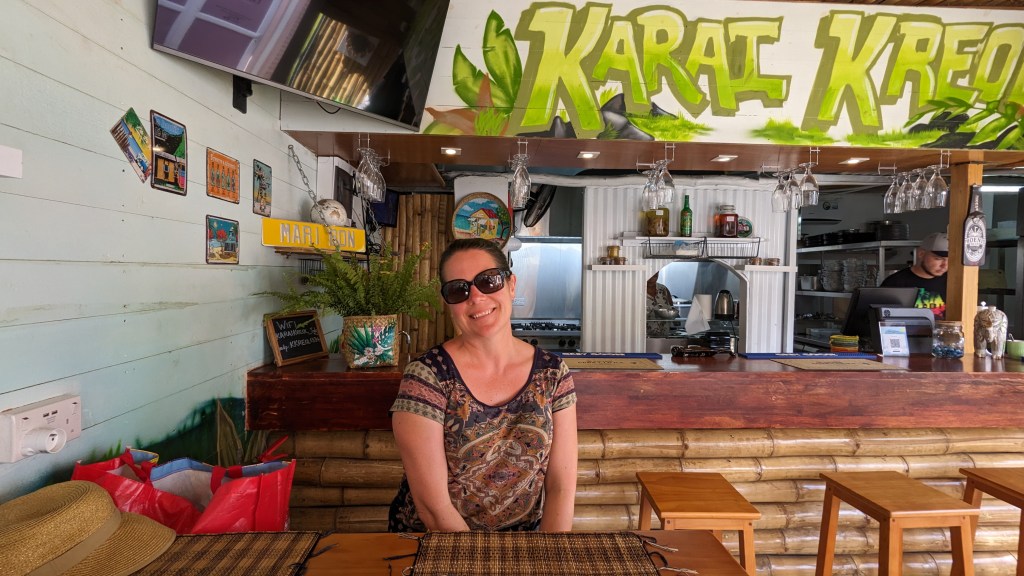
Max at Karai Kreol 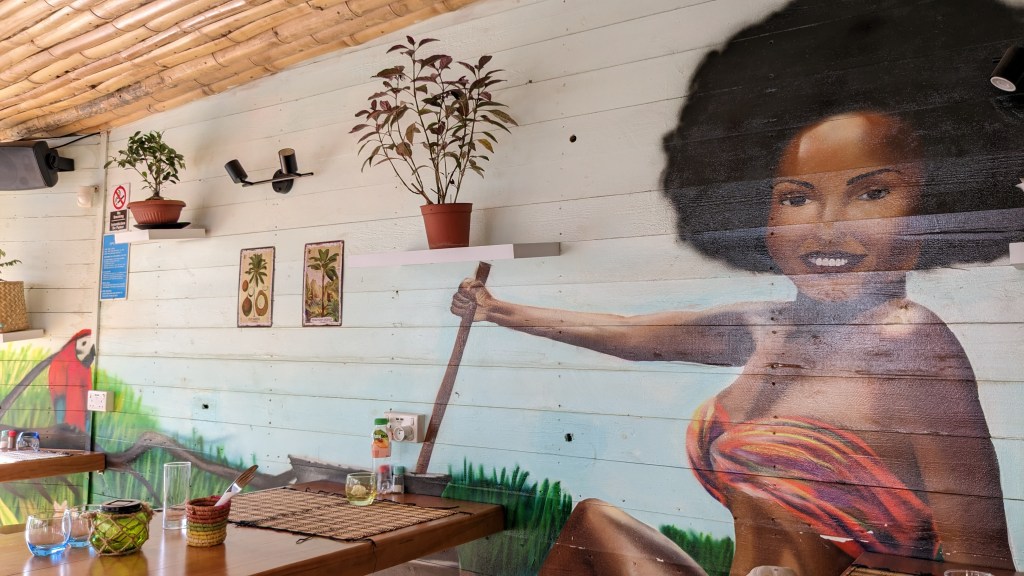
Mural at Karai Kreol 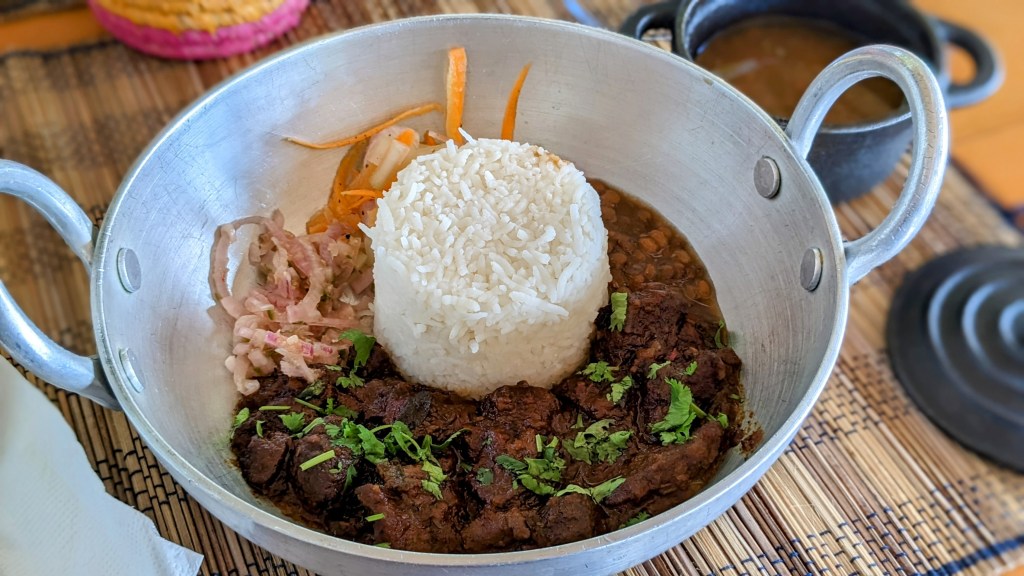
Salmi cochon marron at Karai Kreol 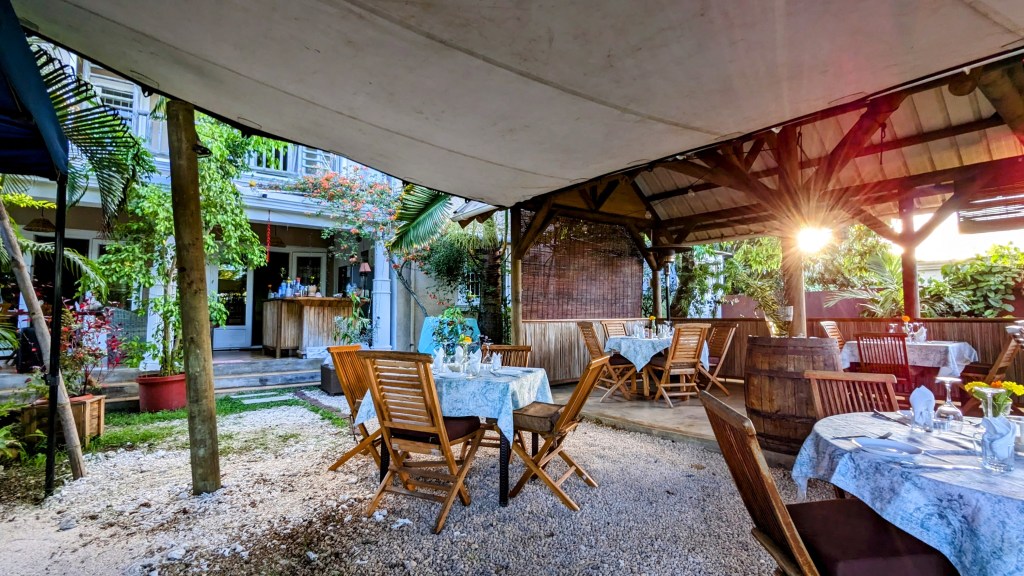
Outdoor dining at Table D’hote Mami Sophie 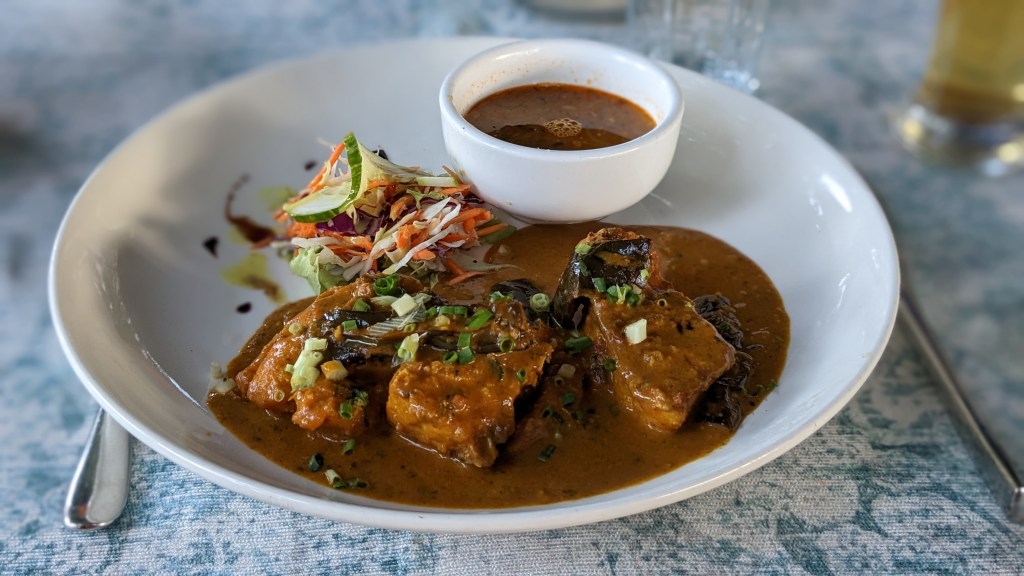
Fish curry at table D’hote Mami Sophie 
Mauritian octopus salad at table D’hote Mami Sophie 
Shrimp dish at table D’hote Mami Sophie 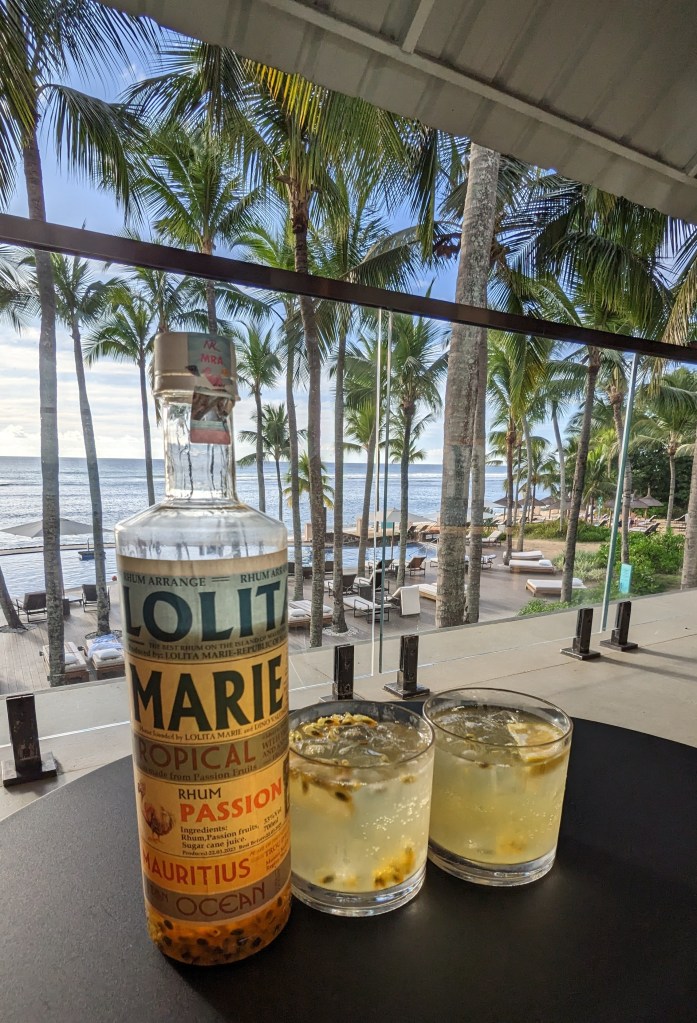
Rhum arrange Lolita Marie 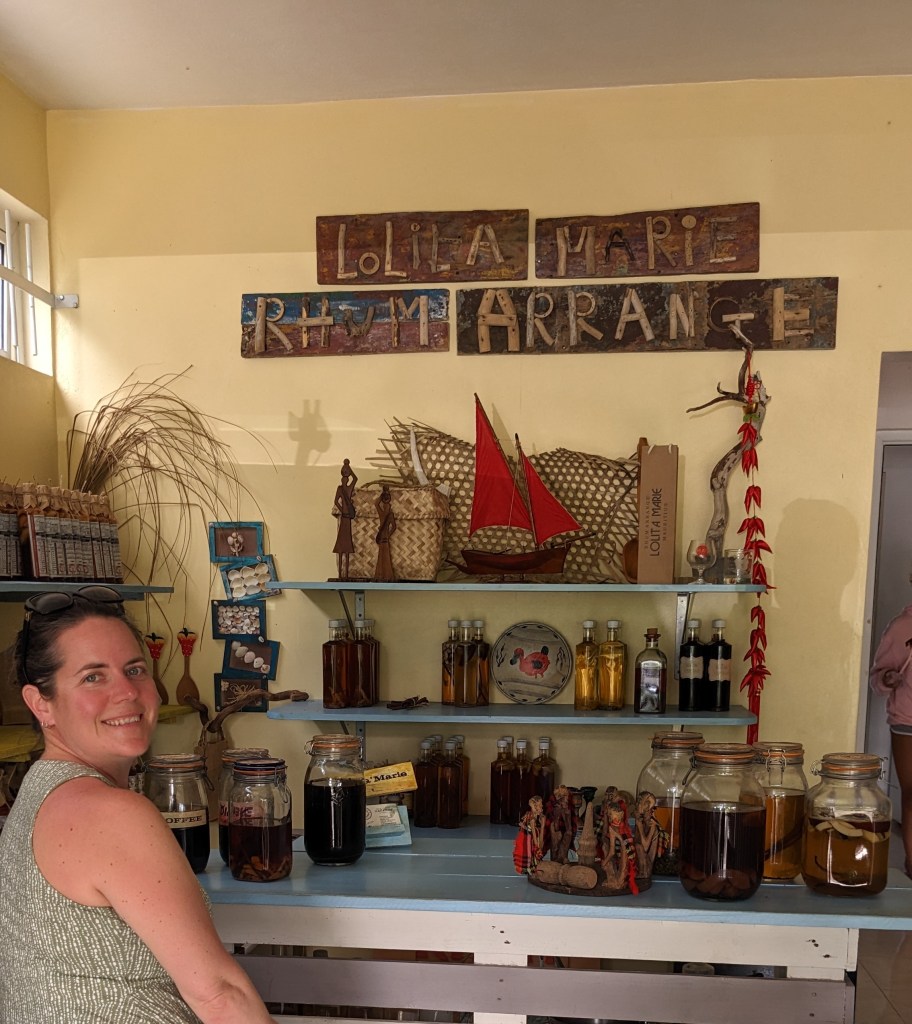
Tasting at Rhum arrange Lolita Marie 
Dewa and Sons Dholl Puri 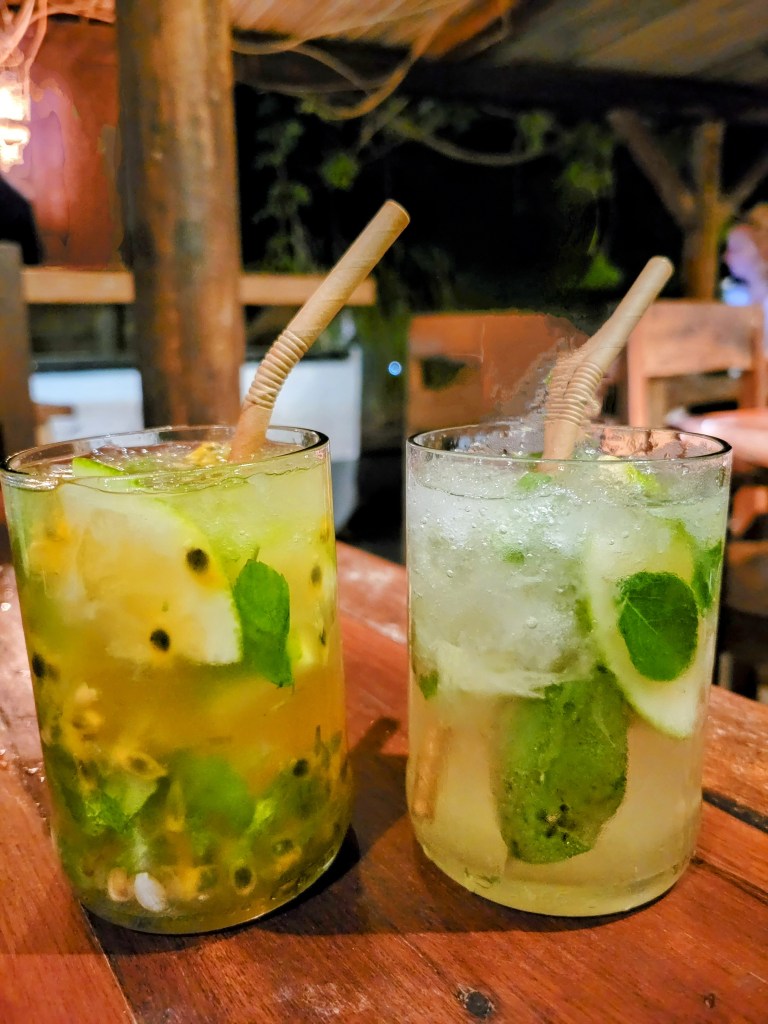
Cocktails at Wapalapam 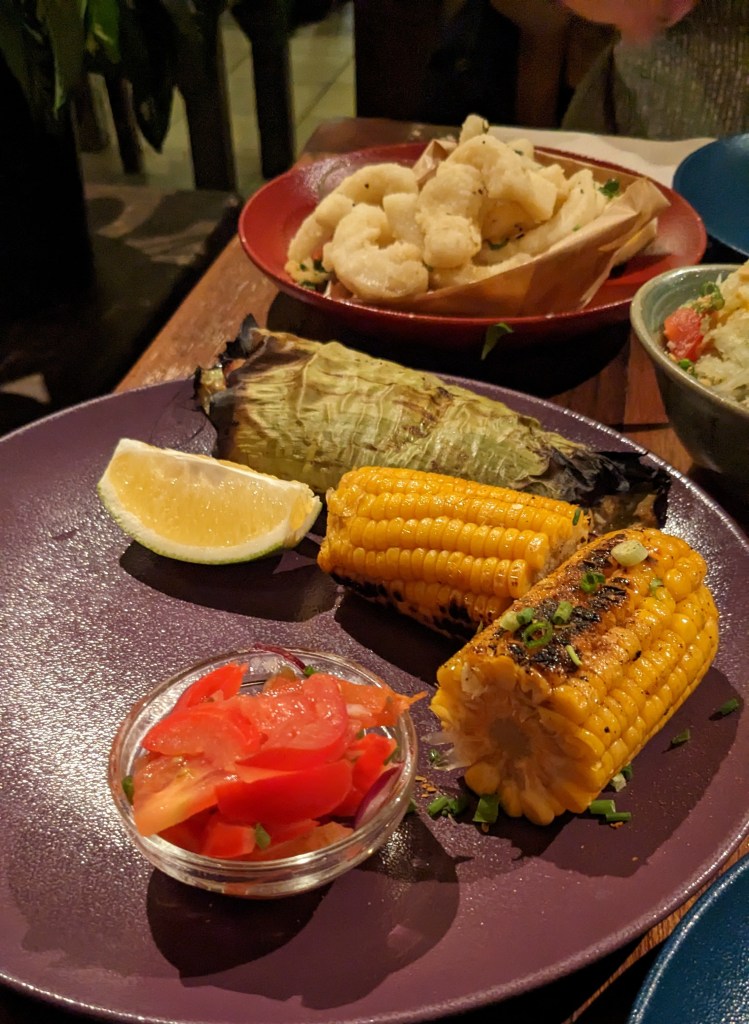
Fish in banana leaf, calamari, and papaya salad at Wapalapam 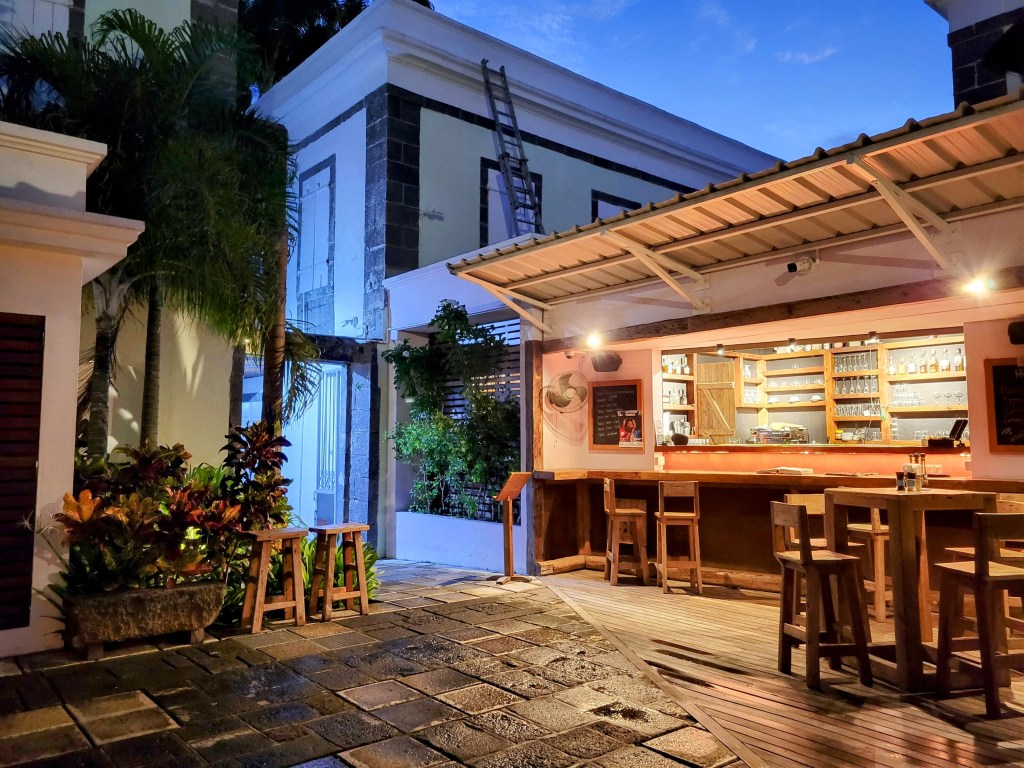
Wapalapam in Port Louis
- Have Dholl Puri at Dewa & Sons: Dholl puri is a popular local snack; it’s a pancake made from yellow split peas seasoned with cumin and turmeric and grilles on a flat pan before being wrapped around butter bean curry, spicy Creole tomato sauce, pickled vegetables and chutneys. We tried a few dholl puris and our favorite was most definitely the one at Dewa & Sons. They have locations across the island with the most accessible one at a mall in Grand Baie.
- Drink craft beer at Flying Dodo Brewing Company: Yes, there is a craft beer brewery with a tasting room in Mauritius! Flying Dodo Brewing Company has been making about 20 beers per year since 2011 on the island.
- Sample rhum arrange: Rhum arrange is more or less infused rhum and it is very popular in Mauritius. We sampled some at Rhum Arrange Lolita Marie, a small family-owned business on the east side of the island near Salt of Palmar. We had the pleasure of meeting Lolita Marie, her husband, brother and daughter during our tasting experience. We purchased a bottle of passion fruit for 1,200 Mauritian Rupees ($36CAD). You can get rhum arrange elsewhere on the island some of the organized tours to Chamarel offer this but if you can, stop in to see Lolita Marie.
- Try a ti punch cocktail: Made with rhum agricole, lime, and sugar cane syrup, ti punch is a popular drink in Mauritius.
- Try Alouda, a Mauritian-style milkshake: Alouda is a traditional beverage originating from Mauritius. It is typically prepared with a combination of basil seeds, agar jelly, milk, and vanilla. The ingredients are combined, then served over ice. You can find it at the market in Port Louis.
- Discover Mauritian Creole cuisine: We focused many of our meals on trying Mauritian Creole cuisine as it is all homecooked and incorporates many different flavours using local ingredients. The most common dishes are “rougaille” or “vindaye” which are the sauces/spice blends used to season the seafood, poultry or meat. More information here. The places we enjoyed Mauritian Creole cuisine are: Karai Kreol in Grand Baie for lunch, Creole Shack in Flic en Flac for lunch (set menu of appetizer, main, and dessert **reservations are a must), and Table d’hôte chez Mami Sophie in Camp Ithier for dinner ( some Creole but also fusion **reservations are a must)
- Snack on gateau piments: These are delicious little flavor bombs of fried split peas, chillies, and curry leaves popular in Mauritius. We had them at the Creole Shack but there is a little place in Moka called “Gato Rozil” that does them too and it’s very popular.
- Hang out and eat at a beach hut restaurant: There are many little beach hut restaurants in Mauritius serving up everything from fried calamari, curries, grilled seafood, and “mine bouille ou frite” (boiled or fried noodles) in Mauritius. Most are open for dinner and some are open for lunch. They are owned and operated by local people and are good for casual and affordable food on the beach.
- Eat at Wapalapam for Indian Ocean influenced cuisine: For off-resort dinner, Wapalapam is a great choice if you’re staying at Le Morne or exploring Port Louis. They offer really good cocktails and high quality food in a casual setting (no dress code but beachwear is not suitable).
- We didn’t visit these places on our recent trip but would consider them in the future: Bois Cheri Tea Factory and Museum, Takamaka Boutique and Winery, and Port Louis Street Food Tour.
- In addition, we did enjoy other meals/snacks that were not Mauritian: tapas at Moustache Tapas and Wine Bar in Tamarin, biltong at The Butcher Block in Grand Baie, burgers at Nomad in Riviere Noire, poke bowls at Bloom in Grand Baie, and greek food at The Trojan Horse in Grand Baie. More information is on our Google Map below.
Summary:
After waiting for three years to go on this trip, we finally did, and must say that Mauritius is truly one of the most beautiful and fascinating places we’ve been to! As we sat at the airport lounge waiting for our trip back to Canada, we went through our Google Maps and realized that not only did we enjoy our trip to Mauritius, we ran out of time to do everything! We hope to be back to explore more one day and hope this guide helps you plan your trip and make the most of your time in Mauritius.
Have you been to Mauritius? Did you enjoy your trip? Any tips to add?
 weleavetoday.com
Leave a comment