
Our third journey to Costa Rica led us to the underrated Caribbean coast and its hidden gems, Puerto Viejo, Punta Uva, and Manzanillo. Here, we share tips for visiting the area as a solo adventure or integrated into your itinerary.
1) When to visit:
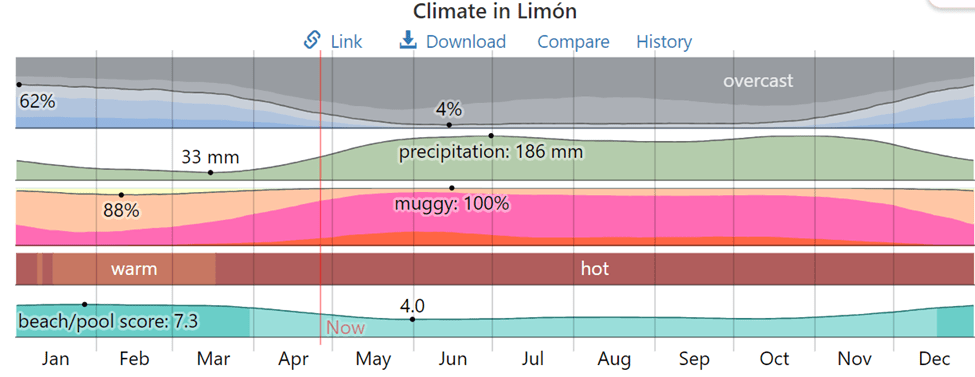
The best time to visit for most people is during the dryer season: the dryer season is from December to April. We visited during late December and experienced no rainy days, but it was cloudy sometimes. We were also told to expect rain at least once a day, but despite seeing dark clouds occasionally, our visit was rain free!
2) How long to stay:
Determining how long to stay in one place is a matter of preference, travel style, and circumstances. We enjoyed our 4 nights and 4 days here. We had enough time to relax and also explore the Puerto Viejo area.
If you want a more leisurely pace, 1 week would be a good option too. Due to how difficult it is to get to Puerto Viejo, we think a minimum of 3 nights would be a suitable option, but 4-5 more optimal.
There are a number of excursions you can do to explore the area, and some do take half to a full day, like going to Bocas Del Toro (islands in Panama about a 4 hours via bus and boat), visiting the parks, the nature reserves, snorkeling, coffee farms, and some of the villages. More about that below!
On this trip, we spent 2 nights in San Jose to explore for one day, 4 nights in Puerto Viejo (we stayed in Punta Uva), 5 nights in Brasilito, 4 nights in Playa Avellanas, and 2 nights in Las Catalinas.
3) Getting Here:
As much as we enjoyed our time visiting this part of Costa Rica, getting here is the biggest downside. Had things run smoothly, our comments would be different, but we had a negative experience that made us aware of the logistical challenges of travelling within Costa Rica. When booking this part of the itinerary, we had contemplated driving, taking a shuttle bus, or flying. We decided to fly as it was the quickest option, and avoided a long drive in a rental car or bus.
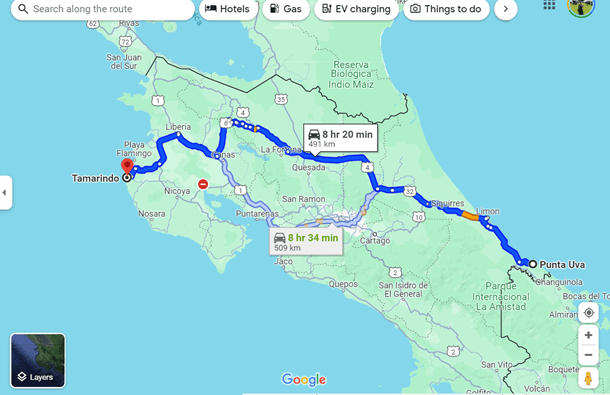
Due to the ongoing road construction, it can take much longer than 4 hours to drive to and from the Caribbean Coast from San Jose. It would also have required a lot of driving had we rented a car to drive to the Pacific Coast. People say it can take up to 12 hours, depending on traffic and road conditions.
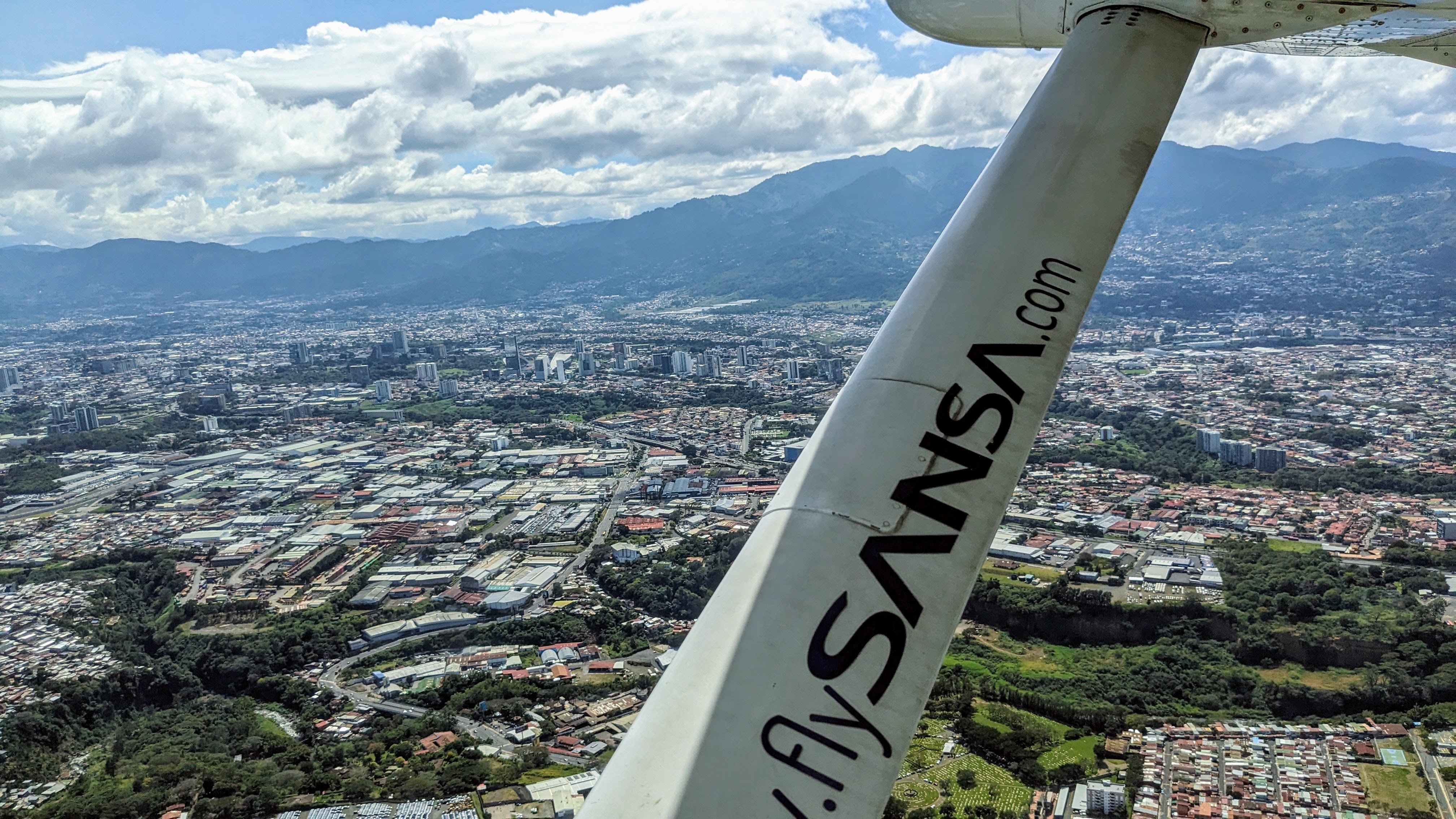
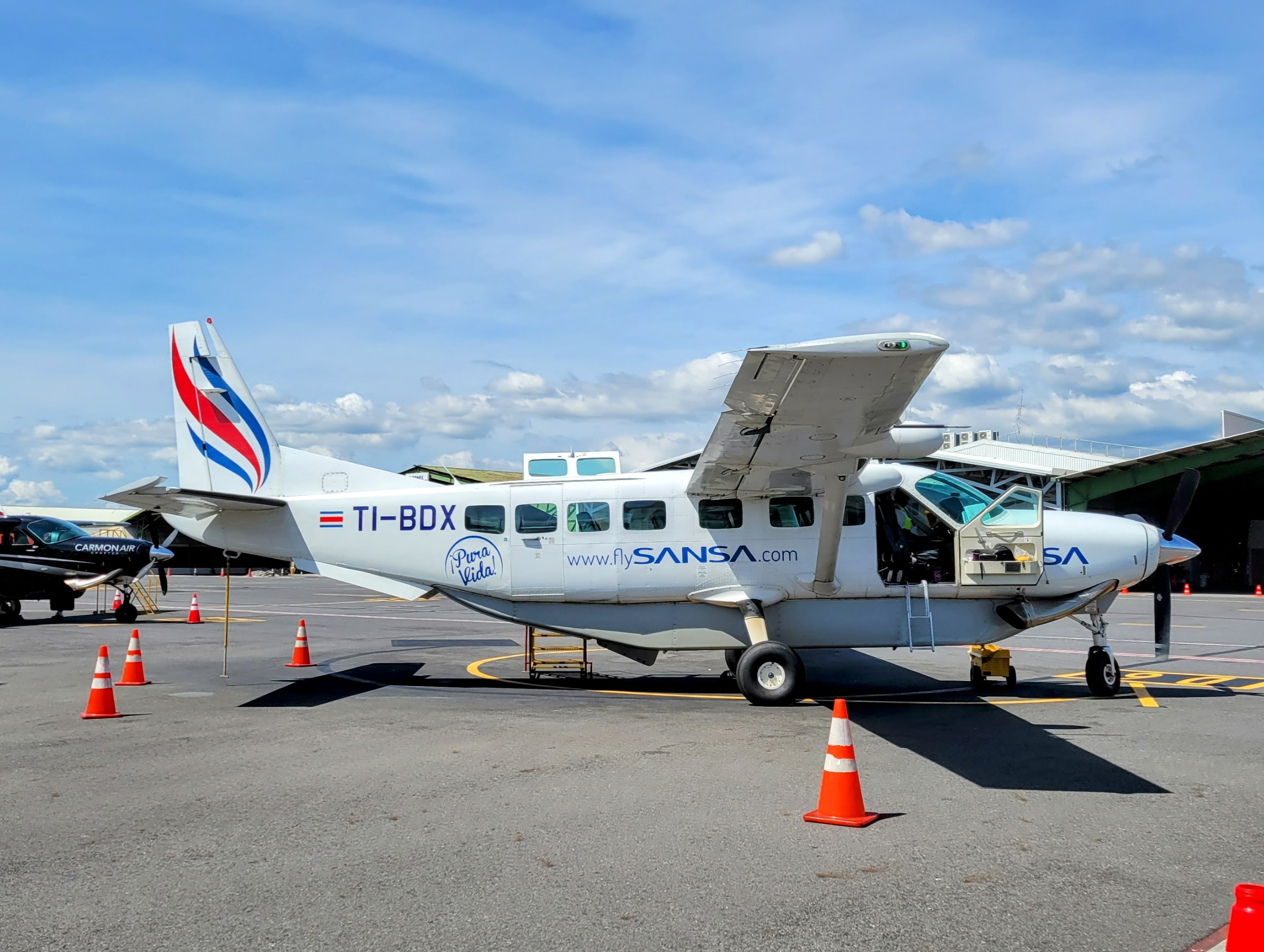
We usually fly into LIR – Liberia, but flew into SAN – Juan Santamaría International Airport due to our planned visit to Puerto Viejo/Punta Uva this time. After a brief layover to explore San Jose, we flew to LIO – Limon International Airport with Sansa Airlines. Sansa is a regional airline that offers scheduled and charter flights in Costa Rica to main tourism destinations using a Cessna Grand Caravan fleet.
The flight itself is pretty short, it’s a quick 45 minute hop to Limon, and then we took a transfer to our hotel in Punta Uva, about a 1-1.5 hour drive.
Unfortunately, Sansa cancelled our flight back to San Jose, which would cause us to miss our flight to Tamarindo. As it was the busy holiday season, there were no seats on flights to Tamarindo for days. As a result, we ended up taking a taxi at 04:00 to San Jose to catch our Sansa flight to Tamarindo. From speaking with people, these types of flight cancellations are common.
From our experience in the taxi ride, the road conditions vary from easy to more challenging. We did not experience any construction delays at the time of our journey, thankfully. The difficult parts of the drive are closer to San Jose, as you start to go up and down the winding mountain passes and narrow roads with deep culverts. The traffic is also heavy with large transport trucks, and people who want to drive very fast to pass them, often at times that seem unsafe based on our North American driving standards. We would not recommend driving yourself unless you are an experienced and defensive driver, unfazed by long road trips in mountain terrain.
TIPS:
- If you are planning to visit and fly with Sansa, be careful if you have connections to other destinations in Costa Rica, and even to get back home on an international flight.
- If you are driving yourself, we recommend a higher clearance vehicle to see the potholes better. A 4X4 is not required for this drive.
4) Cash VS Credit Card:
We used credit card and cash, but used cash more often here than in Guanacaste. At more touristy places, credit cards are widely accepted, but often they do not let you add the “propina” (tip) to the card and so you need to have cash for that. Also, many places charge a 10% service fee, which means you can factor that in when figuring out how much to tip. Tipping culture is not prominent in Costa Rica, and applies more at places geared for US tourists. We also always asked people to charge us in Colones instead of US Dollars, but billing in US dollars is less common on the Caribbean Coast.
5) Budget:
Overall, the Caribbean Coast of Costa Rica is less expensive than Guanacaste. We also have noticed inflation, the poor conversion of Canadian Dollars to Costa Rican Colones, and increasing popularity of Costa Rica making things more expensive each year we visit. The Costa Rica Colon has been doing very well the last little while. At one point, the Canadian dollar was equivalent to 500 Colones, and right now at the time of writing this in April 2024, it’s 372.
Travelers will find options at various price points here: Puerto Viejo has a backpack/hostel scene, and the areas along the coast have mid-range to more expensive accommodation options. The same can be said for food and drinks. For example, a meal at a local soda with a couple of beers was about $40USD, a meal at our hotel was close to $100USD, and other casual meals were about $10USD-$20USD.
6) Getting Around:
Once you are in the area, you have a few options to get around: you can rent a car, an ATV, bike, walk, or take tuk tuks. We walked, biked, and took tuk tuks to explore the area. It was quite cheap to rent a bike, about $3.00 per day, but make sure to check the bike chains, as the conditions of the bikes can vary a lot.

Tuk tuks are more or less fixed rate: it was about $10 each way when we went into Puerto Viejo from our hotel in Punta Uva.
7) Safety:
The Government of Canada Travel Advisory for Costa Rica is “Exercise a High Degree of Caution”, which region specific advisories. Overall, we felt safe here and feel that taking normal precautions is adequate, i.e. don’t leave things unattended on the beach, be careful when walking/biking at night due to lack of lights on the road, and practice good mosquito avoidance practices (pack Deet based mosquito repellent).
8) Language:
Spanish and English are primarily spoken in Costa Rica. You can get by without speaking Spanish but it is recommended to know a few basic phrases (our preferred app to learn is Mosalingua). We found it similar to the Spanish spoken in Mexico as opposed to that spoken in South America based on our limited knowledge and experience. Like many places, Costa Rica has its own sayings and slang. Most people we encountered were more than happy to help us practice our Spanish and teach us some new words and phrases. And yes, you’ll encounter many people saying “pura vida” often which means “pure life”. Also, local people are known as “Ticos”.
9) Where to Stay:
Here are some recommendations about where to stay based on the options we researched and stayed at. There are not major resorts on the coast and most of the places to stay are small boutique style hotels ranging from 1-4 stars, lower budget options like hostels, and other types of vacation rentals.
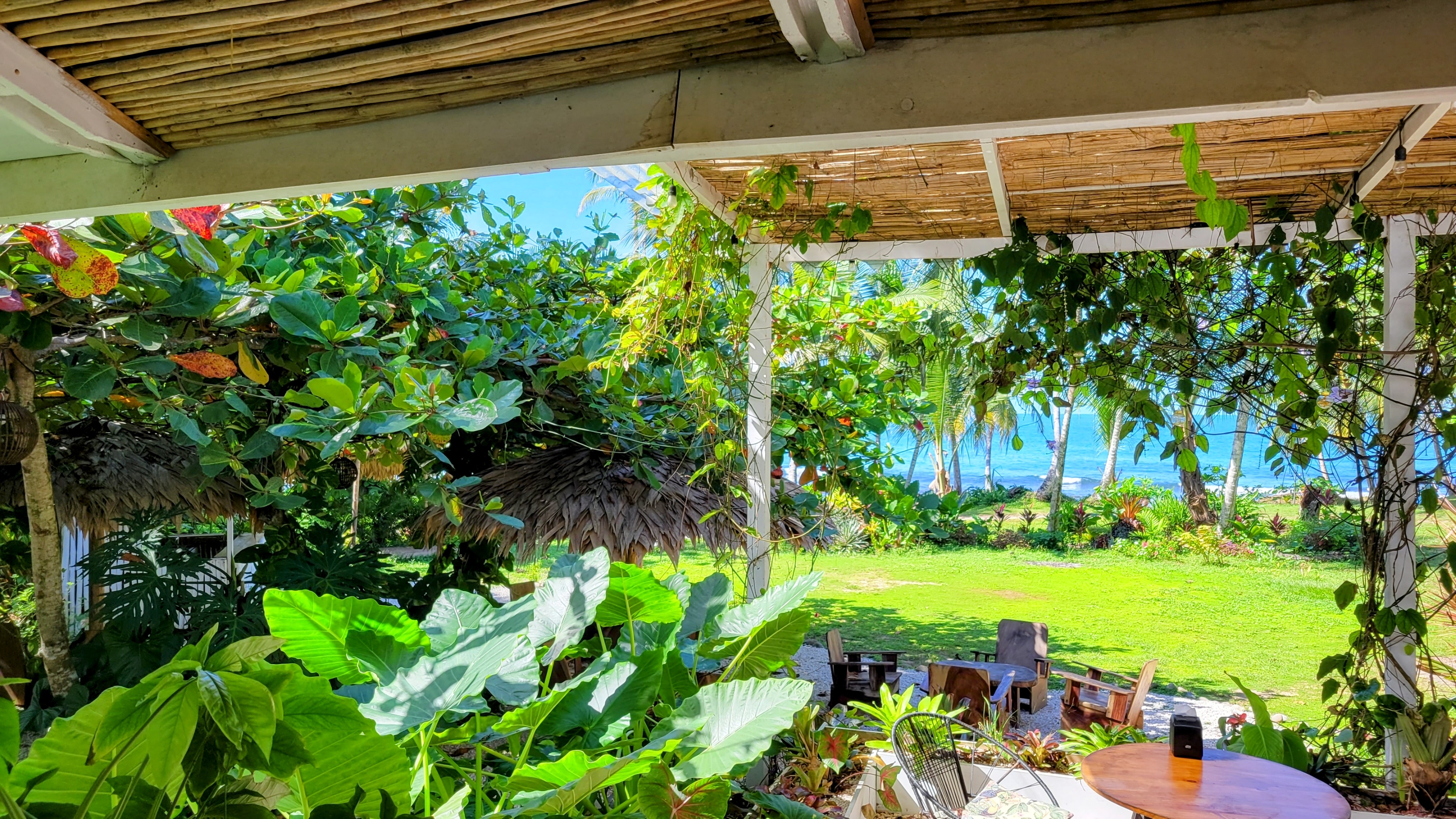
– aWà Beach Hotel: Located in Punta Uva, aWà Beach Hotel is a beach front boutique hotel with 10 rooms, a restaurant, and beach bar. The rooms vary from private bungalows to smaller rooms in the main building. The hotel is about a 30 minute bike ride to Puerto Viejo. We chose this hotel due to the location on Punta Uva Beach, which had calmer waves for swimming than some of the others.
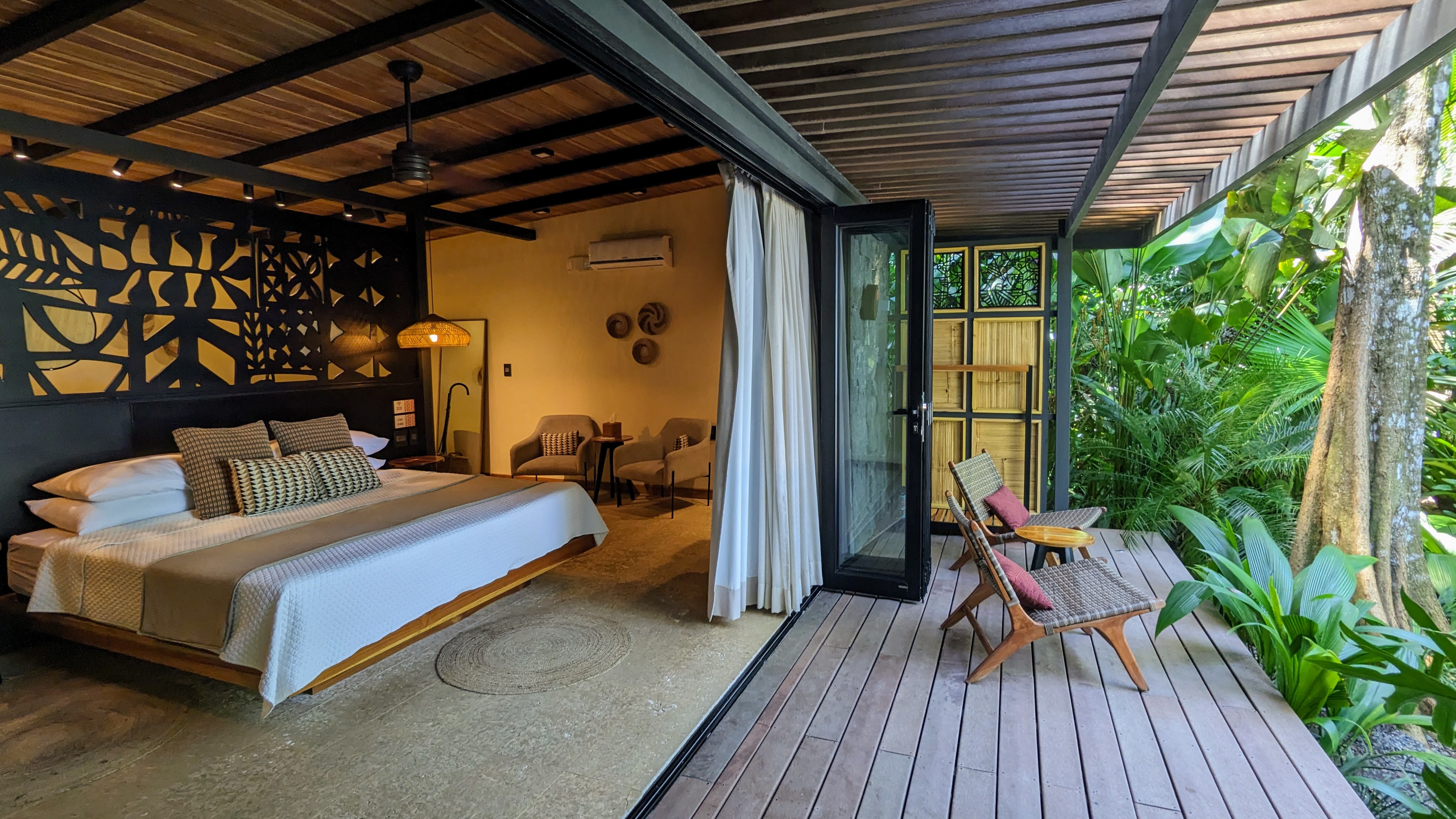
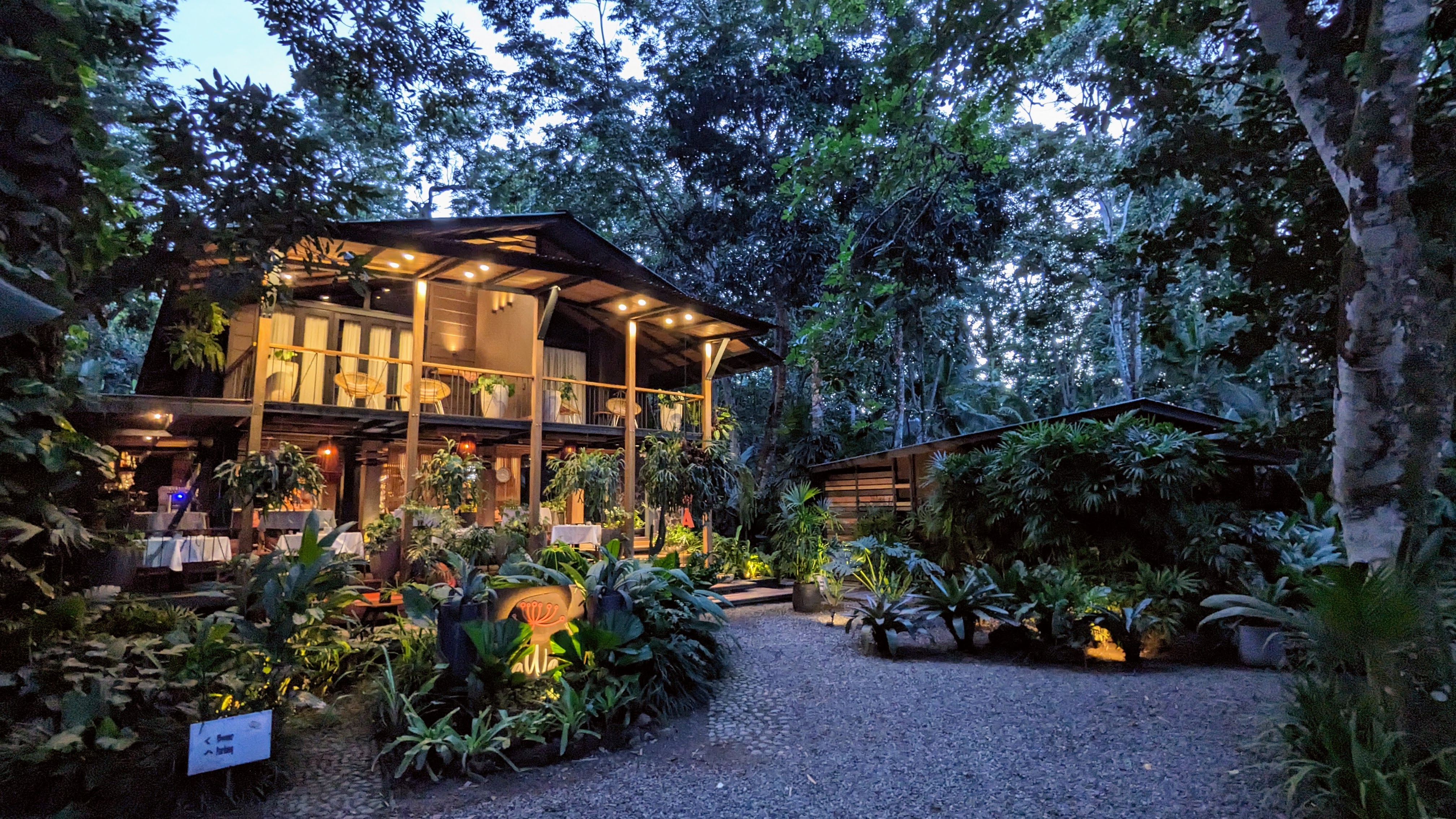
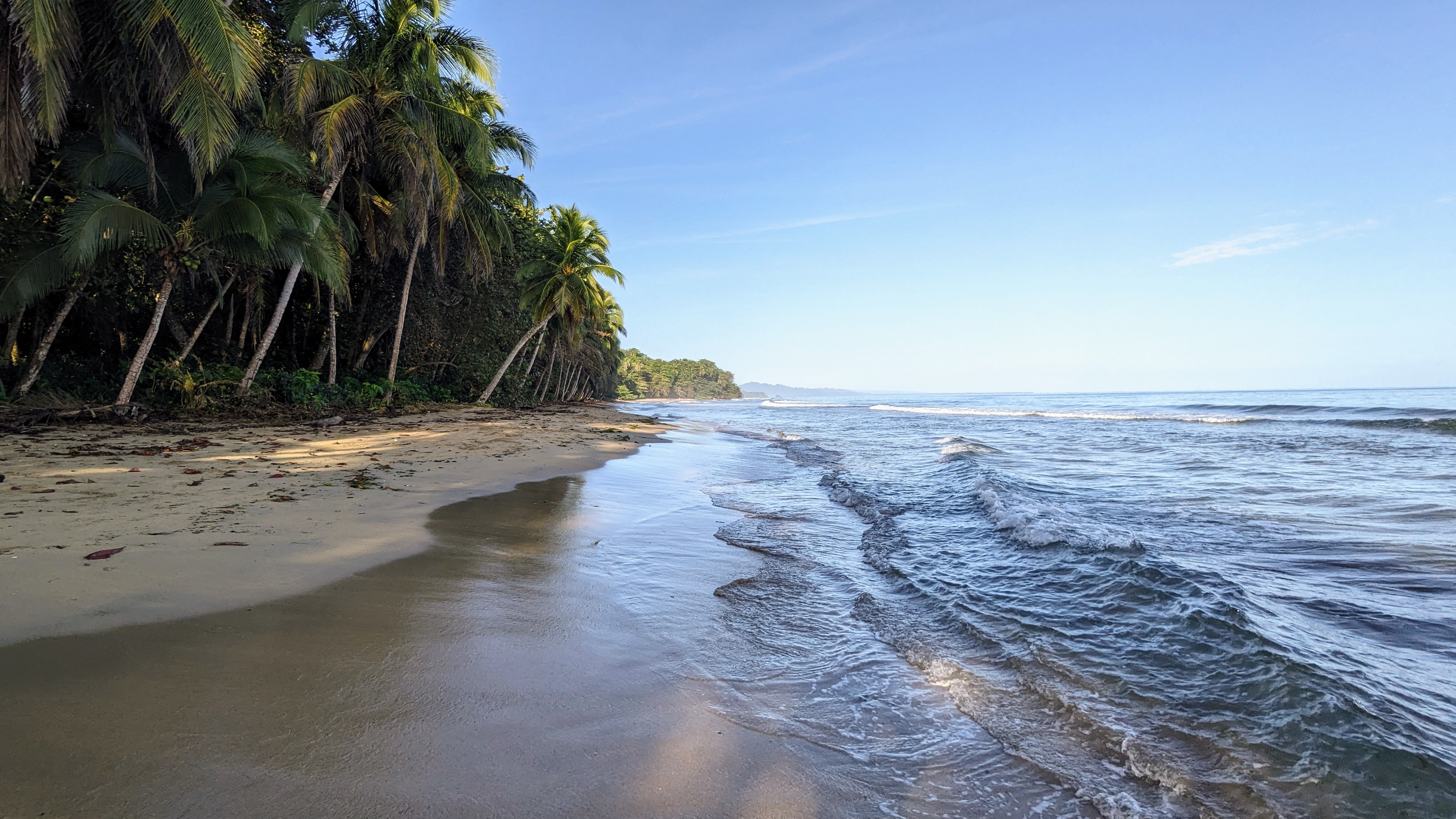
– Exôtico Beach & Rooms: Located closer to Playa Grande and the Manzanillo Beach area, Exôtico Beach Hotel is located a short walk to the beach and surrounded by lush jungle and gardens. This hotel is a little farther from Puerto Viejo, but offers a very quiet and peaceful setting. The hotel has a pool, a restaurant, a bar, and offers some spa treatments.
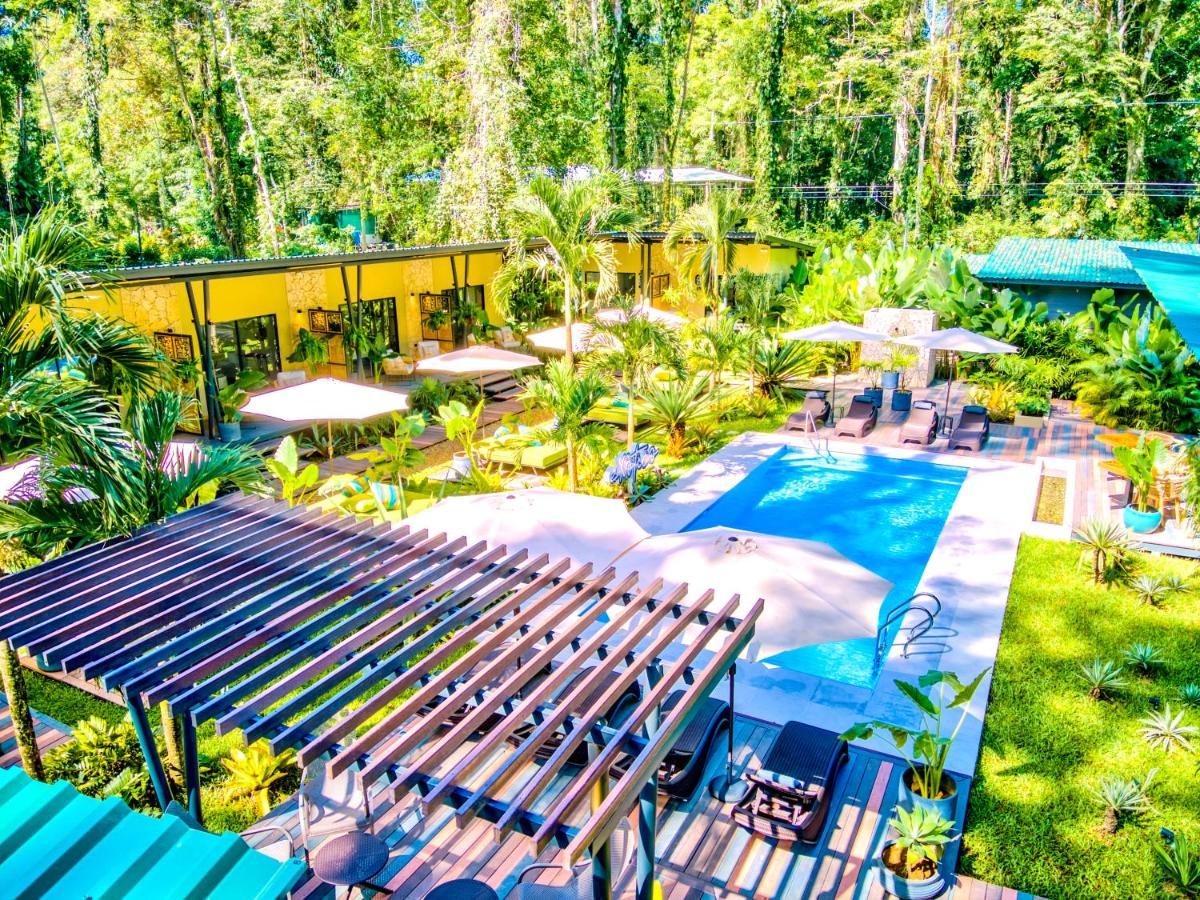
– Hotel Aguas Claras: Located a short walk from Cocles Beach, Hotel Aguas Claras is an adults only 5 star boutique hotel/resort. The 6 beachfront bungalows and 6 suites are decorated in a Victorian-Caribbean style. There are two restaurants on site, including popular Dalime Beach club. The hotel is a 20 minute bike ride from Puerto Viejo, and bikes are included in the rate.

– Umami Hotel – Adults Only: Located in Puerto Viejo town, Umami Hotel is a new adults-only hotel with modern rooms, a pool, and spa. The rate includes breakfast and a new restaurant has opened onsite. Those who want to be close to Puerto Viejo and enjoy the towns restaurants and bars will appreciate Umami Hotel’s location.
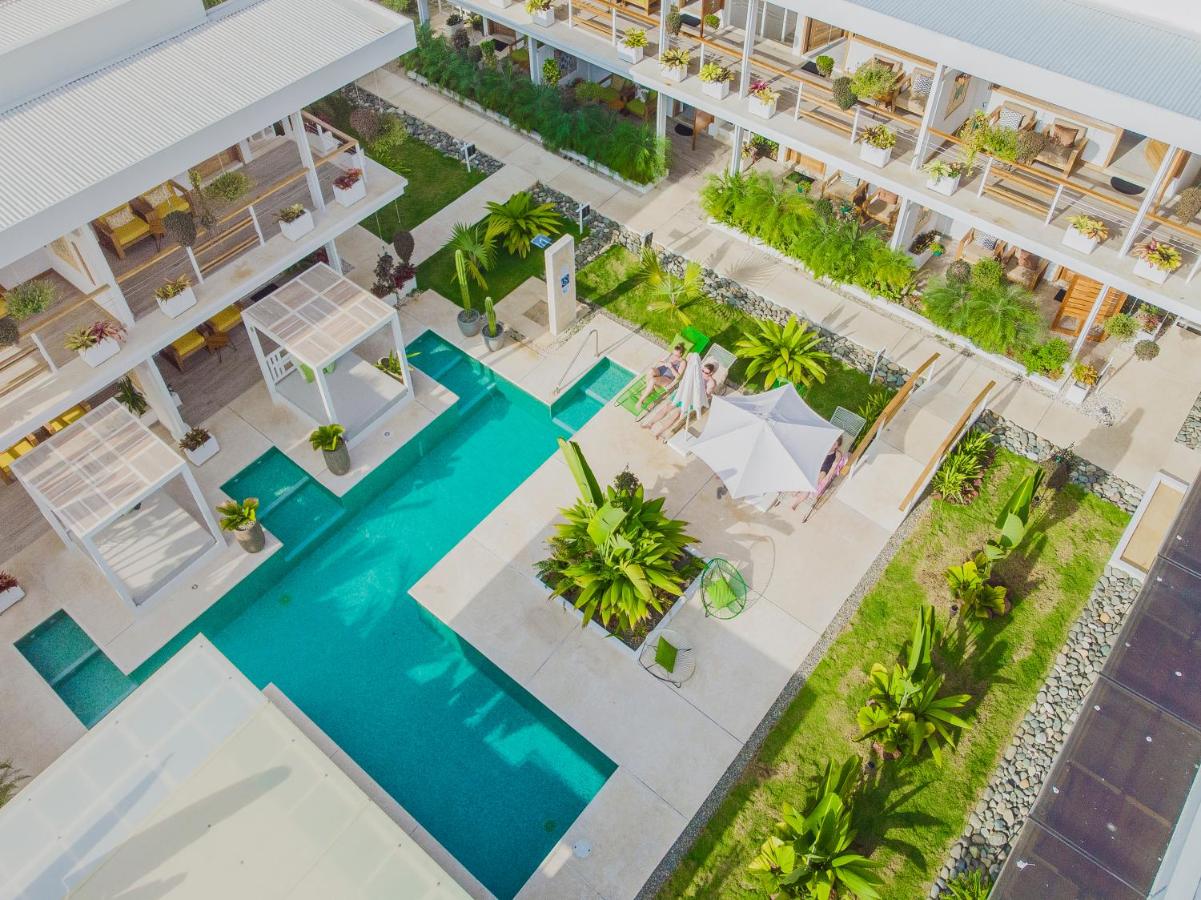
– Namu Garden Hotel and Spa: Located a short walk from Puerto Viejo centre, Namu Garden Hotel and Spa offers accommodations in a jungle setting with a number of rooms to choose from, some have private pools. There is also a pool, a restaurant, and spa on site. If being on the beach is not a priority, this is a good option. It is also about 1.4 km away from the popular Cocles Beach area.

Tip:
- If you are not renting a car or ATV and want access to restaurants, consider staying in Puerto Viejo or near Cocles Beach, as there are more options for food and drinks here, otherwise you will be stuck eating at the hotel restaurant often.
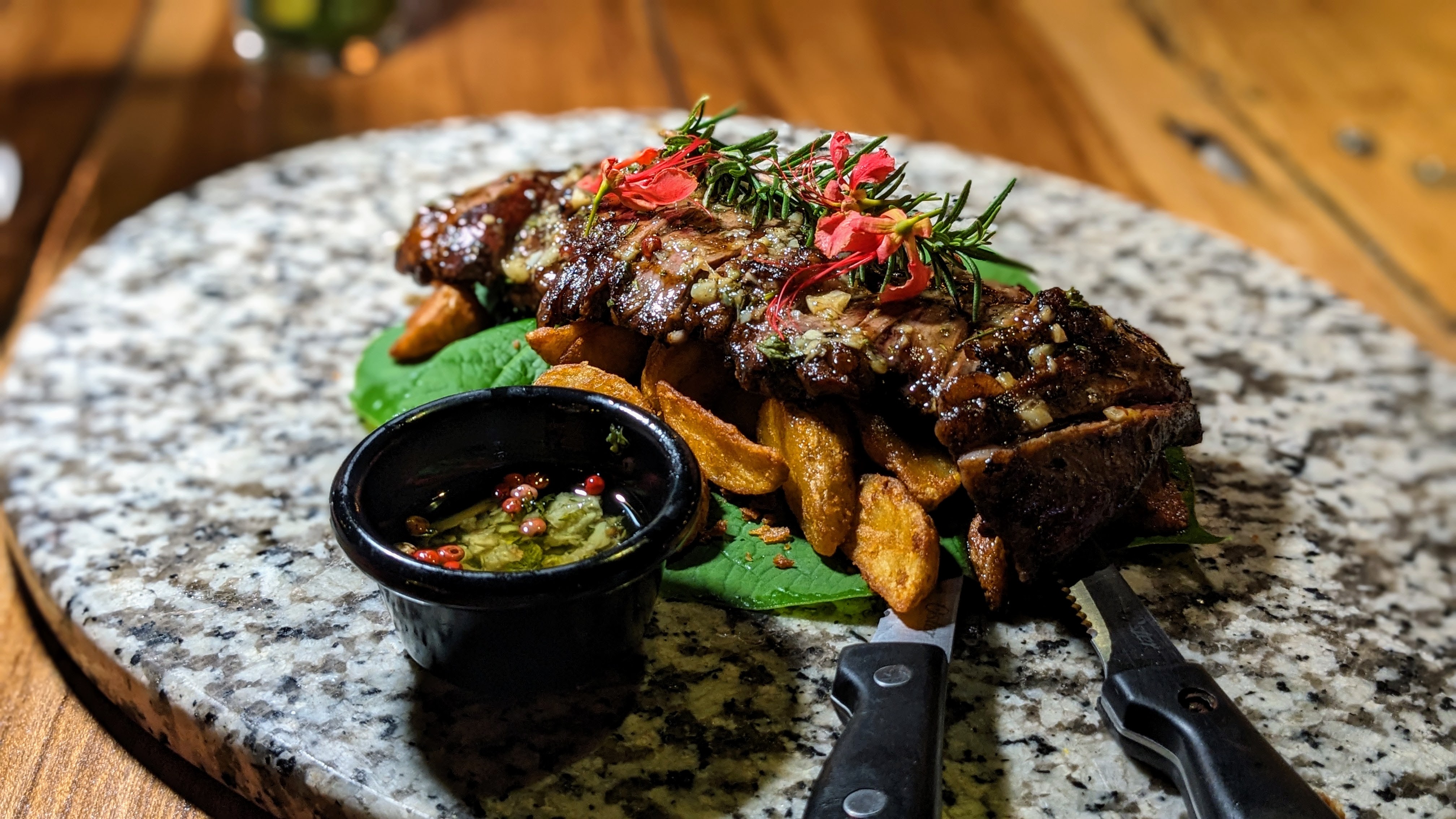
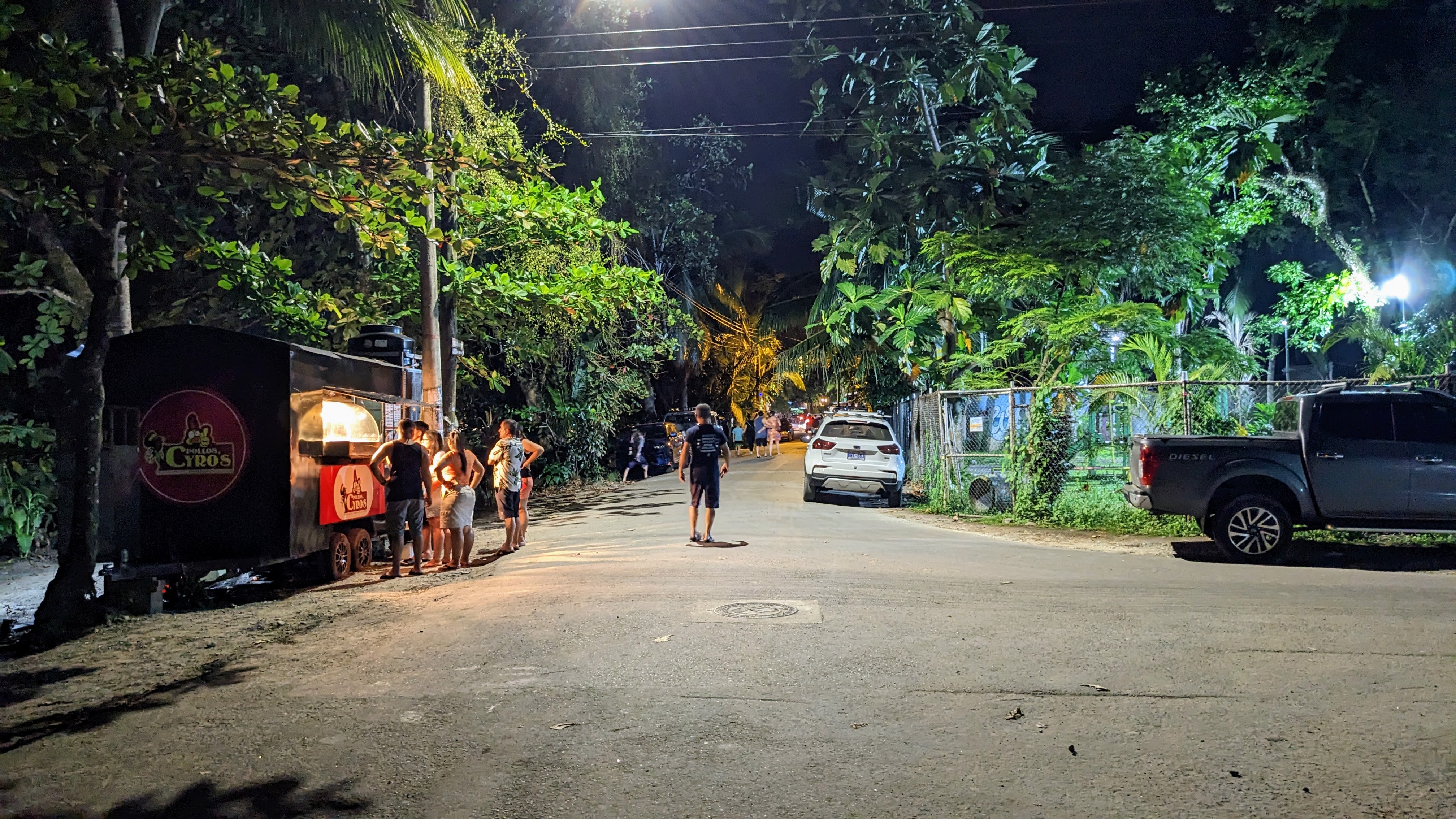
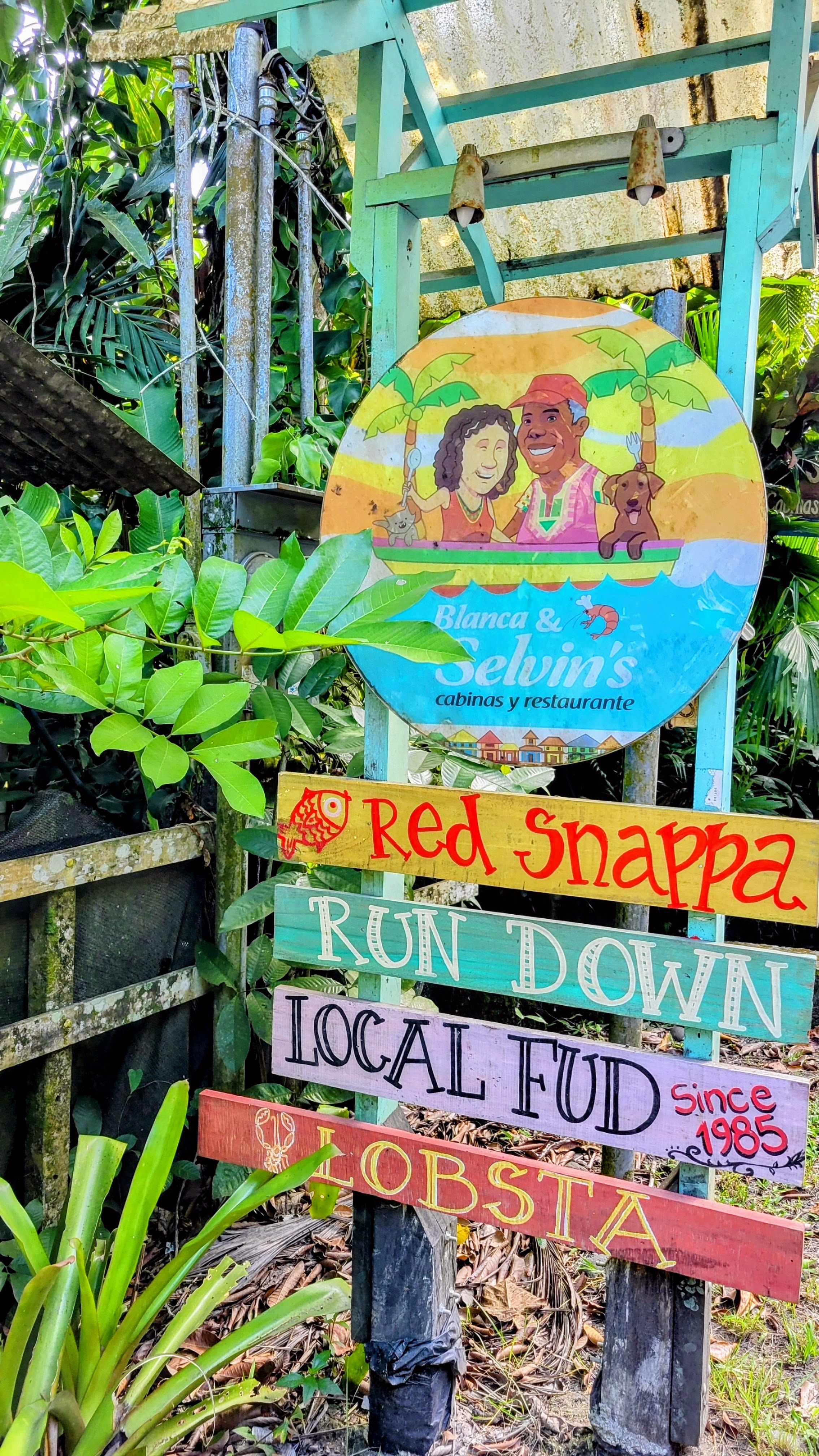
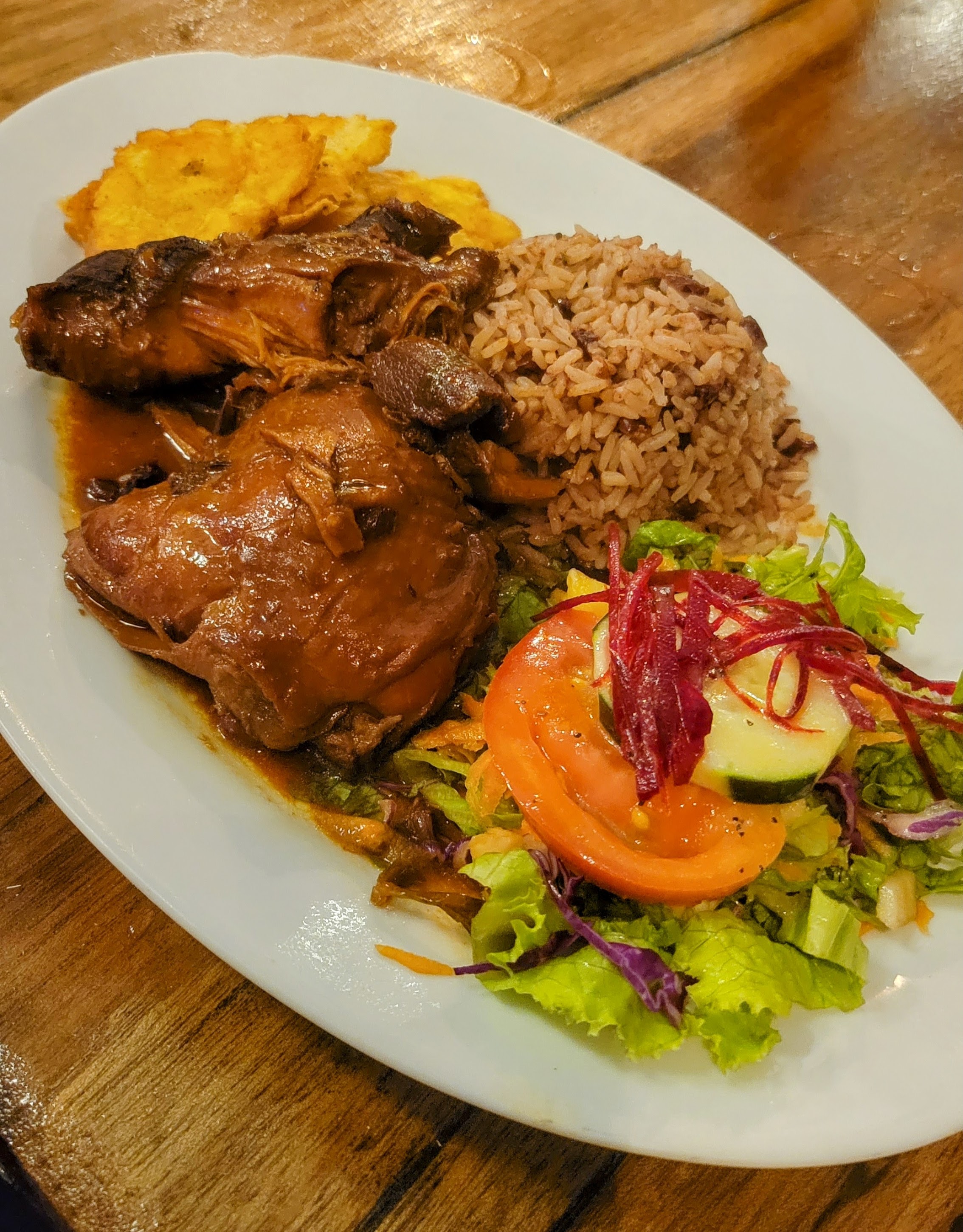
We stayed in Punta Uva and other than the restaurant onsite, there was a restaurant within 5 minute walk (Selvin’s , a soda style restaurant with delicious chicken) , and a few about a 10 minute bike ride away, which is not the easiest thing to do in the dark. It also adds up fast to take a tuk tuk at $10 per way.
Manzanillo has a nice beach and it is very peaceful in the surrounding area, but it is a small town with limited options. A tuk tuk ride to Puerto Viejo is about $15 per way.
10) What to do:
There are many things to do in the region to experience local culture, nature, wildlife, the beach, and food/drinks. Here are some suggestions:
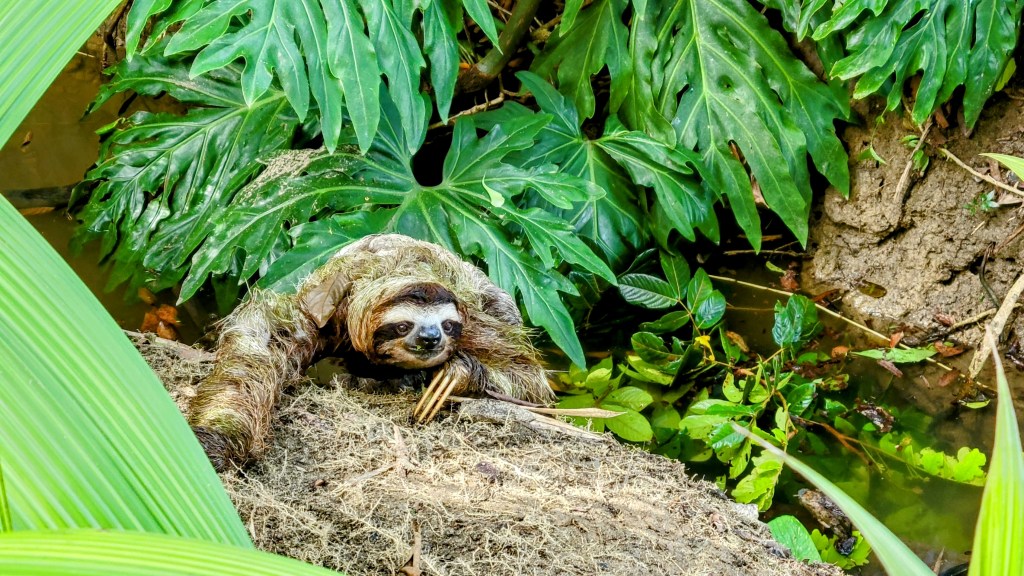
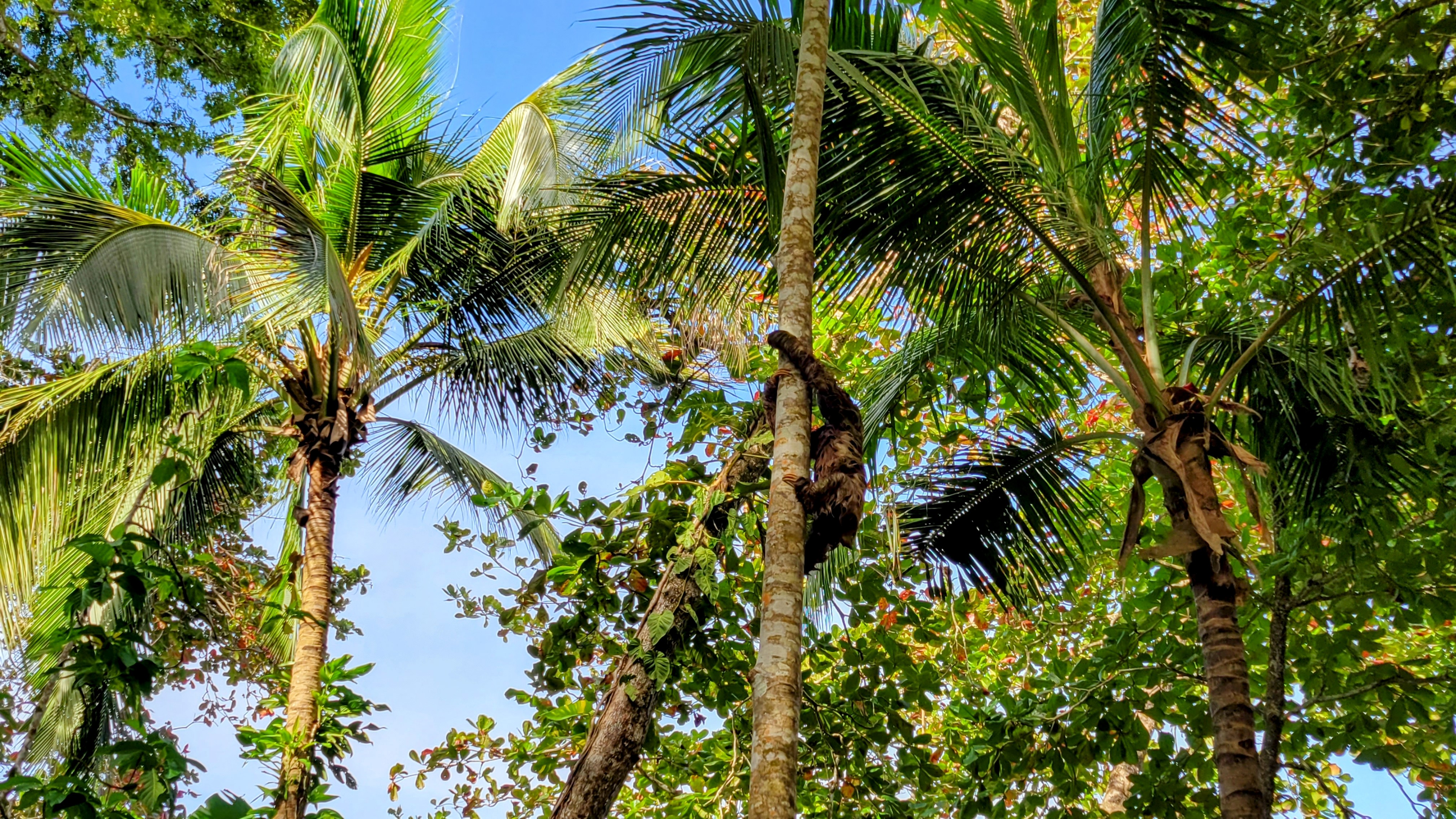
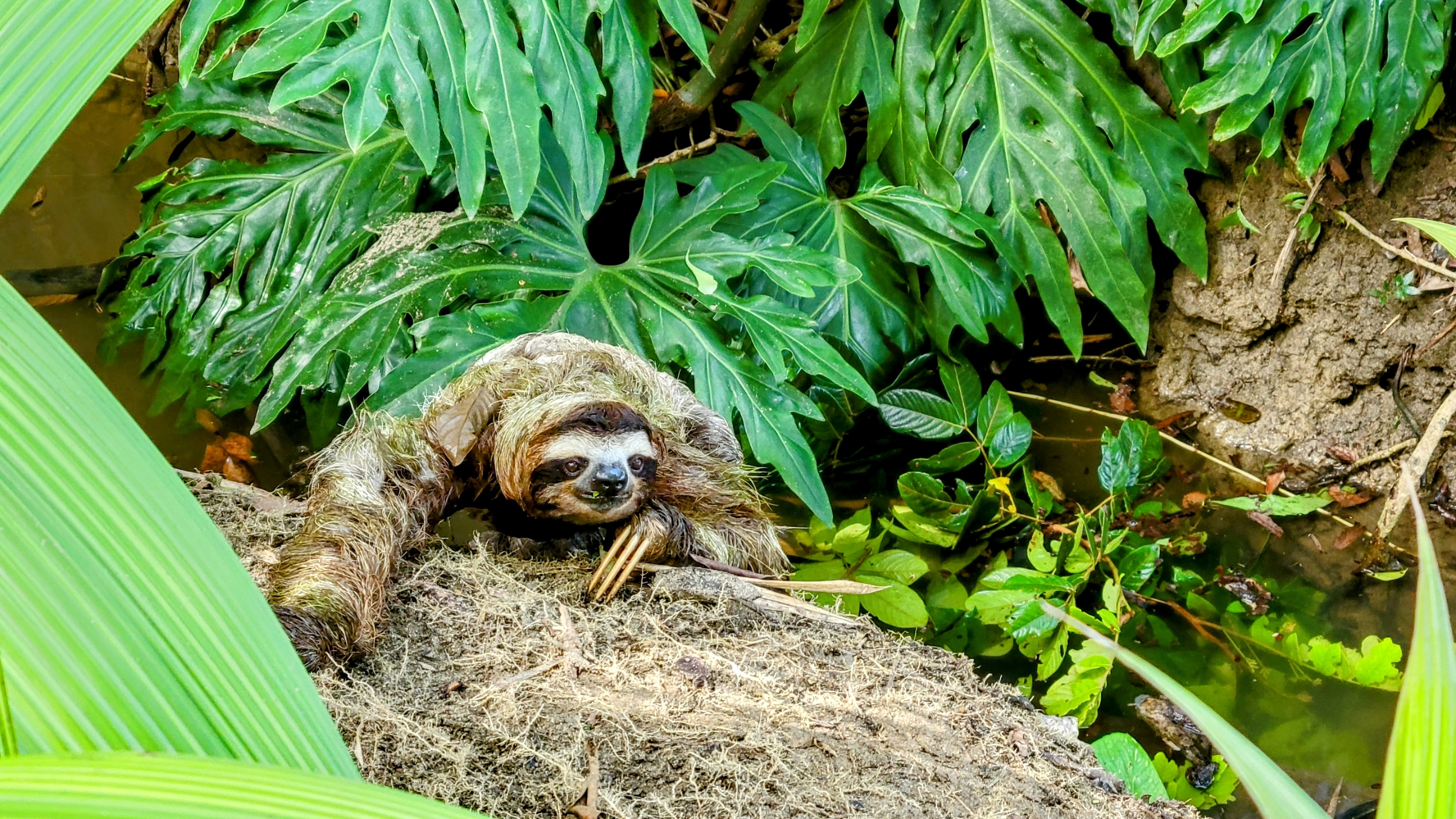
- Wildlife/Marine life: Costa Rica is known for nature and wildlife, and while there may be less parks on the Caribbean side, many species make their home here. It was incredible to see sloths in their natural habitat, in addition to various bird species. You can visit the Sloth Sanctuary and the Jaguar Rescue Centre to support wildlife rehabilitation and conservation. You can also do self-guided or guided tours of Tortuguero National Park , Cahuita National Park , and Gandoca – Manzanillo Wildlife Refuge.
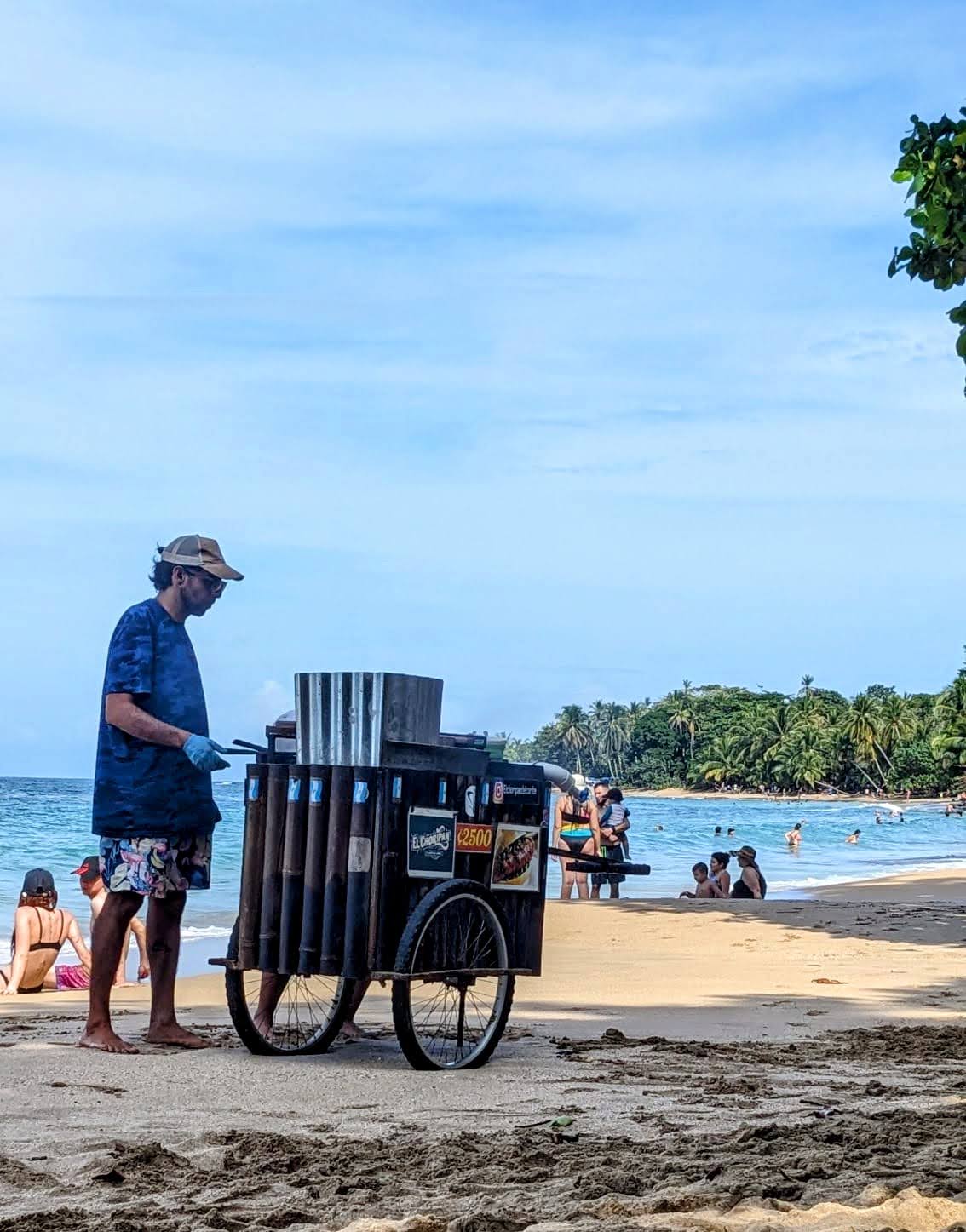
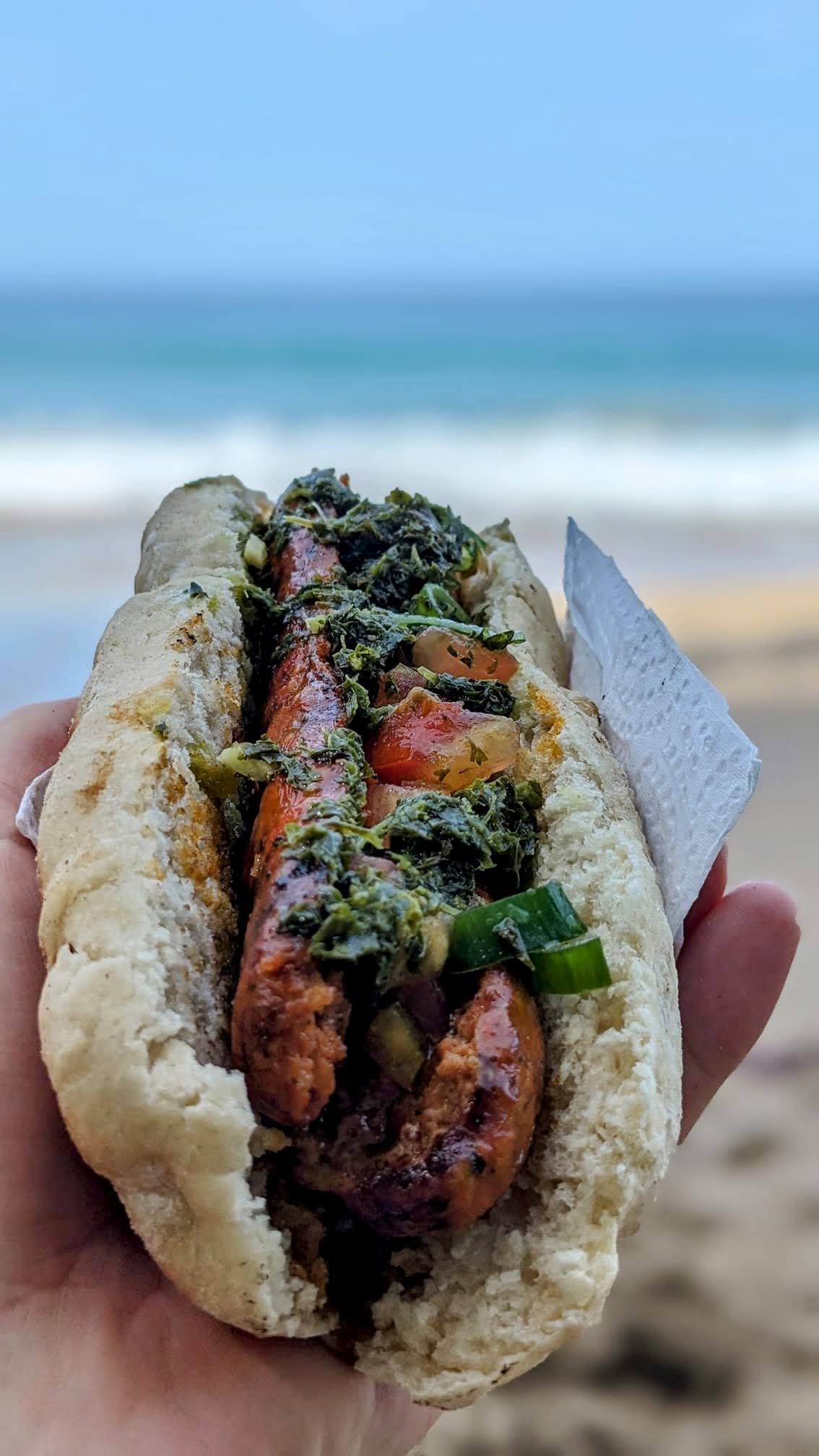
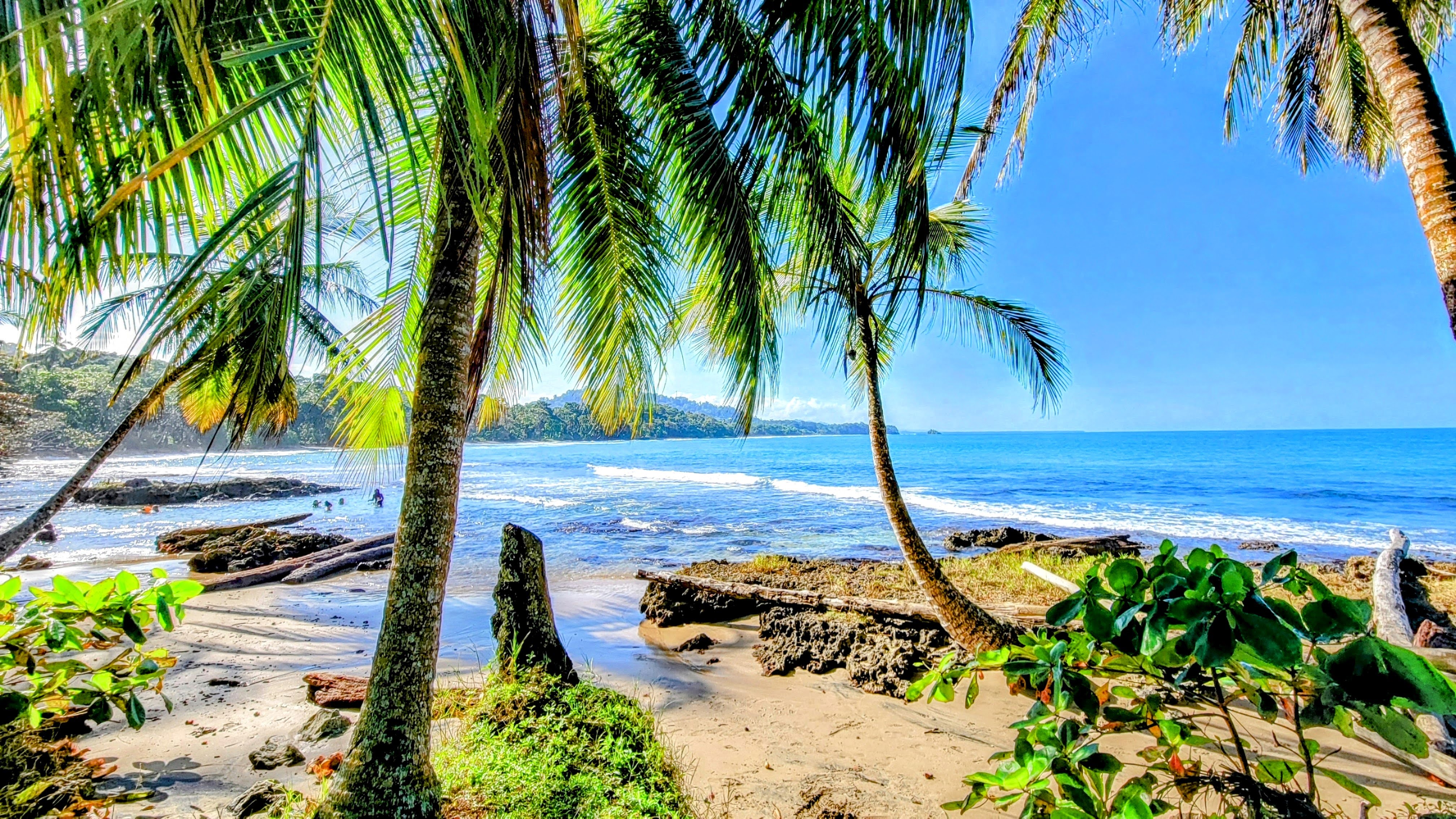
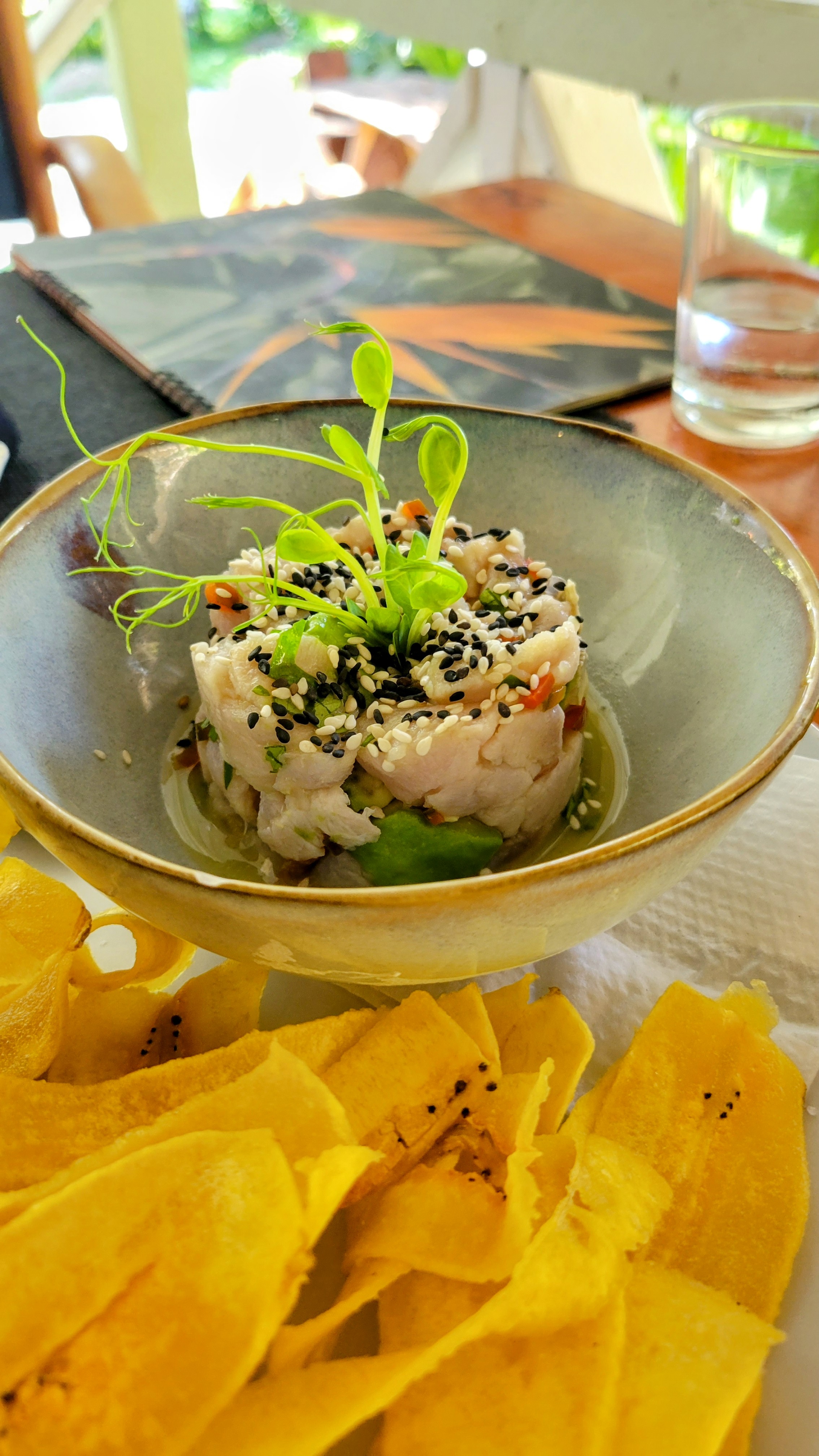
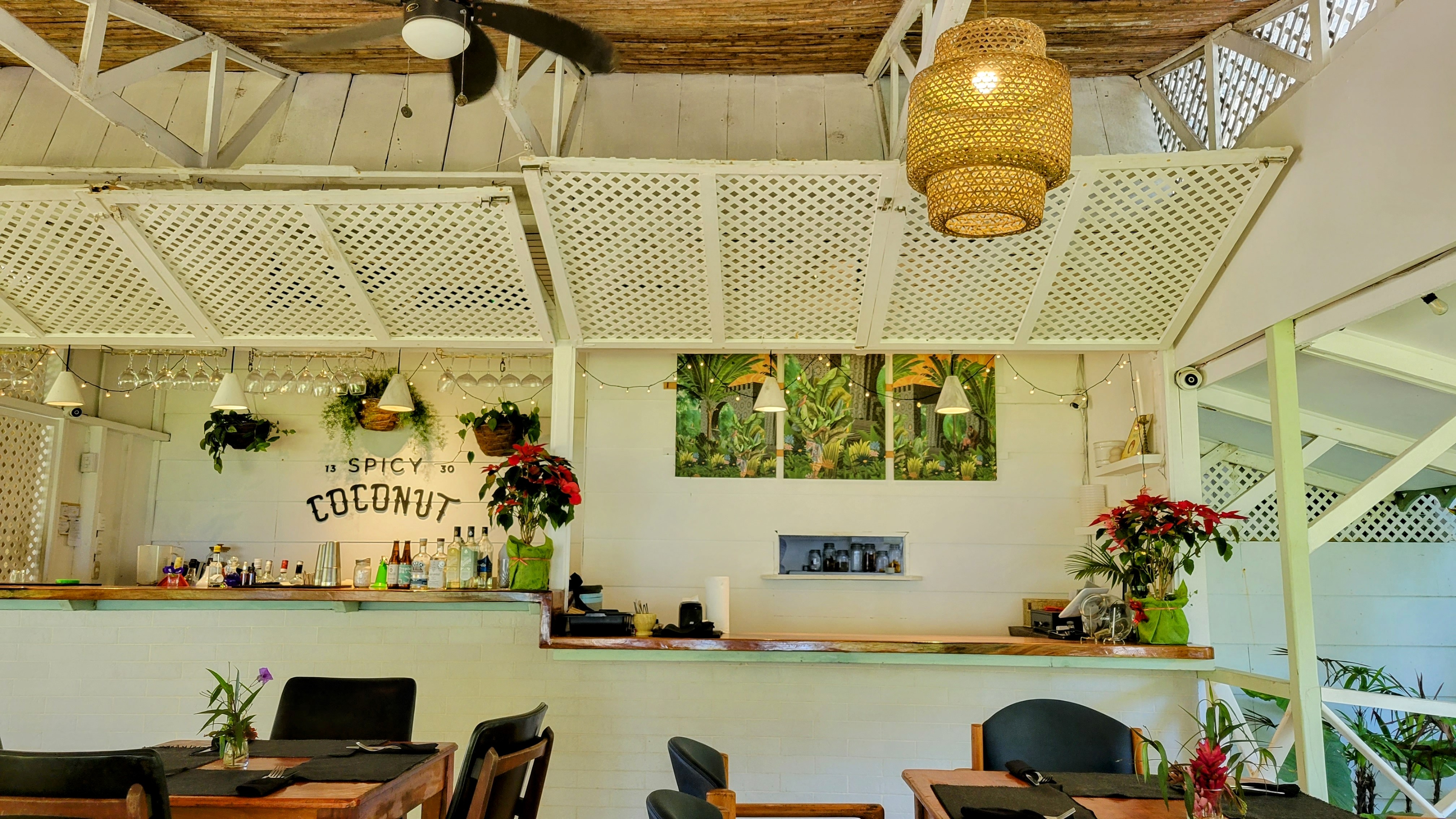
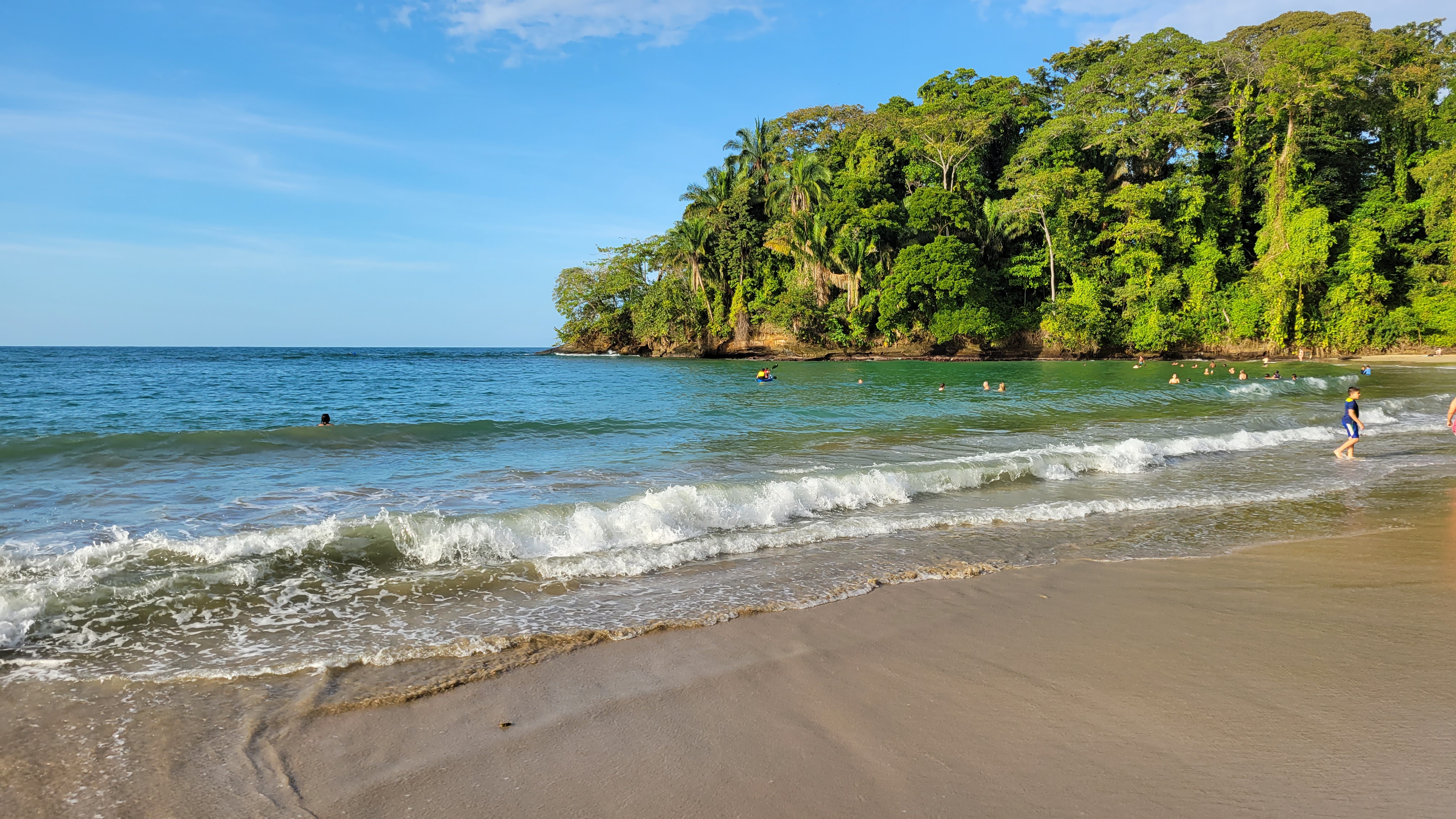
- Beaches: There are beaches that dot the coast line. Our favorite for swimming is Punta Uva, followed by Manzanillo. We also enjoyed Playa Grande for swimming and having “choripan” (look up El Choripan del Caraibe and try it). Playa de Corales is smaller and has pools you can relax in and watch the sunset at before or after a meal at Spicy Coconut.
- Adventure: Nativo offers a jungle trek that involves zip lining, canyoning, rappelling, etc. or just a zip line tour. There are also a number of other activities, like fishing, snorkeling, and dolphin watching in the area.
- Indigenous Village: You can take a tour to Bribri Indigenous Village to learn more about indigenous life, chocolate, and medicine plants.

Summary:
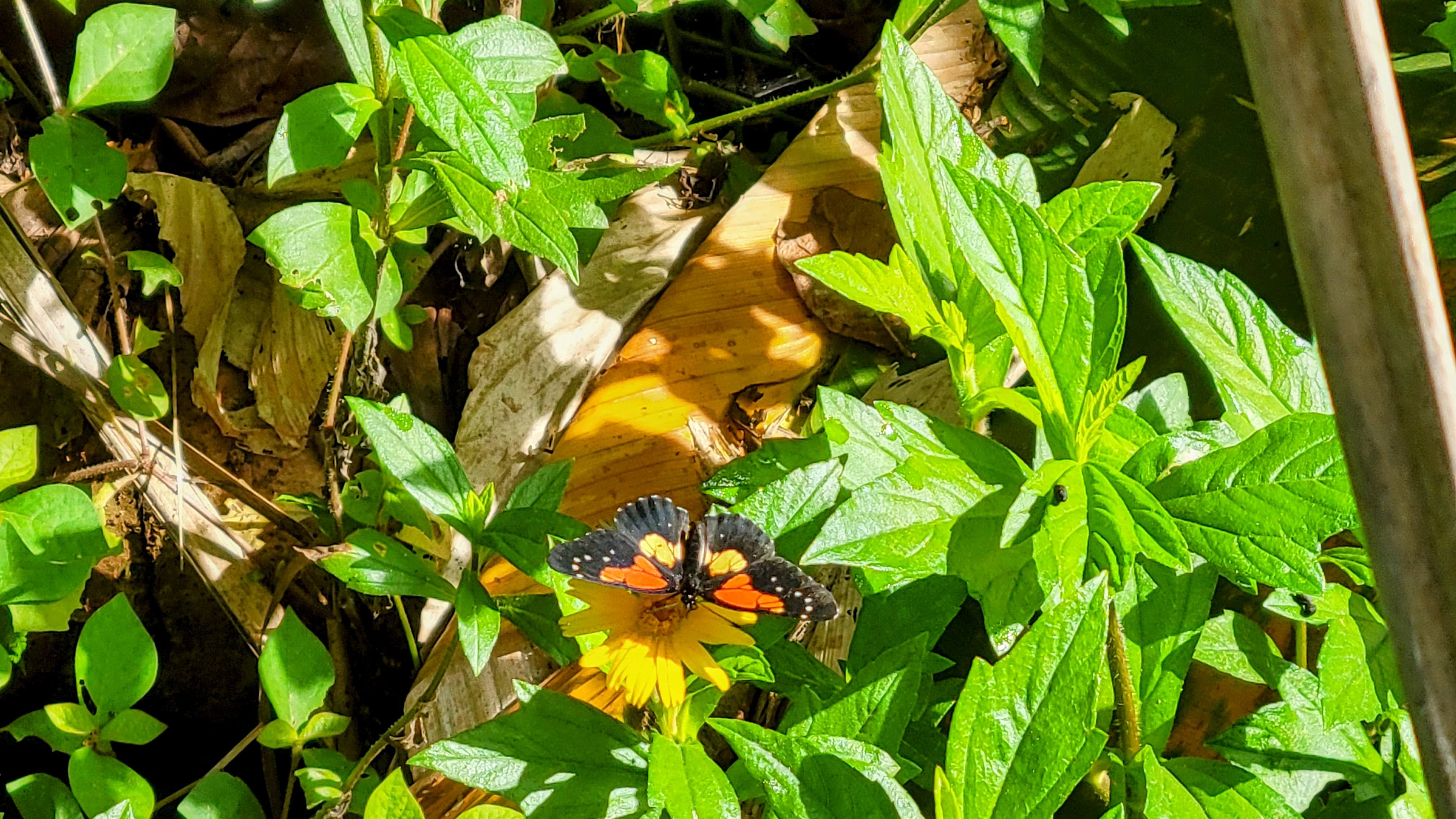
Despite our logistical challenges in returning to San Jose, we loved spending time on the Caribbean Coast. Costa Rica tends to be pretty relaxed and low-key and the Caribbean Coast takes it to the next level due to the lack of large developments. We were also reminded of other places we visited, like Bali, San Pancho Mexico, and even Tulum when it used to be quieter.
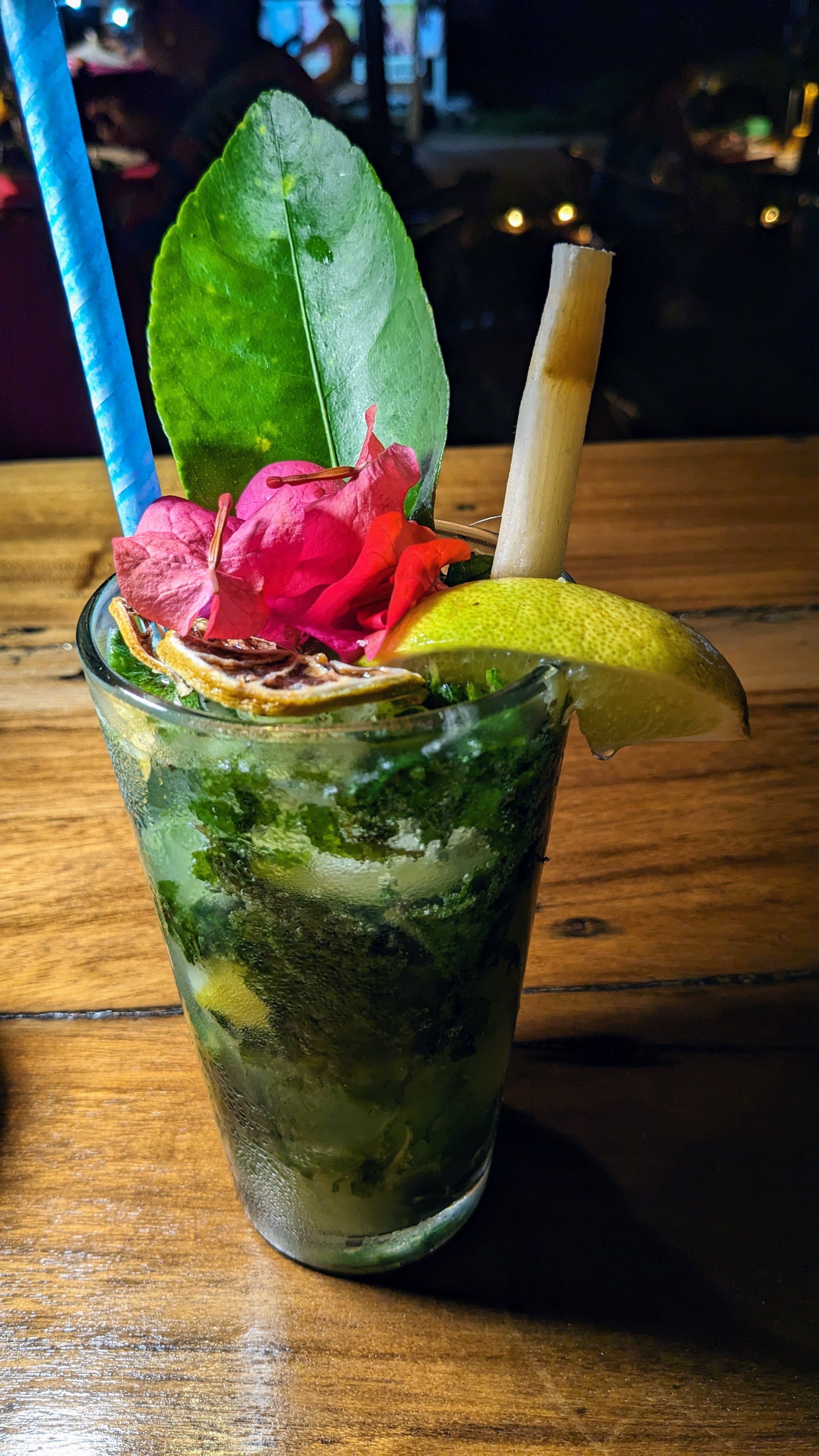
It was lovely to walk the beach in the morning without seeing people, and watch the colors change throughout the day. Even if it was hot and sunny, it was always a pleasant adventure to bike around surrounded by lush jungle and colorful flora. We enjoyed many good meals, cocktails, ocean swims, and observing wildlife in nature.
Have you been to the Caribbean Coast of Costa Rica? How did you get here? Any other tips to share?


 weleavetoday.com
Leave a reply to Awa Beach Hotel Review: Costa Rican Beachfront Tranquility – WeLeaveToday Cancel reply